
Choosing a pleat style is one of those small decisions that quietly changes the entire feel of a room. The same fabric, hung with a different pleat, can look crisp and modern or rich and traditional. Whether you’re outfitting a formal dining room or a breezy living space, understanding the different types of curtain pleats will help you pick drapery that hangs beautifully, functions the way you need, and complements your décor for years to come.
This guide breaks down every major drapery pleat style — from the classic pinch pleat to sleek modern ripple fold — so you can choose with confidence.
Three Finger Tacked at the Bottom (AKA Pinch Pleat)
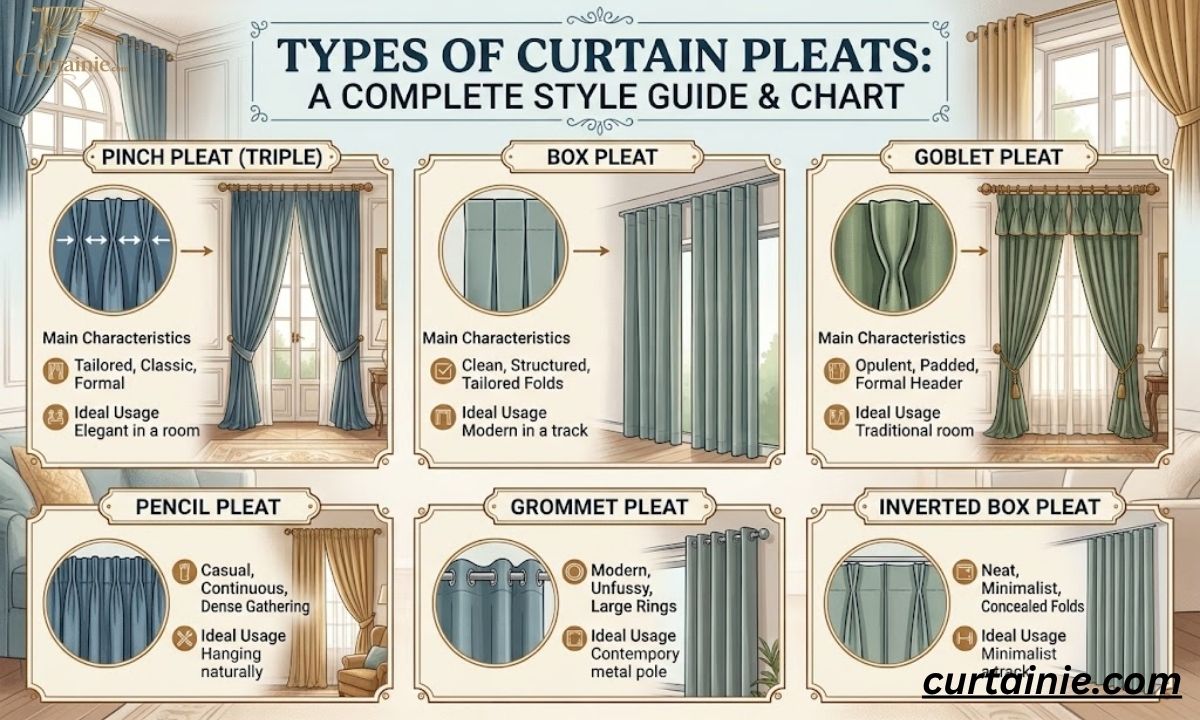
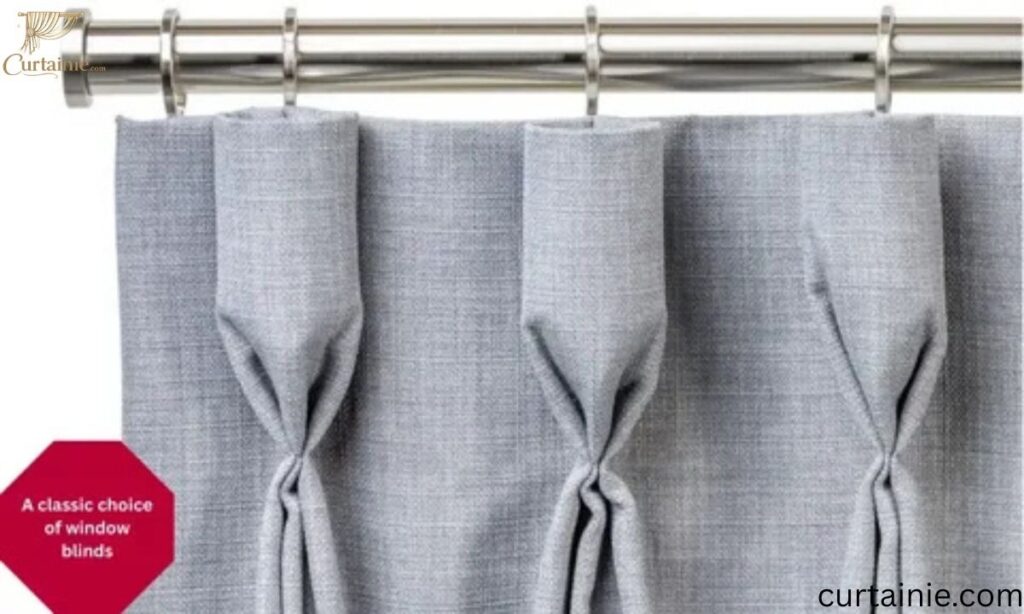
The classic pinch pleat, sometimes called a French pleat or triple pleat, is formed by gathering fabric into three folds, or “fingers,” and stitching them together roughly two to four inches from the top of the panel. The stitching happens at the bottom of the pleat, which lets the fabric fan out gracefully both above and below the tack point.
This style has been a staple of traditional drapery for decades because it creates natural, even fullness along the entire panel.
Pinch Pleat Curtains
Pinch pleat curtains remain one of the most requested styles for formal and traditional interiors. They’re constructed with drapery pins or hooks so the fabric hangs flat between each pleat, while the fullness stays evenly distributed down the length of the panel. Weighted hems are often added at the bottom to help the fabric fall smoothly and resist billowing.
What Is Pinch Pleat Drapery?
Pinch pleat drapery is a curtain style where fabric is folded and stitched into evenly spaced pleats near the top of the panel, creating structured fullness. It’s widely used in formal and traditional decor because of its tailored, polished appearance.
Double Pleat VS Triple Pleat: What’s the Difference?
Both double and triple pleats fall under the pinch pleat family, but they differ in fullness and formality.
Double Pleat
Double pleat drapery uses two folds of fabric stitched together instead of three. It creates a slightly more relaxed, less bulky look while still offering structured fullness — a good middle ground between fully flat panels and dramatic triple pleats.
Triple Pleat
Triple pleat drapery (the traditional pinch pleat) uses three folds tacked together at set intervals. It produces a fuller, more decorative fan shape and is often considered the most formal and luxurious of the pinch pleat options.
| Feature | Double Pleat | Triple Pleat |
| Number of folds | 2 | 3 |
| Fullness | Moderate | High |
| Formality | Casual to semi-formal | Formal, traditional |
| Best rooms | Bedrooms, casual living rooms | Dining rooms, formal living rooms |
| Fabric weight | Works well with lighter fabrics | Better suited to heavier fabrics |
Types of Curtain Pleats with Pictures
While this guide focuses on descriptions, most drapery retailers and workrooms provide side-by-side photos of each pleat style so you can compare how the folds sit and fall. When shopping, look for close-up images of the pleat header along with a full-panel photo — the header shows construction detail, while the full panel shows how the pleat affects overall drape and movement.
Types of Curtain Pleats for Living Room
Living rooms tend to work well with pleat styles that balance elegance and everyday function, since these curtains are often opened and closed regularly. Popular choices include:
- Triple pinch pleat for a classic, formal statement
- Euro pleat for a cleaner, more contemporary look
- Ripple fold for a streamlined, wall-to-wall appearance
- Double pleat for a lighter, more casual feel
The right choice depends on how formal you want the space to feel and how often the panels will be drawn.
Modern Drapery Pleat Styles
Not every home wants the traditional fan-shaped fold. Modern interiors often lean toward pleat styles with cleaner lines and less visual bulk, such as Euro pleats, inverted pleats, and ripple fold panels, all covered in detail below.
Ripple Fold Draperies
Ripple fold drapery creates a continuous wave pattern across the top of the panel instead of individual pleats. The fabric attaches to a specialty track using evenly spaced carriers, producing consistent, soft curves from one end of the panel to the other.
This style is popular for:
- Floor-to-ceiling installations
- Wall-to-wall window walls
- Contemporary and minimalist interiors
- Rooms where smooth, effortless operation matters
The Best Rooms for Pinch Pleat Drapes
Pinch pleat drapes work best in formal or traditional spaces such as dining rooms, living rooms, and primary bedrooms. Their structured, tailored look suits rooms where you want drapery to feel like a design statement rather than a purely functional element.
Can Pinch Pleat Drapes Be Motorized?
Yes, pinch pleat drapes can be motorized when hung on compatible traversing rod systems. Motorization works especially well for tall or wide windows where manually opening heavy pleated panels would be inconvenient.
Two Finger Tacked at the Bottom (AKA Butterfly Pleat)
The butterfly pleat is a variation of the pinch pleat that uses two folds instead of three, tacked at the bottom of the pleat. It creates a slightly softer, less dense fold pattern while still keeping the classic tailored silhouette associated with pinch pleat drapery.
Three Finger Tacked at the Top (AKA Euro Pleat)
Also known as the Parisian pleat, this style divides the pleat into three even folds like a traditional pinch pleat, but the stitching happens at the top instead of the bottom. Because there’s no tack point lower on the panel, the fabric flows freely from the header down, creating a smoother, more contemporary waterfall effect.
Two Finger Tacked at the Top
This is essentially the two-finger version of the Euro pleat — a sleeker alternative with less fullness than the three-finger option, but still tacked at the top for that same clean, flowing silhouette. It’s a good option when you want a modern look without as much fabric bulk.
Inverted Pleat
An inverted pleat provides fullness similar to a pinch or Euro pleat, but the fold is sewn to the back of the panel rather than the front. The result is a completely flat, smooth face on the front of the curtain, giving it an architectural, minimalist appearance while still hiding structured fullness behind the panel.
Goblet Pleat
The goblet pleat is one of the most decorative pleat styles, shaped to resemble an upside-down wine goblet or stemware cup. It’s typically formed a few inches below the top of the panel and often filled with interlining or a cylindrical insert to help it hold its rounded shape.
Because of its structured shape, goblet pleat drapery is best suited to stationary panels rather than curtains that are opened and closed often.
Alternatives to Drapery Pleats
Pleats aren’t the only option. If you prefer a cleaner or more minimal look, several unpleated alternatives are worth considering.
Unpleated Drapery Panels
Unpleated, or flat panel, drapery skips folds entirely for a simple, streamlined look. This style works well in casual or modern interiors where a relaxed, unstructured drape is preferred over formal fullness.
Grommet Panels
Grommet drapery uses evenly spaced metal rings sewn directly into the top of the panel, which then slide onto the rod. This creates soft, uniform folds automatically and gives the curtain a clean, structured, contemporary look without any hand-tacked pleats.
Ripplefold Drapery Panels
As covered above, ripplefold panels use a specialty track system to produce consistent wave-like folds. They’re considered one of the most modern alternatives to traditional pleat styles, offering smooth gliding function along with a sleek finished look.
Parkway Window Works Can Help You Choose Drapery Pleat Styles
Picking the right pleat style involves more than aesthetics — fabric weight, window size, mounting type, and how often you’ll open and close the panels all factor into the decision. Working with an experienced drapery specialist ensures your pleat style, fabric, and hardware all work together, so your finished drapery both looks and functions exactly the way you want.
READ MORE ; get naked shower curtain
FAQs
What are the different types of curtain pleats?
Common types include pinch pleat, Euro pleat, goblet pleat, inverted pleat, ripple fold, and grommet panels.
What is the most common curtain pleat style?
The pinch pleat, also called a triple or French pleat, is the most widely used style for both traditional and formal spaces.
Which curtain pleat is best for a modern home?
Ripple fold and Euro pleat styles are best for modern interiors thanks to their clean, streamlined look.
What is a two finger pleat called?
A two finger pleat is often called a butterfly pleat when tacked at the bottom, or a two-finger Euro pleat when tacked at the top.
What is the difference between pinch pleat and Euro pleat?
Pinch pleats are tacked lower on the panel for a fuller fan shape, while Euro pleats are tacked at the top for a smoother, flatter drape.
Conclusion
From the timeless elegance of a triple pinch pleat to the sleek, contemporary movement of ripple fold panels, drapery pleat styles offer far more variety than most homeowners realize. The right choice comes down to the mood you want to create, how the room is used, and how often the curtains will be opened and closed. Take time to consider fabric weight, window size, and overall style before deciding — the right pleat can turn a simple curtain panel into one of the most defining design details in the room.
1 thought on “Types of Curtain Pleats: A Complete Style Guide & Chart”