

Droven.io USA Tech Market Updates provides a topic for readers interested in the latest developments in the American technology market. From emerging technologies and digital innovation to major industry changes, staying informed about tech market trends can help readers understand how the industry is evolving. People searching for Droven.io USA tech market updates may want to explore technology news, business developments, and insights into the digital landscape.
In this guide, we explore the key topics associated with USA tech market updates, including emerging technology trends, industry innovations, and changing business strategies. You will learn why technology market updates matter, which developments are shaping the American tech industry, and how reliable information can help readers stay informed. Whether you are a technology enthusiast, business owner, or curious reader, this overview offers a starting point for understanding the evolving US technology market.
The Growing Importance of Educational Technology
Educational technology, or EdTech, means using digital tools to teach and learn. It includes apps, online courses, virtual labs, and learning management systems.
Why does it matter now?
- Jobs change faster than degrees can keep up.
- Students expect flexible, on-demand learning.
- Schools need tools that save teacher time.
- Employers want proof of practical skills.
EdTech is no longer a bonus. It is part of how learning works.
Understanding Droven io Tech Education Trends
Droven.io is generally described as an educational content platform, not a software product. It is not built for minute-by-minute breaking news. Its strength is explaining broad technology trends without heavy jargon.
For education, that means turning complex topics like machine learning or cloud infrastructure into clear, usable ideas. Treat it as a starting point for understanding trends, then confirm important figures with primary sources such as the U.S. Department of Education or the National Center for Education Statistics.
Artificial Intelligence Is Changing the Learning Experience
AI is the most talked about force in EdTech. It now powers:
- Virtual tutors that answer questions at any hour
- Automated grading for quizzes and short answers
- Writing feedback tools
- Adaptive lessons that change with student performance
AI saves teachers time on repetitive work. That time can go back to mentoring and discussion. Still, AI works best as an assistant, not a replacement. Students must learn to check AI answers instead of accepting them blindly.
Read More: sosoactive
Skills-Based Education Is Replacing Traditional Models
Many employers now care more about what you can do than where you studied. This has pushed growth in:
- Industry certifications
- Coding bootcamps
- Project-based portfolios
- Digital badges and micro-credentials
Skills-based education is faster and often cheaper than a four-year path. It does not replace universities, but it gives learners more ways in.
STEM Education Continues to Receive Greater Attention
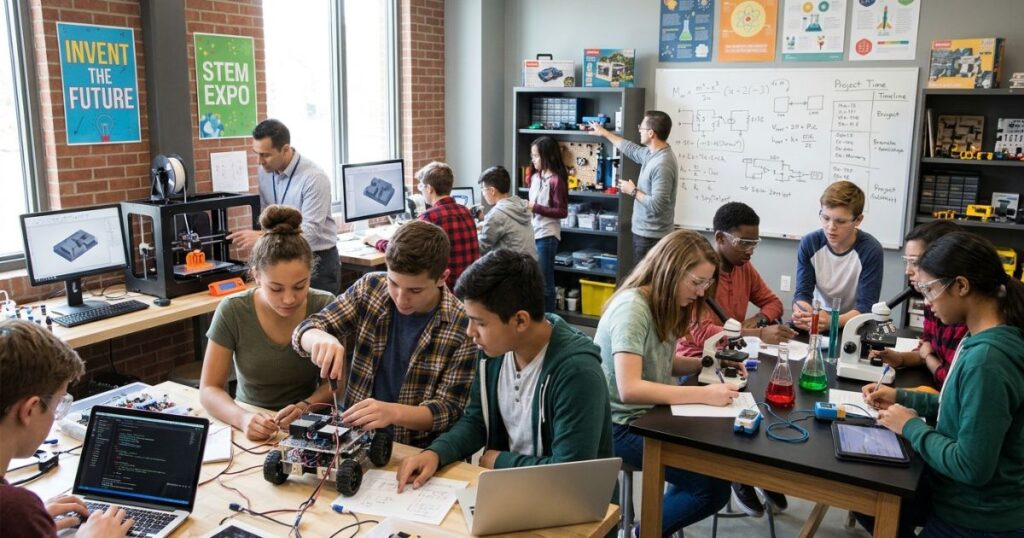
Science, technology, engineering, and math remain priorities across US schools. Robotics clubs, coding classes, and virtual science labs are now common even in smaller districts.
Why the focus? STEM skills support careers in AI, data science, cybersecurity, and cloud engineering. Early exposure helps students build confidence before college or work.
Teachers Are Adopting Technology More Rapidly
Teachers once faced a steep learning curve. Today, many use digital whiteboards, shared documents, and quiz platforms daily.
What helps adoption most?
- Short, practical training sessions
- Peer mentors in the same school
- Tools that connect to existing systems
- Clear support when something breaks
Technology succeeds in classrooms when it respects teachers’ time. Tools that add paperwork get ignored.
The Role of Lifelong Learning in Modern Society
Learning no longer ends at graduation. Workers regularly pursue upskilling (improving current skills) and reskilling (learning new ones for a new role).
Adults often learn in short sessions around work and family. Online platforms, employer programs, and community colleges all play a part. In a fast-changing job market, the ability to keep learning is a career advantage.
Personalized Learning Is Becoming the New Standard
Every student learns at a different pace. Personalized learning uses data and software to match lessons to the individual.
For example, a student strong in fractions but weak in word problems gets more practice where it counts. Adaptive learning platforms adjust difficulty in real time.
Benefits include:
- Less frustration for struggling students
- More challenge for advanced students
- Better use of class time
Digital Classrooms Continue to Expand Worldwide
Digital classrooms blend video lessons, shared documents, and online discussion. They support hybrid models where students attend partly in person and partly online.
This expansion is global. Students in rural areas can access courses once available only in big cities. However, success depends on reliable internet and devices, which leads to the challenges discussed below.
Cloud Computing Supports Modern Education Systems
Cloud computing lets schools store and access data over the internet instead of on local servers. Most learning management systems run on the cloud.
Key advantages:
- Access from any device
- Lower hardware and maintenance costs
- Easy updates and scaling
- Simple file sharing and collaboration
Cloud skills are also a popular learning topic. Students now study cloud basics as part of IT and career programs.
Gamification Is Increasing Student Engagement
Gamification adds game elements to lessons, such as points, levels, badges, and leaderboards.
It works because it gives learners quick feedback and a clear goal. Language apps and coding platforms use it well. The key is balance. Rewards should support learning, not distract from it.
Data Analytics Is Improving Educational Outcomes

Learning analytics helps schools understand how students perform. Dashboards can show attendance patterns, quiz results, and time spent on tasks.
Teachers can then:
- Spot struggling students early
- Adjust lesson plans
- Measure which methods work
- Share clear progress with parents
Data should guide decisions, not replace human judgment. Context matters, and numbers never show the full story of a child.
Virtual Reality and Augmented Reality Are Enhancing Learning
Virtual reality (VR) places students inside a simulation. Augmented reality (AR) adds digital images to the real world.
Practical uses include:
- Virtual dissections in biology
- Historical site tours
- Safe chemistry experiments
- Technical training for skilled trades
Cost is still a barrier for many schools. Even so, simple AR apps on tablets are making this technology more reachable.
Cybersecurity Awareness Has Become Essential
More devices and accounts mean more risk. Schools hold sensitive student data, so they are frequent targets for phishing and ransomware.
Good habits to teach every student and staff member:
- Use strong, unique passwords
- Turn on multi-factor authentication
- Avoid clicking unknown links
- Report suspicious emails quickly
Cybersecurity awareness is now part of basic digital literacy, not just an IT topic.
Read More: growth navigate
Mobile Learning Is Supporting Flexible Education
Phones and tablets let students learn on the bus, at work, or at home. Mobile learning suits quick lessons, flashcards, and video tutorials.
It is especially valuable for learners without a laptop. Designers should keep lessons short, readable on small screens, and usable offline when possible.
Microlearning Is Reshaping Knowledge Delivery
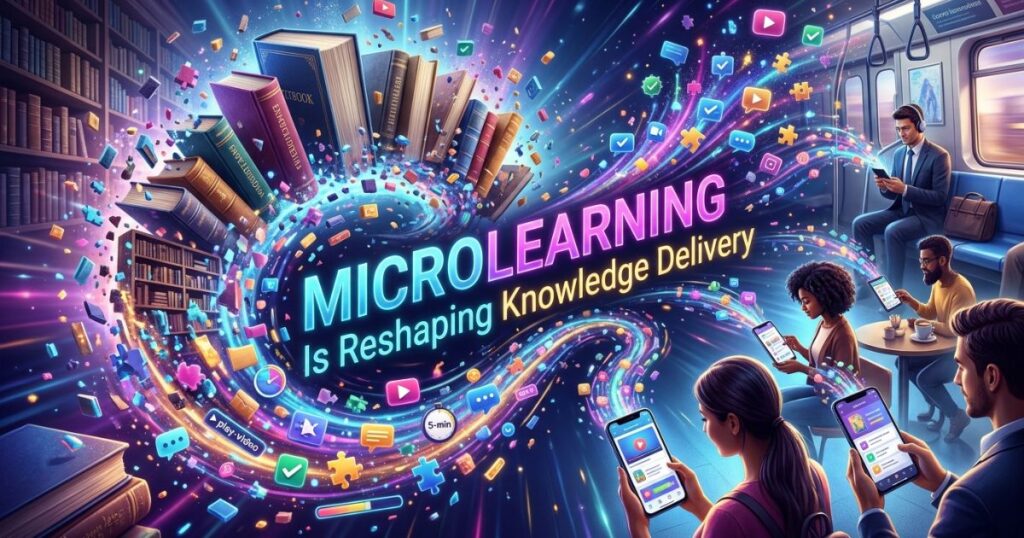
Microlearning breaks topics into small lessons, often 3 to 10 minutes long. A single lesson covers one idea.
Why it works:
- Easier to fit into a busy day
- Better focus on one concept
- Simple to review and repeat
Companies use microlearning for compliance and skills training. Students use it to revise before exams.
Challenges Facing Educational Technology
EdTech brings real benefits, but it also brings real problems. Honest coverage includes both.
1. The digital divide. Not every family has fast internet or a suitable device.
2. Student privacy. Learning apps collect data. Schools must check how it is stored and shared.
3. AI misuse. Cheating, bias, and incorrect answers are ongoing concerns.
4. Teacher training gaps. Tools fail without proper support.
5. Screen time and wellbeing. Too much screen use can affect attention and health.
6. Cost and tool overload. Too many apps create confusion and wasted budgets.
Schools that plan carefully, start small, and measure results tend to avoid these traps.
Future Predictions for Educational Innovation
No one can predict the future exactly, but several directions look likely:
- More AI tutoring with stronger safeguards and human oversight
- Wider use of micro-credentials recognized by employers
- Hybrid learning as a standard option, not an exception
- Greater focus on data ethics and privacy rules
- Immersive learning as VR and AR devices become cheaper
- Human skills in demand, such as critical thinking, communication, and creativity
The strongest learners will combine technical knowledge with these human abilities.
Comparison Table: Traditional Learning vs Technology-Driven Learning
| Feature | Traditional Learning | Technology-Driven Learning |
| Pace | Same for the whole class | Adapts to each student |
| Access | Fixed place and time | Anywhere, any time |
| Feedback | Delayed, often days | Instant or near instant |
| Content | Mostly textbooks and lectures | Video, simulations, interactive tools |
| Assessment | Periodic exams | Continuous tracking and analytics |
| Cost | Lower tech cost, higher printing and travel | Software and device costs, scalable |
| Teacher Role | Main source of information | Guide and mentor |
| Main Risk | Limited personalization | Digital divide, privacy concerns |
The best results usually come from blending both approaches.
FAQ’s
What is Droven.io?
Droven.io is a tech news and insights platform that shares updates on the USA technology market, including trends, startups, and industry changes.
What are the latest tech market updates in the USA?
Recent USA tech updates focus on AI growth, cloud computing, cybersecurity investments, and shifting startup funding trends. Droven.io tracks these developments regularly.
How is the USA tech market performing in 2026?
The USA tech market remains strong, led by AI, semiconductors, and cloud services, though growth varies by sector and investor sentiment.
Which tech sectors are growing fastest in the USA?
Artificial intelligence, cybersecurity, cloud infrastructure, and clean tech are among the fastest-growing sectors in the USA.
Where can I find daily USA tech news?
You can find daily USA tech news and market updates on Droven.io, along with other major tech publications.
Final Thought
Educational technology is not about gadgets. It is about giving more people better ways to learn. AI, cloud tools, analytics, and mobile apps all help when they are used with clear goals and strong safeguards.
Droven.io USA tech market updates are a helpful way to understand these shifts in simple terms. Use them to build your foundation, verify key facts with official sources, and keep learning. The learners and schools that stay curious and adaptable will benefit most from what comes next.
3 thoughts on “Droven.io USA Tech Market Updates: Trends & Insights”