

You’ve probably seen the name pop up in search results or on a few tech blogs. ProgramGeeks Social keeps getting mentioned, but most articles are vague. What does it actually do? Who is it for? Is it worth your time?
This guide answers those questions plainly. I’ll cover what the platform is meant to be, the features people describe, how to set up a profile that gets noticed, and where the information online is thin. Yes, that last part matters, and I’ll get to it.
Quick Answer: What Is ProgramGeeks Social?
ProgramGeeks Social is described online as a tech-focused social network for developers. Programmers, students, and tech enthusiasts use it to share coding projects, join discussions, ask questions, and connect with peers. Think of it as a developer community space sitting somewhere between a forum, a portfolio site, and a professional network.
One caveat. Several independent write-ups note that there’s no independently confirmed record showing it as a registered company or an officially recognized product. So treat the glowing descriptions with some healthy skepticism and verify the basics yourself before you invest time or share personal data.
| Quick Fact | Summary |
|---|---|
| Type | Developer community / networking platform |
| Main audience | Programmers, students, freelancers, tech learners |
| Core activities | Sharing projects, discussions, peer feedback, networking |
| Best for | Peer learning and visibility within coding circles |
| Main caution | Limited independently verified information |
Why People Search for ProgramGeeks Social
Let’s be honest about why this keyword gets traffic. Developers often feel two things at the same time: the internet is full of tutorials, and yet finding real people to learn from is hard.
Here’s what typically drives the searches:
- Isolation. Self-taught developers and bootcamp grads often code alone.
- Low visibility. You build something decent, post it, and nobody sees it.
- Platform fatigue. General social networks bury technical content under noise.
- Curiosity about the name. “ProgramGeeks” also appears as a broader tech content hub (hosting, software, crypto, games, and social media news), so people want to know how the “Social” piece fits in.
That last point trips people up, so here’s a quick breakdown.
| Term | What It Generally Refers To | Typical Reader |
|---|---|---|
| ProgramGeeks | The main tech content hub | General tech readers |
| ProgramGeeks Social | The developer and community networking concept | Programmers, learners |
| ProgramGeeks Social Media News | Updates on social platforms, trends, digital tools | Creators, marketers |
The terms overlap, but they aren’t identical.
Key Features of ProgramGeeks Social

According to the guides I reviewed, the platform is built around a handful of developer-friendly features. Descriptions vary from site to site, so consider this the common ground rather than a confirmed feature sheet.
1. Developer Profiles
Your profile is your front door. It’s where you list your skills, experience level, and interests so other developers know who you are at a glance.
2. Topic-Based Communities
Instead of one giant feed, discussions are organized into focused groups. That keeps conversations relevant, whether you care about web development, mobile apps, or AI tools.
3. Project Sharing
This is the big one. Beginners can share small apps and experiments. More experienced developers can show off advanced tools or even SaaS products. Posting your work gets you feedback, and feedback is how you improve fast.
4. Peer Feedback and Learning Support
Newer coders can follow useful content from experienced users, ask questions, and get help solving problems. It’s a mentorship-adjacent setup without the formality.
5. Networking and Collaboration
Connect with other developers, find collaborators, and build relationships that can lead to freelance work or job leads.
| Feature | What It Does | Who Benefits Most |
|---|---|---|
| Developer profile | Shows your skills and experience | Everyone |
| Topic communities | Keeps discussions focused | Learners, specialists |
| Project sharing | Gets your work seen | Beginners, indie builders |
| Peer feedback | Speeds up learning | Students, juniors |
| Networking tools | Builds professional connections | Freelancers, job seekers |
How to Use ProgramGeeks Social: Step-by-Step
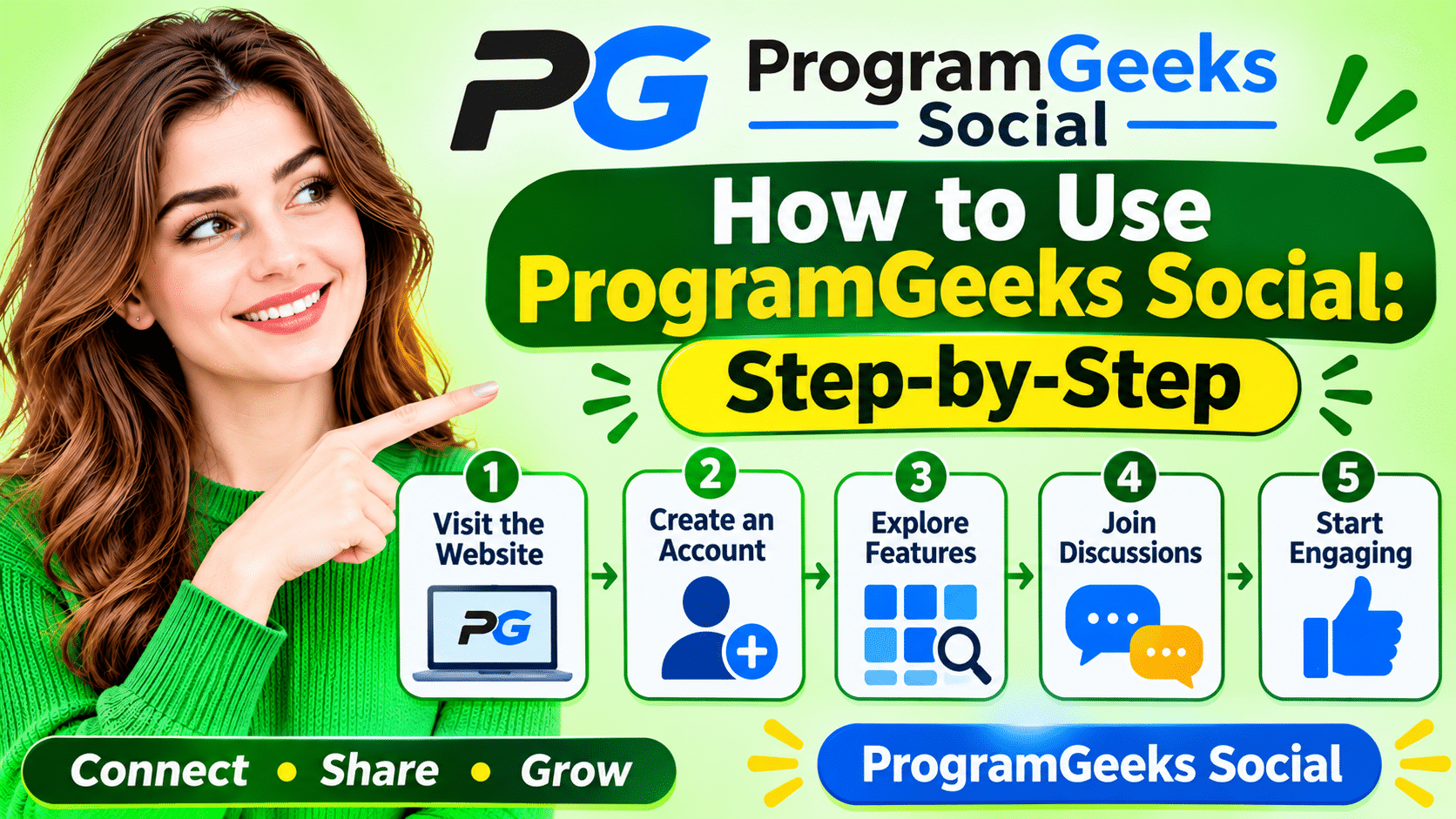
If you decide to try it, here’s a simple workflow based on the process most guides describe. Don’t overthink it.
Step 1: Sign Up Carefully
Create an account. Use a unique password and, if you can, a separate email you don’t mind exposing. Since the platform’s official status isn’t clearly confirmed, don’t hand over sensitive information on day one.
Step 2: Build a Solid Developer Profile
Include the basics:
- Your main programming languages and tools
- Your experience level (be honest, beginners are welcome)
- A short bio of two or three sentences about what you’re building or learning
- Links to your GitHub or portfolio
Step 3: Join Relevant Communities
Pick two or three groups that match your actual interests. Joining twenty is a good way to ignore all of them.
Step 4: Share a Project
Start small. A weekend script, a UI component, a bug you finally solved. Add a short write-up explaining what it does and what you struggled with. People respond to honesty more than polish.
Step 5: Engage Before You Promote
Comment on other people’s work first. Answer a question. Give feedback. The developers who grow on community platforms are usually the ones who give before they ask.
Step 6: Network Consistently
Ten minutes a day beats a three-hour binge once a month. Follow people whose work you respect and keep the conversation going.
ProgramGeeks Social vs LinkedIn vs GitHub
Developers always ask this, and it’s a fair question. These platforms do different jobs.
| Platform | Primary Purpose | Strength | Weak Spot |
|---|---|---|---|
| ProgramGeeks Social | Community discussion and project sharing | Developer-centric environment, peer learning | Limited verified information, smaller reach |
| Professional networking | Access to recruiters and hiring managers | Technical content gets lost in general feeds | |
| GitHub | Code hosting and version control | Real code, real contribution history | Not built for casual conversation |
The honest take: it won’t replace GitHub or LinkedIn. One community thread asked whether ProgramGeeks Social could replace traditional coding platforms, and the thread had zero replies. That tells you something about where it sits in the ecosystem. Use it as a supplement, not a substitute.
Benefits of ProgramGeeks Social (When It Works Well)
- Distraction-free focus. Technical content gets priority over general noise.
- Faster learning. Real people reviewing your work beats watching another tutorial.
- Confidence building. Participating regularly makes you more comfortable sharing ideas.
- Personal branding. Consistent posting builds a recognizable name in niche circles.
- Collaboration opportunities. Side projects and open-source contributions often start with a casual conversation.
Common Mistakes and Misconceptions

A few things people get wrong about ProgramGeeks Social:
Mistake 1: Assuming it’s an established, verified platform.
Some articles read like official product pages, but independent sources say there’s no confirmed registration or official recognition. Check for yourself.
Mistake 2: Confusing the three “ProgramGeeks” terms.
ProgramGeeks, ProgramGeeks Social, and ProgramGeeks Social Media News are related but not the same thing. Mixing them up leads to wrong expectations.
Mistake 3: Treating it as a job board.
It’s a community first. Recruiters may or may not be there. LinkedIn is still the better bet for job hunting.
Mistake 4: Posting once and disappearing.
Community platforms reward consistency. One post and silence gets you nowhere.
Mistake 5: Sharing sensitive code or credentials.
Never post API keys, private repos, or client work. This applies everywhere, but it’s worth repeating.
See more:What Was 12 Hours Ago From Now
Is ProgramGeeks Social Safe and Legit? A Practical Checklist
Since confirmed information is limited, run a quick check before committing:
| Check | What to Look For |
|---|---|
| Privacy policy and terms | Clearly written and easy to find |
| Contact information | A real way to reach the team |
| Account controls | Ability to delete your data and account |
| Community activity | Recent, genuine posts, not only generic content |
| Independent mentions | Reviews from sources outside the platform itself |
Browse before you sign up. If the content looks thin or copy-pasted, move on.
Related Topics Worth Exploring
If this topic interests you, these are natural next reads:
- Best developer communities for beginners (Stack Overflow, Dev.to, Reddit’s programming communities)
- How to build a developer portfolio that actually gets noticed
- Open-source contribution guides for first-timers
- Personal branding for programmers on LinkedIn and X
- Programming social media news and how to follow tech trends without drowning in noise
Who Should Use ProgramGeeks Social?
It may suit you if you are:
- A student looking for peers and practice feedback
- A self-taught developer who wants community without the corporate vibe
- A freelancer hoping to build visibility
- A tech enthusiast who likes following new tools and trends
It’s probably not your main channel if you need verified recruiter access, enterprise credibility, or deep code collaboration. For those, stick with LinkedIn and GitHub.
Frequently Asked Questions
What is ProgramGeeks Social?
ProgramGeeks Social is described as a community and networking platform for developers, programmers, and tech learners. People use it to share projects, discuss coding topics, and connect with peers.
Is ProgramGeeks Social free to use?
Most guides don’t list clear pricing, so check the platform directly. Don’t assume anything about costs or premium features until you see them on the official site.
Is ProgramGeeks Social the same as ProgramGeeks Social Media News?
No. ProgramGeeks Social focuses on developer networking and community. ProgramGeeks Social Media News covers updates about social platforms, trends, and digital tools for a wider audience.
Can ProgramGeeks Social replace GitHub or LinkedIn?
No. GitHub is for hosting code and version control, and LinkedIn is for professional networking and hiring. ProgramGeeks Social works better as a supplementary community space.
Who should join ProgramGeeks Social?
Students, beginners, freelancers, and tech enthusiasts who want a focused place to share work and learn from others. Verify its legitimacy and privacy practices before sharing personal information.
Conclusion
ProgramGeeks Social is positioned as a developer-first community where you can share projects, swap feedback, and build connections. The idea is solid, and the use cases are real. Peer learning works.
But go in with open eyes. Official details are limited, the platform is far smaller than the big names, and the online coverage leans promotional. Try it as a low-risk supplement to the tools you already use, protect your personal data, and judge it by the quality of the actual conversations, not the blog posts praising it.