
Snap buttons are a dependable fastening solution, but they aren’t the best fit for every project. Some fabrics require a gentler closure, while certain designs call for a cleaner appearance or a fastening option that’s easier to use. Fortunately, there are plenty of effective alternatives to choose from. In this guide, you’ll discover the best snap button alternatives, learn how each option works, and find out which fastening solution is best suited to your fabric, design, and project needs.
Key Takeaways
- Snap buttons work well for many projects, but alternatives like zippers, Velcro, magnetic closures, buttons, and ties can perform better depending on fabric type and use.
- Material, size, and strength should guide your choice of any fastener — not just snap buttons.
- Proper installation and regular maintenance extend the life of any closure, no matter which type you choose.
- For baby clothing, spring snaps or KAM plastic snaps are often preferred over heavy-duty metal snaps due to gentler hold and lighter weight.
What Are Snap Buttons?
Snap buttons (also called press studs, poppers, or dome fasteners) are two-part fasteners — a male stud and a female socket — that click together when pressed and release when pulled apart. They come in metal, plastic, and resin, and are widely used in jackets, baby clothes, bags, and home accessories. They are fast to use, require no buttonhole, and hold well under normal stress.
However, they are not ideal for every situation. On very delicate fabrics, the prongs can cause tearing. On thick materials, the socket may not grip firmly. And for users with limited hand strength, pressing snaps open and closed can be difficult. This is where alternatives become valuable.
Types of Snap Buttons (Before You Switch)
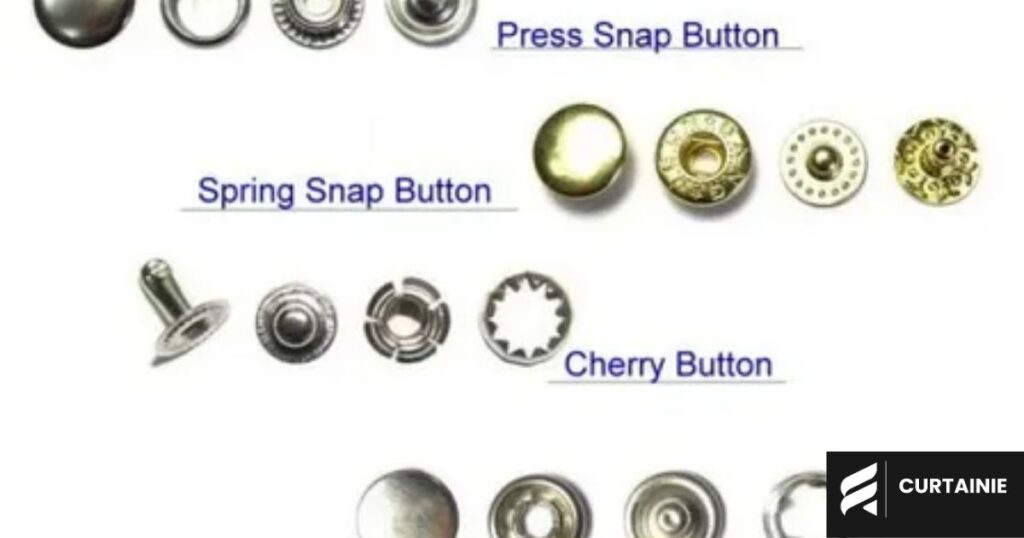
Before choosing an alternative, it helps to know your snap options. There are three main types:
1. Utility (Ring) Snap
This is the standard metal snap, applied with a hammer and setting tool. It is durable and strong — ideal for heavy fabrics like denim, canvas, and vinyl. Not recommended for baby garments or delicate fabric as the hold can be too stiff and may cause tearing on thinner material.
2. Spring Snap
A spring snap has a small internal spring in the socket that gives a gentler, more controlled grip. It snaps and unsnaps more smoothly than a ring snap, making it better suited for delicate fabrics and lighter garments. The trade-off is a slightly taller profile and higher cost per snap.
3. Prong (Open-Ring) Snap
Prong snaps use small triangular prongs that fold into the fabric to hold the snap in place. They sit low-profile, making them popular for baby bodysuits and inseam closures. Because the prongs pierce the fabric directly, use interfacing on thinner or layered materials to prevent tearing.
4. KAM Plastic Snap
KAM snaps are colorful plastic snaps applied with plier-style tools instead of a hammer. They are lightweight, affordable, come in dozens of colors, and are very popular for baby clothes and bibs. They offer a gentler hold than metal snaps and are easy to install at home without specialized equipment.
Top Alternatives to Snap Buttons
If snap buttons do not suit your project, here are the best alternatives — with honest pros and cons for each.
1. Zippers
Zippers provide a long, continuous closure ideal for jackets, bags, dresses, and fitted garments. They create a clean, smooth edge and hold very securely along the entire length.
- Pros: Strong hold, neat finish, available in many lengths and styles (coil, metal, invisible).
- Cons: Can feel stiff or scratchy against skin; more complex to install than snaps; not ideal for very young children’s clothing.
2. Velcro (Hook-and-Loop Tape)
Velcro is one of the easiest closures to use — press together to close, pull apart to open. It is adjustable and requires no tools to fasten, making it excellent for people with limited dexterity and for active or adjustable-fit items.
- Pros: Quick, adjustable, no tools needed, great for activewear and children’s shoes.
- Cons: Can collect lint and lose grip over time; the rough side can snag delicate fabrics in the wash; not suitable for formal or high-end fashion.
3. Magnetic Closures
Magnetic closures use embedded magnets that attract each other to form a secure but effortless seal. They are popular in handbags, wallets, and premium accessories. The closure feels smooth and modern with no visible hardware on the outside.
- Pros: Elegant look, very easy to use, self-aligning, ideal for bags and structured garments.
- Cons: Not suitable near pacemakers or electronic devices; adds slight thickness to fabric layers; check wash-care instructions as strong magnets can interfere with washing machine sensors.
4. Traditional Buttons
Sew-through buttons and shank buttons have been used for centuries for good reason. They are durable, easy to replace, look polished, and work on almost any fabric. They come in sew-through and shank styles, and in every material from plastic to shell to wood.
- Pros: Classic look, widely available, easy to sew on, suitable for formal and everyday garments.
- Cons: Requires buttonholes, which add time and skill; slower to fasten than snaps or Velcro; not ideal for one-handed dressing.
5. Ties and Drawstrings
Ties and drawstrings use fabric strips or cords to secure an opening by tying or pulling. They are common in casual wear (hoodies, sweatpants, lounge shorts) and work well when an adjustable fit is more important than a precise closure.
- Pros: Highly adjustable, soft against skin, no tools needed, great for relaxed and activewear garments.
- Cons: Can come undone during activity; not suitable for structured garments or bags that need a firm closure.
6. Hooks and Eyes
Hooks and eyes are small, discreet metal fasteners commonly used at the top of zippers, on waistbands, or on bra closures. They provide a low-profile hold that lies flat against the fabric.
- Pros: Very flat and discreet, strong hold for a single point, ideal for waistbands and formal garments.
- Cons: Small and fiddly to fasten; not suitable as a primary closure along a long opening; can bend out of shape with heavy use.
How to Choose the Right Closure for Your Project
Use these four factors to guide your decision:
- Fabric type: Delicate fabrics need soft, gentle closures (ties, spring snaps, buttons). Heavy fabrics can handle metal snaps, zippers, or hooks.
- Frequency of use: Items opened and closed many times daily need durable, reliable fasteners. Zippers and metal snaps hold up well to heavy use.
- User ease: For children, elderly users, or people with limited dexterity, Velcro and magnetic closures offer the easiest experience.
- Aesthetic: For a clean, minimal look on bags and structured garments, magnetic closures or invisible zippers work best. For a classic garment look, buttons remain the most versatile choice.
Quick Comparison: Snap Buttons vs. Alternatives
Here is a side-by-side overview of the most common options:
Closure Type Best For Ease of Use Durability
Metal Snap Heavy fabrics, workwear Moderate Very High
KAM Plastic Snap Baby clothes, bibs Easy Moderate
Zipper Jackets, bags, fitted garments Moderate High
Velcro Activewear, children’s items Very Easy Moderate
Magnetic Closure Bags, structured garments Very Easy High
Traditional Button Shirts, jackets, formal wear Moderate High
Ties / Drawstrings Casual wear, hoodies Easy Moderate
Hooks and Eyes Waistbands, formal edges Difficult Moderate
Read more:what are people replacing vertical blinds with
Frequently Asked Questions (FAQs)
Q1: What is the easiest alternative to snap buttons for baby clothes?
KAM plastic snaps are the easiest alternative for baby clothes. They are lightweight, colorful, and applied with a simple plier tool — no hammer needed. They have a gentle hold that is easy for parents to open and close, and they do not scratch or irritate a baby’s skin. If you prefer to avoid snaps entirely, Velcro (hook-and-loop tape) is another excellent option for bibs and sleep sacks.
Q2: Can I replace snap buttons with magnets on a bag?
Yes. Magnetic closures are one of the best replacements for snap buttons on bags. They give a premium, effortless feel and are available in various sizes and finishes (silver, gold, antique brass). Just make sure the bag fabric is thick enough to support the magnet — most magnetic closures require a reinforcing washer or interfacing on the inside to prevent pulling or tearing.
Q3: Are zippers stronger than snap buttons?
In most cases, yes. A zipper distributes tension along its entire length, making it harder to force open accidentally. A snap button holds at a single point, which means enough pull force can pop it open. For garments or bags that face strong stress — like jacket fronts or sports bags — a zipper is usually the stronger, more reliable choice.
Q4: What can I use instead of snap buttons on delicate fabric?
For delicate fabrics like chiffon, silk, or lace, the best alternatives are small sew-on buttons with hand-stitched buttonholes, fabric ties, or small hooks and eyes. These options do not require piercing the fabric with prongs or applying pressure with a hammer — both of which can damage fine material. Spring snaps can also work if you add a layer of interfacing beneath the snap site for reinforcement.
Q5: Which snap button alternative is best for heavy-duty workwear or outdoor gear?
Heavy-duty metal zippers or large metal ring snaps (also called utility snaps) are the best choices for workwear and outdoor gear. Both resist rust, handle repeated stress, and hold up in harsh conditions. Metal zippers made from brass or aluminum are especially reliable on jackets and pockets where the closure must stay secure during physical activity
Conclusion
Snap buttons are a practical, versatile fastener — but knowing when to use an alternative is just as important as knowing how to install a snap. Zippers win for durability and clean edges on fitted garments. Velcro wins for speed and ease on active or everyday wear. Magnetic closures win for premium bags and structured accessories. Traditional buttons win for timeless, polished garments that need a classic finish.
Match your closure to your fabric, your user, and your design — and test on a scrap piece before committing to the final garment. The right fastener makes your project look better, last longer, and function exactly as intended.
1 thought on “Snap Button Alternatives for Fabric and Crafts”