
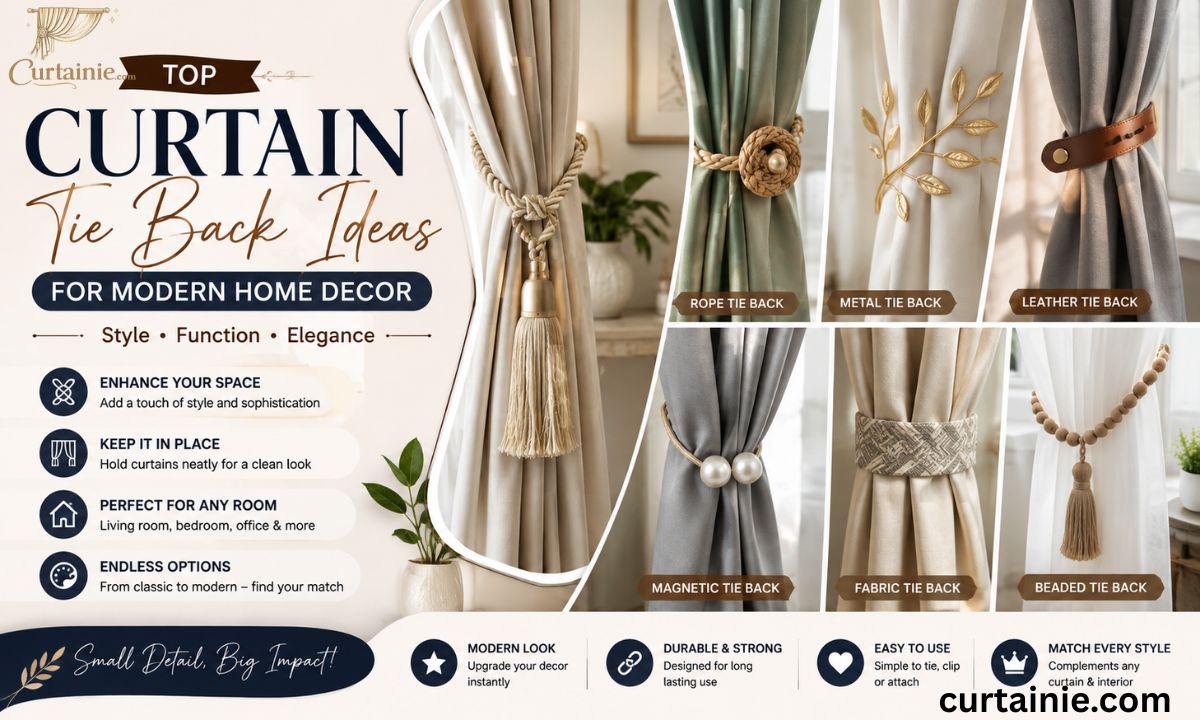
Curtains do a lot of visual work in a room, but the small hardware that holds them open often gets overlooked. A well-chosen tieback or holdback can turn a plain window into a styled focal point, control how much light enters your room, and give even budget curtains a custom, tailored look.
In this guide, you’ll find five stylish curtain tieback and holdback ideas, the real difference between the two, correct placement height, and answers to the questions people ask most often when shopping for this small but mighty accessory.
Curtain Tiebacks & Holdbacks Explained
Before picking a style, it helps to know what you’re actually buying, because “tieback” and “holdback” aren’t interchangeable terms.
| Feature | Curtain Tieback | Curtain Holdback |
| Material | Fabric, rope, cord, tassel, ribbon | Metal, wood, resin (rigid) |
| Fixing | Wraps around the curtain panel | Mounted to the wall |
| Flexibility | Soft, adjustable, removable | Fixed position |
| Best for | Casual, layered, or decorative looks | Structured, formal, heavier drapes |
| Installation | Usually a small wall hook | Screws, drill, or no-drill wall clips |
A tieback is a soft furnishing, often braided rope, tasselled cord, or a strip of matching fabric, that loops around the curtain and secures to a small hook on the wall. A holdback is rigid hardware, typically metal or wood, fixed permanently to the wall, and the curtain simply rests behind it.
Neither is “better.” Tiebacks suit rooms where you want flexibility and softness, while holdbacks suit rooms where a fixed, architectural line matters more, think heavy velvet drapes in a formal living room or dining space.
Top 5 Curtain Tieback Ideas
Once you know the difference, choosing a style comes down to the mood you want the room to give off. Here are five directions that consistently work well.
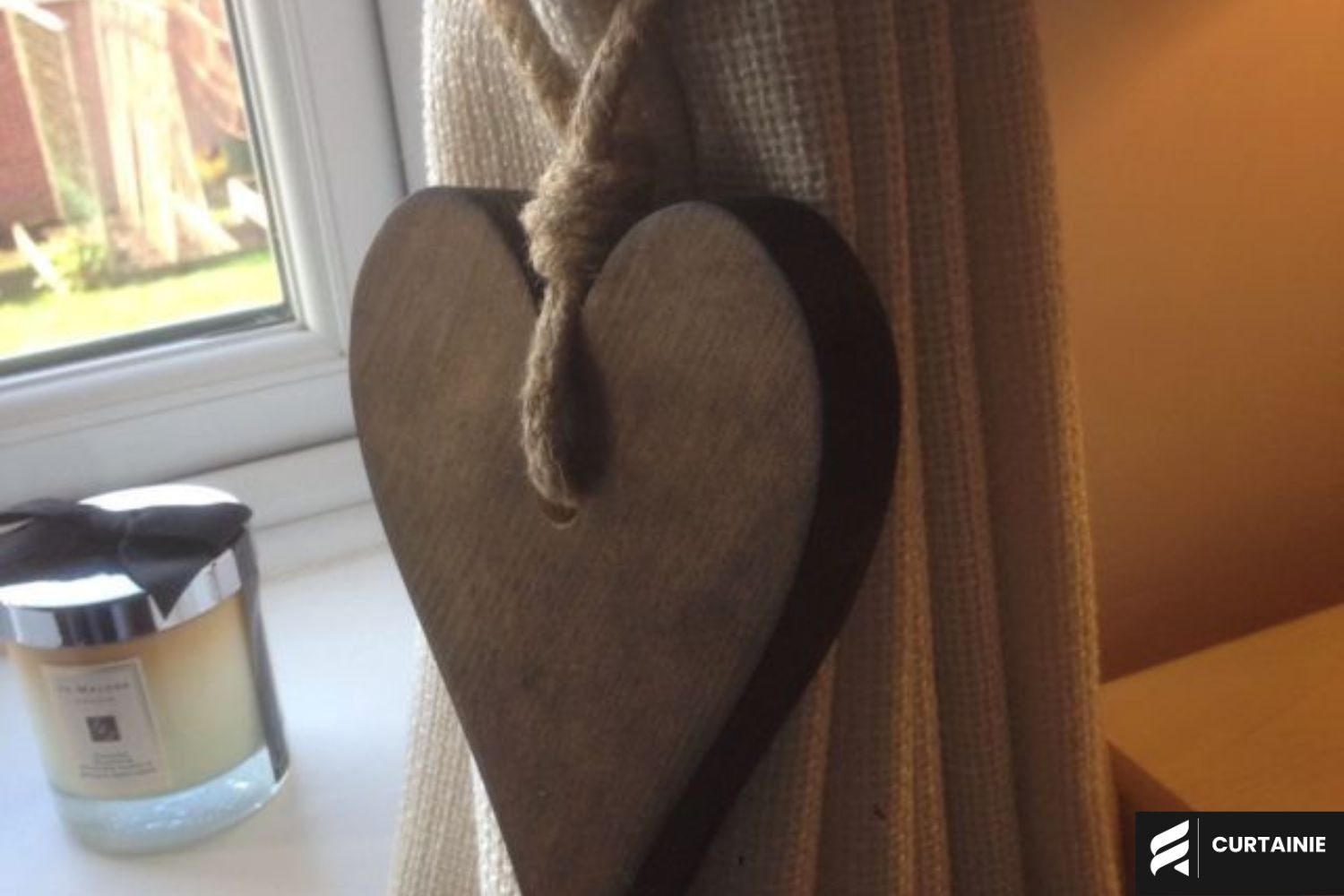
1. Natural Elements
Natural materials continue to dominate interior design, and curtain hardware is no exception. Wood holdbacks, jute rope, and woven rattan tiebacks bring texture without shouting for attention.
- Wood holdbacks suit minimalist or Japandi-style rooms and pair beautifully with linen curtains.
- Jute or hemp rope tiebacks work well in coastal, farmhouse, or organic-modern interiors.
- Stick to earthy tones, cream, sand, olive, and walnut, to keep the look cohesive.
This category is popular because it’s low-maintenance and blends into almost any existing colour scheme, which makes it a safe starting point if you’re unsure what else in the room might change later.
2. Romantic & Classic Tiebacks
For a traditional, formal feel, nothing beats a corded tieback with a tassel end. These are the tiebacks most people picture when they hear the word, and they remain a top choice for living rooms, dining rooms, and period-style homes.
- Choose thicker cord and larger tassels for heavy drapery.
- Match the tassel colour to trim, cushions, or wallpaper accents for a pulled-together look.
- Beaded or braided detailing adds a slightly more ornate, old-world character.
This style works especially well with floor-length curtains in silk, velvet, or heavy cotton blends, where the drape needs enough weight to hold a soft, curved swag.
3. Vintage & Rustic Looks
Vintage-inspired tiebacks add personality that off-the-shelf hardware rarely offers. This is also one of the easiest categories to DIY.
- Repurposed leather belts or leather strips give a rustic, saloon-style feel.
- Old skeleton keys, vintage doorknobs, or antique brooches make characterful holdback points.
- Chained beads or an upcycled necklace suit a shabby-chic or cottage interior.
Because most of these pieces are one-of-a-kind, no two windows in the house need to match exactly, which is part of the appeal for anyone who prefers a curated, lived-in look over a showroom finish.
4. Floral Influences
Floral tiebacks bring softness and a romantic, feminine edge to a room, and they work particularly well in bedrooms, nurseries, and garden-facing spaces.
- Silk or felt flowers attached to twine or ribbon create a delicate, handcrafted look.
- Fabric-flower tiebacks let you match the curtain’s own pattern for a coordinated finish.
- A single oversized bloom can act as a statement piece even on plain curtains.
This idea is popular right now because it adds colour and texture without needing to change the curtains themselves, an easy refresh for a tired room.
5. Boho Accents
Macrame and tasselled boho tiebacks have become one of the fastest-growing styles in home decor, largely because they suit both sheer and heavier curtains.
- Crochet or macrame tassels add texture and movement.
- Layered fringe or wooden bead accents suit eclectic, global-inspired interiors.
- Neutral, undyed cotton cord keeps the look airy rather than busy.
Boho tiebacks pair especially well with linen or gauzy sheer curtains, where the loose, textured knotting stands out against a soft, flowing fabric.
Holding It All Together: Getting the Placement Right
Even the most stylish tieback looks wrong if it’s positioned incorrectly. Placement affects both the visual proportion of your window and how much light the curtain lets in.
The most reliable guideline is the one-third rule: measure your curtain panel from top to bottom, divide by three, and mount the tieback or holdback that distance up from the floor (or the bottom hem).
| Curtain Length | Approximate Tieback Height from Floor | Look Created |
| 84 inches (standard) | 28–30 inches | Classic, gathered swag |
| 96 inches | 32–36 inches | Balanced, slightly higher line |
| 108–120 inches | 36–40 inches | Tailored for tall, floor-to-ceiling windows |
| Café curtains (24–36 in) | 12 inches from bottom | Casual, kitchen-style pull |
A few extra pointers worth knowing:
- Mount the hook or holdback 2 to 4 inches outside the window frame so the curtain drapes at a natural angle instead of cutting across the glass.
- Lower placement creates a dramatic, sweeping drape; higher placement gives a more casual, open look and lets in more light.
- Always keep hardware level and identical on both sides of the window for a symmetrical finish.
- For heavier fabrics like velvet or blackout linings, mount slightly higher, since the extra weight pulls the fabric down over time.
Curtain Tie Back Hooks
The hook is the unsung hero of any tieback setup. It’s what actually anchors the fabric or cord to the wall, and choosing the wrong one can undo an otherwise great design choice.
- Screw-in hooks are the most secure option and suit heavier curtains or permanent installations.
- No-drill, tap-in hooks grip into the wooden window frame with a light tap of a hammer, ideal for renters since they leave no wall damage.
- Adhesive hooks work only for very lightweight panels and shouldn’t be trusted with heavy drapery.
- Magnetic tiebacks skip hooks entirely, using hidden magnets to hold the curtain in place, useful if you open and close curtains often.
Match the hook’s finish (brass, matte black, brushed nickel, antique bronze) to your existing curtain rod and door hardware for a consistent, considered look throughout the room.
Unique Curtain Tieback Ideas
If you want something that doesn’t look like it came off a shelf, try one of these:
- A stuffed animal tied into a loop, playful and practical for a kids’ room.
- Old silk neckties repurposed as a dapper, unexpected tieback.
- A ring of vintage keys for a characterful, antique-shop feel.
- Chunky rope with a nautical knot for a coastal-themed room.
Modern Curtain Tieback Ideas
For a cleaner, more contemporary finish, simplicity wins.
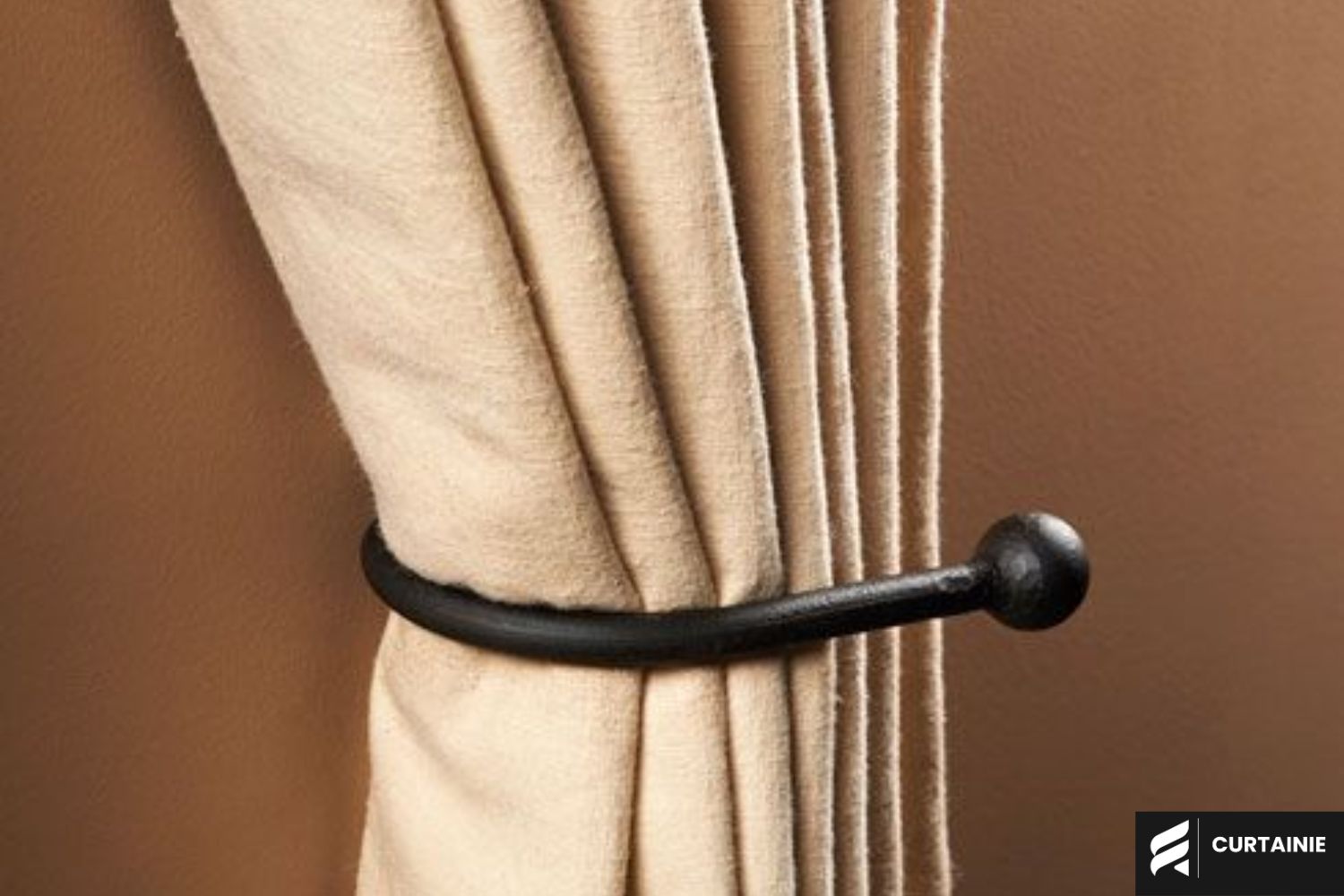
- Slim matte-black or brushed-brass metal holdbacks with a minimal silhouette.
- Solid-colour fabric tiebacks that match the curtain exactly, so the hardware nearly disappears.
- Geometric acrylic or resin holdbacks for a subtle, architectural accent.
Simple Curtain Tieback Ideas
Not every window needs an elaborate accessory. Some of the easiest, most budget-friendly options include:
- A length of leftover craft twine, tied in a single knot.
- Plain ribbon in a colour that complements your walls.
- A basic fabric strip cut from spare curtain material for a perfectly matched, no-cost tieback.
Curtain Tie Backs: Choosing What’s Right for Your Room
When shopping, weigh up three things: the weight of your curtain fabric, the formality of the room, and how often you’ll open and close the curtains. Heavy drapes need sturdier hardware; sheer or lightweight curtains can use almost any style without strain. Formal rooms lean toward corded tassels or metal holdbacks, while casual spaces suit rope, fabric strips, or boho tassels. If you tie and untie curtains daily, magnetic or hook-based tiebacks are far more practical than fixed holdbacks.
Read more:extra long shower curtain liner
FAQs
What’s the difference between a curtain tieback and a holdback?
A tieback is a soft, flexible accessory that wraps around the curtain, while a holdback is rigid, wall-mounted hardware that the curtain rests behind.
How high should curtain tiebacks be placed?
Use the one-third rule, roughly one-third of the curtain’s length up from the floor, which is about 28 to 30 inches for a standard 84-inch panel.
Can I install tiebacks without drilling into the wall?
Yes, no-drill tap-in hooks and magnetic tiebacks both secure curtains without permanent wall damage, making them ideal for rented homes.
Do curtain tiebacks work with sheer curtains?
Yes, lightweight rope, ribbon, or fabric tiebacks work especially well with sheers, since heavy metal holdbacks can look disproportionate against thin fabric.
How far should a tieback hook sit from the window frame?
Mount it 2 to 4 inches outside the frame so the curtain drapes at a natural angle and doesn’t block the glass.
Can I make curtain tiebacks myself?
Absolutely. Rope, ribbon, old belts, fabric offcuts, and even repurposed jewellery all make effective, low-cost DIY tiebacks.
Conclusion
Curtain tiebacks and holdbacks are a small detail with an outsized impact on how a room feels. Whether you lean toward natural wood and linen, classic corded tassels, vintage leather, floral softness, or boho macrame, the right choice comes down to your curtain’s weight, your room’s mood, and how you actually use the space day to day. Get the style and the placement right, and even the simplest curtains will look intentionally designed.