
Bay windows are one of the most striking architectural features a home can have. They extend outward from the wall, invite natural light from multiple angles, and create a natural focal point in any room. But when it comes to dressing them with drapes, many homeowners feel stuck. Which rod do you use? Should all three panels match? How do you handle the corners?
At Curtain Chronicles, we have spent years testing every combination of fabric, hardware, and heading style for bay windows. This complete guide answers every question you have — from choosing the right curtain rod to picking the perfect fabric, layering for light control, and styling the space like a professional interior designer.
Whether your bay window overlooks a garden, a busy street, or a quiet courtyard, the right drapes will transform it into the most beautiful part of your home.
What Makes Bay Window Drapes Different?
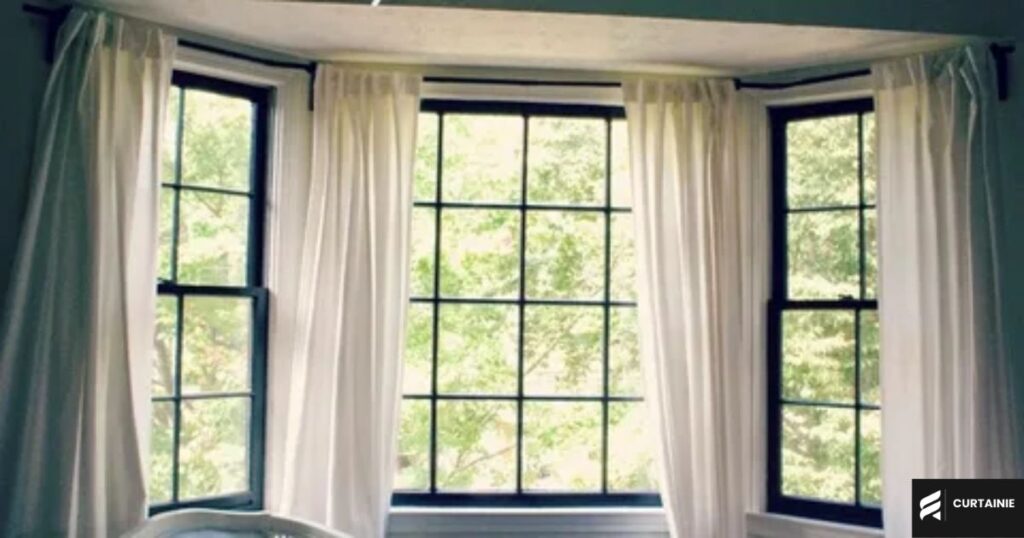
Unlike a standard flat window, a bay window extends outward in three or more angled sections. This unique structure means you cannot simply hang a single straight rod and drape fabric across it. Bay window drapes need to follow the angles of each panel, respect the depth of each section, and still look unified from inside the room.
The three main sections of a bay window — a wide center panel and two angled side panels — each need to be addressed individually. Ignore this, and your drapes will bunch awkwardly at the corners, hang unevenly, or look like an afterthought rather than a design decision.
When done right, however, bay window drapes become the most impactful design feature in any room. They frame a natural sitting area, soften large expanses of glass, manage light beautifully throughout the day, and add layers of texture and warmth that flat walls simply cannot offer.
Choosing the Right Hardware for Bay Windows
Hardware is where every successful bay window drape setup begins. The wrong rod causes fabric to bunch at corners, hang unevenly, or slide poorly. The right rod makes everything else straightforward.
Curved and Flexible Rods
A curved or flexible curtain rod bends to follow the exact angle of your bay window. These rods are specifically designed for bay setups and are the most practical choice for anyone who wants the drapes to flow naturally from section to section without gaps or awkward folds at the corners.
When installing a flexible rod, measure each panel section separately, bend the rod slowly to match your wall angle, and mount the brackets at consistent heights so the rod sits level all the way across. This small amount of preparation makes the finished result look custom and intentional.
Individual Straight Rods Per Section
Some homeowners prefer to hang one straight rod per panel — three separate rods, each mounted to its own section of the bay. This approach gives you more control over each panel and makes it easy to open and close one section independently. The trade-off is that the joins between rods can sometimes look less seamless unless the curtain panels overlap slightly at each corner to conceal the gap.
Ceiling-Mounted Tracks
For a clean, contemporary look, ceiling-mounted tracks are an excellent choice for bay windows. A slim track follows the bay angle precisely, the fabric glides smoothly along it, and from inside the room the overall look is architectural and minimal. If your ceiling height allows it, mounting the track close to the ceiling elongates the wall visually and makes the entire room feel taller and more spacious.
Pro Tip: Always hang your hardware 10 to 15 centimeters above the window frame, not on the frame itself. This draws the eye upward, creates a sense of height, and makes your bay window feel more dramatic than its actual dimensions suggest.
Best Fabric Choices for Bay Window Drapes
Fabric choice is the single most important decision you will make for bay window drapes. The right fabric determines how light enters the room, how private the space feels, how the drapes move when you open and close them, and how the whole setup holds up over time.
Linen and Natural Weaves
Linen is our top recommendation at Curtain Chronicles for bay window drapes. It hangs beautifully, filters light softly without blocking it completely, and its natural texture adds warmth to a space that can otherwise feel very glass-heavy. Linen drapes look relaxed in casual living rooms and refined in more formal settings — the difference comes down to the heading style you choose rather than the fabric itself.
Natural weaves like cotton-linen blends and textured cotton also work well for bay windows. They are durable, easy to launder, and available in a wide range of colors and patterns to suit any interior style.
Velvet and Heavy Weaves
For bay windows in bedrooms or in rooms where strong light control is a priority, velvet drapes offer a luxurious solution. Heavy velvet falls in clean vertical folds, insulates well in colder climates, and gives the bay window a dramatic, high-end appearance. The natural weight of velvet also helps the fabric hang straight without needing additional stiffeners or heavy lining.
Pair velvet drapes with a ceiling-mounted track for the smoothest operation — the weight of velvet can make eyelet or tab top headings difficult to slide on curved rods.
Sheer and Lightweight Fabrics
Sheer panels are one of the most popular choices for bay windows because they allow natural light to flood in while still providing softness and a sense of privacy during the day. A sheer voile or lightweight cotton muslin in white or cream transforms a bay window into a glowing focal point in any room.
The most versatile setup for bay windows is a layered approach: hang a light sheer panel behind a heavier drape on a double rod or double track. This gives you full control over mood, light, and privacy at any time of day. In the morning, draw back the heavier panels and let the sheers do the work. In the evening or at night, close everything for complete privacy and a warm, enclosed atmosphere.
Heading Styles That Work Best for Bay Windows
The heading is the top portion of the curtain — where the fabric attaches to the rod or track. It determines how the fabric gathers, how it moves, and how formal or relaxed the final look feels. For bay windows, heading choice also affects how well the drapes navigate the angles of the frame.
Eyelet Headings
Eyelet or grommet headings are among the most popular choices for bay windows because the metal rings glide smoothly along a curved or flexible rod. The folds are uniform and clean, and the overall appearance is contemporary and unfussy. If your room has a modern, Scandinavian, or minimalist aesthetic, eyelet headings are the natural choice.
Pinch Pleat Headings
Pinch pleat headings create a tailored, elegant look with structured folds that hang in precise vertical lines. They work well on both tracks and poles and give bay window drapes a more formal, finished appearance. Pinch pleats suit traditional interiors, period homes, and any space where you want the drapes to feel considered and luxurious.
Tab Top and Tie Top Headings
Tab and tie top headings offer a relaxed, casual look that suits cottages, country-style homes, and informal living spaces. Because the fabric loops directly over the rod rather than sliding on rings, these headings do not glide as smoothly as eyelet or pleat styles. For bay windows that are more decorative than heavily functional, however, they add a charming, handcrafted quality that works beautifully.
Five Styling Ideas for Bay Window Drapes
1. Floor-to-Ceiling Drama
Hang your drapes from as close to the ceiling as possible and let them fall all the way to the floor — or allow them to pool slightly for a luxurious effect. This approach maximizes the visual impact of the bay window, creates a sense of grandeur, and makes smaller rooms feel significantly larger. Use a single coordinated fabric across all three bay sections for a unified, seamless look that feels custom-made.
2. Layered Light Control
Install a double rod or double track and hang sheer panels on the inner layer with heavier drapes on the outer layer. This is one of the most practical and stylish setups for bay windows that receive changing light throughout the day. The sheer layer softens morning light beautifully while the outer layer provides complete privacy and light block when needed.
3. Bay Window Seat Styling
If your bay window has a built-in seat or window bench beneath it, frame the nook by hanging drapes on either side of the outer bay panels and leaving the central section open. This creates a cozy alcove effect where the seat sits within a soft frame of fabric. Add coordinating cushions in the same color family as the drapes to create a cohesive, intentional vignette that invites people to sit and stay.
4. Cornices and Valances
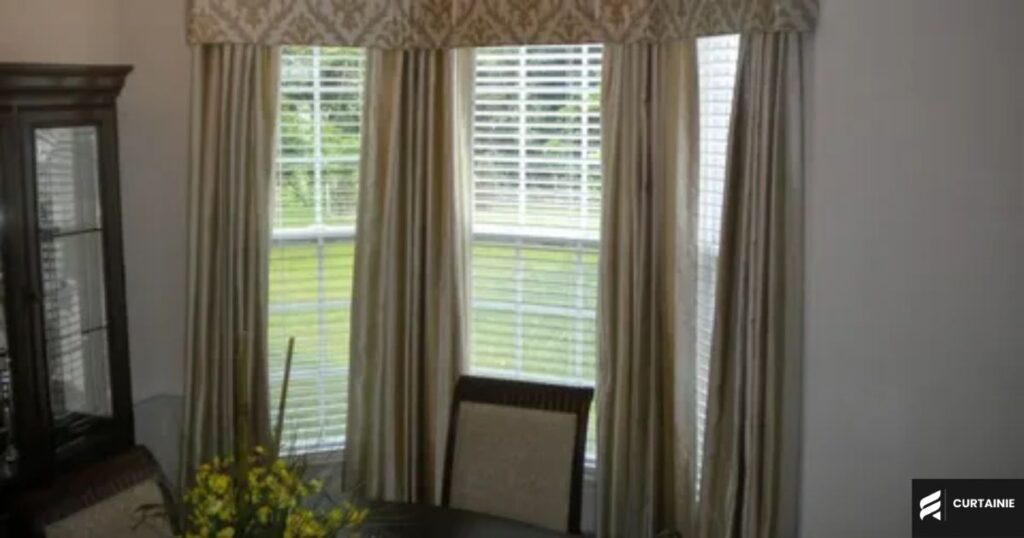
Adding a structured cornice box or softly pleated valance above the bay window gives the entire setup a finished, architectural quality. A cornice hides the rod and header hardware completely, creating a clean top line that makes the drapes look custom-built. Valances add softness at the top and work particularly well with traditional, romantic, or country-style interiors.
5. Drape Ties and Holdbacks
Using drape ties or brass holdbacks to pull the panels back during the day completely changes the character of the bay window. Tied-back drapes create a graceful hourglass shape that softens the window frame, allows maximum light into the room, and keeps the fabric controlled and elegant. Choose silk ties for a formal room, jute rope ties for a natural or rustic look, or vintage brass holdbacks for a classic, refined finish.
Color and Pattern Tips for Bay Window Drapes
Choosing the right color for bay window drapes can feel overwhelming given how much visual space they occupy. At Curtain Chronicles, we follow one simple rule: start with the floor.
Find a color that appears in your rug, your flooring, or your largest piece of furniture and build your drape color from there. When the curtain fabric echoes a tone already present in the room, the whole space feels designed rather than assembled. Neutral tones like warm white, soft linen, sage green, dusty blue, and charcoal work well in most bay window settings because they complement rather than compete with the view outside.
For pattern, bay windows can carry more visual weight than flat windows because the three-dimensional structure breaks up the fabric. Subtle patterns like a quiet stripe, a small geometric, or a soft botanical print work well. Bold, large-scale patterns should be used carefully — they can look striking on floor-length drapes but overwhelming if the bay window is already a complex feature in the room.
Eco-Conscious Drape Choices for Bay Windows
Beautiful interiors and responsible sourcing can absolutely go hand in hand. For bay window drapes, several sustainable fabric options perform just as well — or better — than conventional alternatives.
Organic linen, hemp weave, and recycled cotton blends all hang beautifully, age gracefully, and carry a significantly lower environmental footprint than synthetic fabrics. Natural dye options have improved considerably in recent years, meaning you no longer have to compromise on color depth or range when choosing eco-conscious drapes.
For lining, look for thermal linings made from recycled polyester. They improve the energy efficiency of your home by insulating the glass while using less virgin material in production. An added benefit: thermally lined drapes reduce outside noise, which is especially valuable for bay windows that face a busy road or street.
How to Measure Your Bay Window for Drapes
Accurate measurement is essential for bay window drapes because the angled sections mean standard measurements do not translate directly. Follow these steps for the best result:
- Measure each bay section separately. Note the width and height of each panel — do not treat the bay as a single flat window.
- Measure from bracket to bracket where your rod will sit, not from wall to wall.
- Decide on your drop. Measure from the rod position to your preferred finish point: just above the sill for a clean look, to the floor for an elegant finish, or 2 to 3 centimeters pooling on the floor for a luxurious effect.
- Calculate fabric width. Multiply each section width by 1.5 to 2.5 times depending on how full you want the gathers to look.
- Order extra. Always order 10 to 15 percent more fabric than your measurements suggest. Bay windows consistently require more fabric than initial calculations indicate, and having a little extra gives you flexibility during installation and hemming.
Read More: curtain ideas for large living room windows in depth review
Frequently Asked Questions
Q1. What type of curtain rod is best for a bay window?
A flexible or curved curtain rod is the best choice for bay windows.
Q2. Should bay window curtains be floor-length or sill-length?
Floor-length drapes almost always look more elegant and intentional in a bay window.
Q3. Can I use the same curtain fabric for all three bay panels?
Yes, using the same fabric across all three bay panels is the most cohesive and visually unified approach.
Q4. How much fabric do I need for bay window drapes?
Always order 10 to 15 percent more fabric than your measurements suggest for bay windows.
Q5. What is the easiest bay window curtain style to maintain?
Eyelet-headed cotton blend drapes on a flexible rod are the easiest bay window curtain style to maintain.
Final Thoughts
Bay window drapes are one of the most rewarding home styling projects you can undertake. The combination of angle, light, and depth creates a canvas that flat windows simply cannot match. When you invest in the right hardware, choose a fabric that suits the character of your room, and take time to measure each section properly, the result is a window treatment that looks completely custom — because it genuinely is.
Start with the hardware. Let the fabric follow. Do not be afraid to layer. Bay windows reward a considered, patient approach every single time.