
Large living room windows are one of the most coveted features in any home. They flood your space with natural light, frame stunning outdoor views, and create an airy, open atmosphere that smaller windows simply cannot replicate. But when it comes to dressing those oversized panes, most homeowners hit a wall — quite literally.
The wrong curtains can make a grand window look awkward, shrink a room visually, or completely undermine the style you’ve worked hard to build. The right curtains, on the other hand, do something almost magical: they frame the window like a painting, add warmth and texture, and tie the entire room together.
This in-depth review covers everything you need to know about curtain ideas for large living room windows — fabric choices, hanging methods, popular styles, color palettes, budget options, and common mistakes to avoid. Whether you’re renovating from scratch or simply refreshing your space, this guide gives you the confidence to make smart, lasting choices.
Why Large Windows Demand Special Curtain Attention
Standard curtain advice simply doesn’t scale up. A 36-inch window and a 96-inch window are not the same challenge, and treating them identically is one of the most common decorating mistakes people make.
Large windows require more fabric, which means more visual weight. They need stronger curtain rods and brackets to bear the load. The drop height matters more — a curtain that barely grazes the floor on a small window looks fine; on a large floor-to-ceiling window, a sloppy hem is immediately noticeable. Additionally, large windows often need to balance two competing goals: maximizing light during the day and ensuring complete privacy at night.
Understanding these unique demands is the first step to choosing curtains that actually work.
1. Floor-to-Ceiling Curtains: The Gold Standard
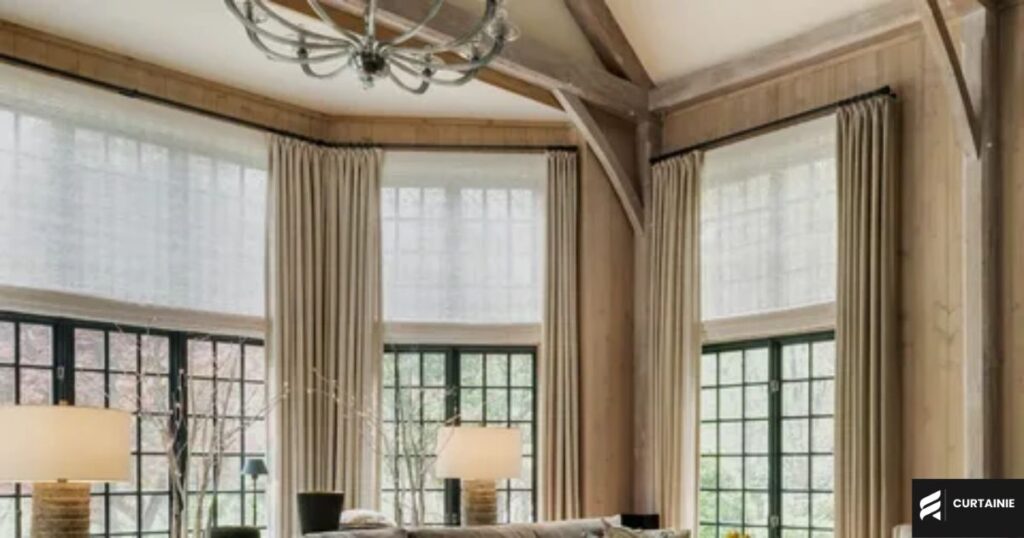
If your living room has tall windows — anything from 8 to 12 feet or beyond — floor-to-ceiling curtains are almost always the best choice. They elongate the walls, create a sense of grandeur, and make even a modest room feel like a luxury space.
The key rule: hang the curtain rod as close to the ceiling as possible, not just above the window frame. This simple technique draws the eye upward and makes the ceiling appear higher than it actually is. Ideally, your curtains should just kiss the floor or pool very slightly — about half an inch to one inch of break is the classic look. A dramatic pool of two to three inches reads as intentionally luxurious.
For floor-to-ceiling installations, linen, velvet, and heavyweight cotton are the top fabric choices. Linen brings a relaxed, organic feel perfect for contemporary and Scandinavian-inspired spaces. Velvet adds depth and opulence, particularly beautiful in jewel tones like emerald, navy, or burgundy. Heavyweight cotton sits between the two — easy to wash, relatively affordable, and versatile across styles.
2. Layered Curtains: Sheer + Blackout Combination
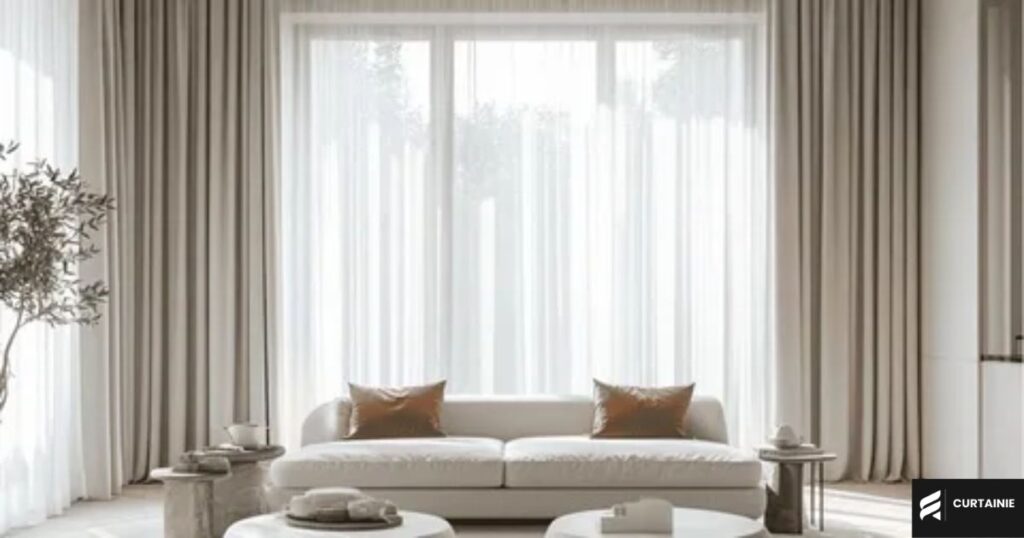
One of the most practical and visually rich approaches for large living room windows is layering. The concept is straightforward: a sheer curtain closest to the glass filters light softly during the day, and a heavier curtain or blackout panel pulls over it in the evening for privacy and darkness.
This two-layer system gives you complete control over light and atmosphere without sacrificing aesthetics. During the morning, pull back the heavy panels and let the sheers diffuse soft, flattering light. In the evening, draw everything closed for a cozy, intimate feel.
For large windows, double curtain rods are essential for this look. They hold both layers on a single system rather than requiring two separate installations. When choosing sheers for large windows, go with crisp white, off-white, or soft grey tones — these amplify light rather than competing with it. For the outer layer, consider linen, velvet, or thermal-lined panels in a complementary or contrasting tone.
3. Grommet Top vs. Pinch Pleat vs. Rod Pocket: Which Header Works Best?
The curtain header — the way the fabric attaches to the rod — has a bigger impact on the final look than most people realize. For large windows, this choice is especially important because you’re dealing with more fabric and more visual presence.
Grommet Top Curtains
feature metal rings punched through the fabric at the top, creating clean, casual waves. They’re easy to open and close, which makes them practical for large windows where you’re frequently adjusting the panels. The look is modern and relaxed, well-suited to contemporary and transitional living rooms.
Pinch Pleat Curtains
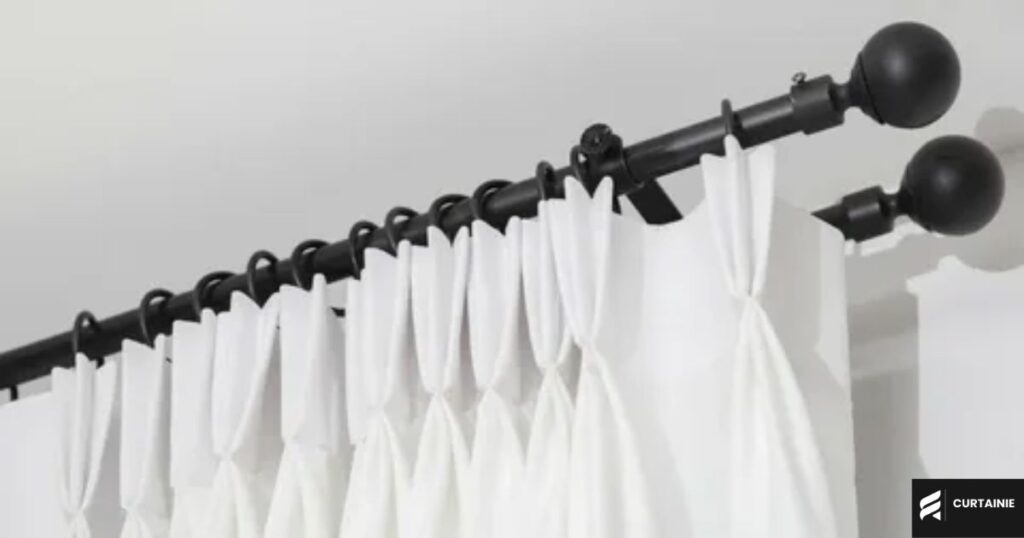
are the traditional choice for formal spaces. The fabric is gathered into neat pleats at set intervals — single, double, or triple pleat — creating a structured, tailored appearance. For large windows, pinch pleats add a sense of architecture and craftsmanship. They require more fabric than grommet styles, which actually works in your favor with oversized windows because the fullness looks intentional and luxurious.
Rod Pocket Curtains
have a sewn channel at the top through which the rod is threaded directly. The result is a soft, gathered look with minimal hardware visible. They work beautifully for stationary, decorative panels on very large windows but are not practical for windows you need to open and close frequently, since sliding rod-pocket panels creates friction and wears out the fabric.
Recommendation
For large living rooms, pinch pleat is the most timeless choice for formal or traditional rooms, while grommet top suits casual, modern spaces perfectly.
4. Best Fabrics for Large Living Room Windows
Fabric selection is where aesthetics and function converge. For large windows, the wrong fabric can look limp, cheap, or simply overwhelmed by the scale.
Linen
remains one of the most popular choices for a reason. Its natural texture adds visual interest without competing with other design elements. Linen drapes beautifully, holds its shape, and becomes softer with washing. The slight wrinkles that develop over time read as intentional and relaxed rather than untidy.
Velvet
is the choice for rooms that lean into drama and richness. For large windows, velvet’s weight means it hangs flawlessly without any additional lining, and its light-absorbing quality makes colors appear more saturated and intense. Navy velvet curtains on a large window can anchor an entire room’s color scheme.
Cotton and Cotton Blends
offer the widest range of price points and styles. Lighter cottons work well for casual spaces, while heavier cotton canvas or twill gives a more substantial look appropriate for larger windows.
Silk and Faux Silk
are best reserved for living rooms that aren’t in direct sunlight — genuine silk degrades quickly with UV exposure. Faux silk (polyester) can mimic the sheen beautifully and is far more practical. For a formal living room with large windows that receive morning light, silk or faux silk panels in champagne, ivory, or blush make an extraordinary statement.
Sheer Fabrics
voile, chiffon, and lightweight linen — work best as the inner layer in a two-panel setup rather than as standalone treatments on large windows, where they may appear insubstantial on their own.
5. Colors and Patterns: What Works at Scale
Color choice for large window curtains follows a few key principles that differ from advice you’d apply to smaller windows.
Monochromatic Tones
are the safest and most sophisticated choice. Choosing a curtain color that closely matches your walls creates a seamless, expansive visual effect. Rather than breaking up the room, the curtains become part of the architecture. This works particularly well in neutral palettes — warm whites, soft greiges, and pale taupes.
Bold Contrast
can be spectacular when done with intention. A deep charcoal curtain against pale walls draws the eye immediately, framing the window as the room’s focal point. Rich jewel tones — forest green, terracotta, cobalt — bring warmth and personality to large, potentially cold spaces with oversized windows.
Pattern Considerations
Large-scale patterns can work on large windows, but only if the pattern’s repeat complements the curtain’s proportions. Avoid small, busy patterns — at the scale required for large windows, these can look chaotic. Geometric prints, wide vertical stripes, and oversized botanical prints are all strong options. Vertical stripes deserve special mention: they naturally draw the eye upward and are one of the most effective ways to emphasize ceiling height.
6. Curtain Length: A Precise Guide
Getting the length right on large windows is non-negotiable. There are three accepted curtain lengths, each communicating a different aesthetic intent:
Just Above the Floor (Half-Inch Break)
The classic choice. Curtains terminate just kissing the floor — clean, precise, and polished. Works best in high-traffic rooms where curtains will be opened and closed frequently.
Floor-Grazing Pool (1–2 Inches)
A relaxed, casual elegance. Perfectly suited to linen and cotton curtains in laid-back, conversational living rooms.
Dramatic Pool (3–5 Inches)
Reserved for formal spaces, rarely-moved decorative panels, and rooms with a deliberate theatrical quality. Velvet and heavy linen pull this off beautifully.
Avoid at all costs
Curtains that hang six inches or more above the floor. This is universally considered a decorating error, particularly on large windows where the proportion mismatch is glaringly obvious.
7. Hardware and Rods: Carrying the Weight
Large curtains are heavy, and your hardware must be up to the task. Lightweight tension rods will bow under the weight of floor-to-ceiling velvet panels, and the result is both ugly and eventually damaging to your walls.
For large windows, use heavy-duty steel or wrought iron curtain rods rated for the weight of your chosen fabric. The rod should extend at least six inches beyond the window frame on each side — this allows curtains to stack completely off the glass when open, maximizing the window’s light-letting potential.
Brackets should be installed into wall studs, not just drywall. For very wide windows, a center support bracket prevents bowing. Finials — the decorative end caps on the rod — should be proportional to the rod diameter and the room’s scale. Oversized finials on a large window look intentional and designed; small finials can appear lost.
8. Budget Tips Without Compromising Style
Large windows require more fabric, which can make curtain costs escalate quickly. Here are authentic, practical ways to achieve a high-end look without the premium price tag:
Use fewer, wider panels rather than many narrow ones. Two 100-inch-wide panels often look more sophisticated than four 50-inch panels and require less hardware. Invest in quality fabric for a single feature window and use simpler, more affordable options for secondary windows in the same room. Ready-made curtain panels in standard sizes can be customized with simple hemming or the addition of a contrast trim. Buying panels at the top of the standard size range (typically 108 inches) and having them professionally hemmed is often more economical than true custom work.
Common Mistakes to Avoid
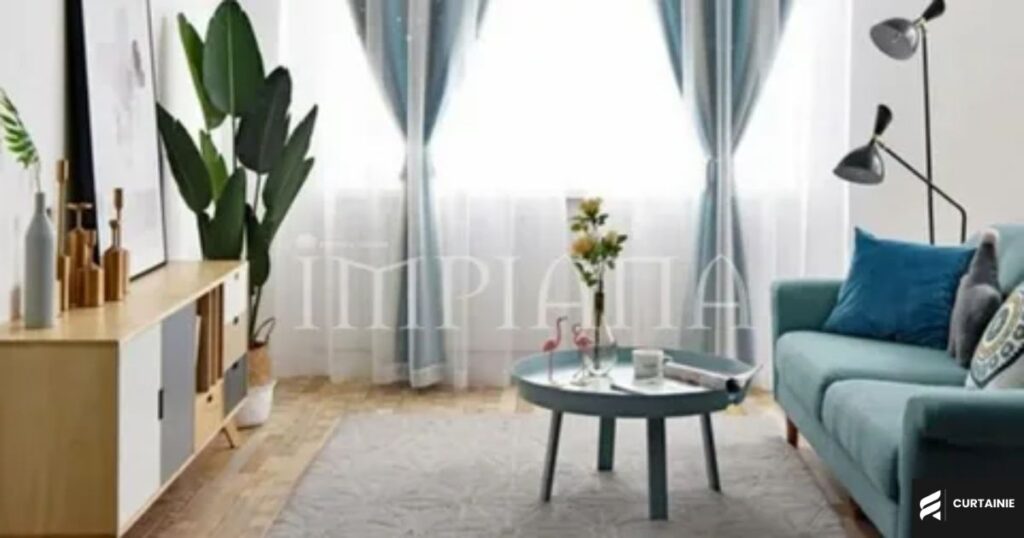
Hanging curtains too low — the rod should go near the ceiling, not just above the window frame. Choosing curtains that are too narrow — each panel should be at least 1.5 times the width of the space it covers when closed. Using thin, lightweight fabric on a very large window — it will appear limp and insubstantial. Ignoring lining — unlined curtains on large windows look flat; a good lining adds body, improves drape, and extends fabric life.
Read More: curtain chronicles wardrobe closet door drapes
FAQs
Q1: What type of curtains are best for very large living room windows?
Floor-to-ceiling curtains in heavyweight fabrics like velvet or linen, hung close to the ceiling, are the most effective and stylish choice for very large windows.
Q2: How wide should curtains be for large windows?
Each curtain panel should be 1.5 to 2 times the width of the area it needs to cover to ensure proper fullness and an expensive, tailored look.
Q3: Should large window curtains touch the floor?
Yes — curtains that just kiss the floor or pool slightly look intentional and polished, while curtains that stop short look like a decorating mistake at any window size.
Q4: Can I use patterned curtains on large living room windows?
Yes, but stick to large-scale or bold patterns like wide stripes or oversized geometrics, as small busy prints look chaotic when repeated across a large expanse of fabric.
Q5: What curtain color works best with large windows to make a room look bigger?
Curtains in a tone that closely matches your wall color create a seamless look that visually expands the room rather than breaking it up.
Conclusion
Dressing large living room windows is one of the highest-impact decisions you can make in a home. The curtains you choose don’t just cover glass — they define the room’s proportions, control its atmosphere, and express your personal style at a scale that cannot be ignored.
The core principles are consistent: hang high, choose quality fabric, get the length exactly right, and use the scale of the window as an opportunity rather than a challenge. Whether you gravitate toward the relaxed elegance of floor-length linen, the drama of pooling velvet, or the practicality of a layered sheer-and-blackout system, there is a curtain solution that will make your large windows the most beautiful feature in your home.
Take your time, invest in the right hardware, and let the curtains do exactly what they’re meant to do — frame the view, and frame the life happening in front of it.Curtain Ideas for Large Living Room Windows: An In-Depth Review