
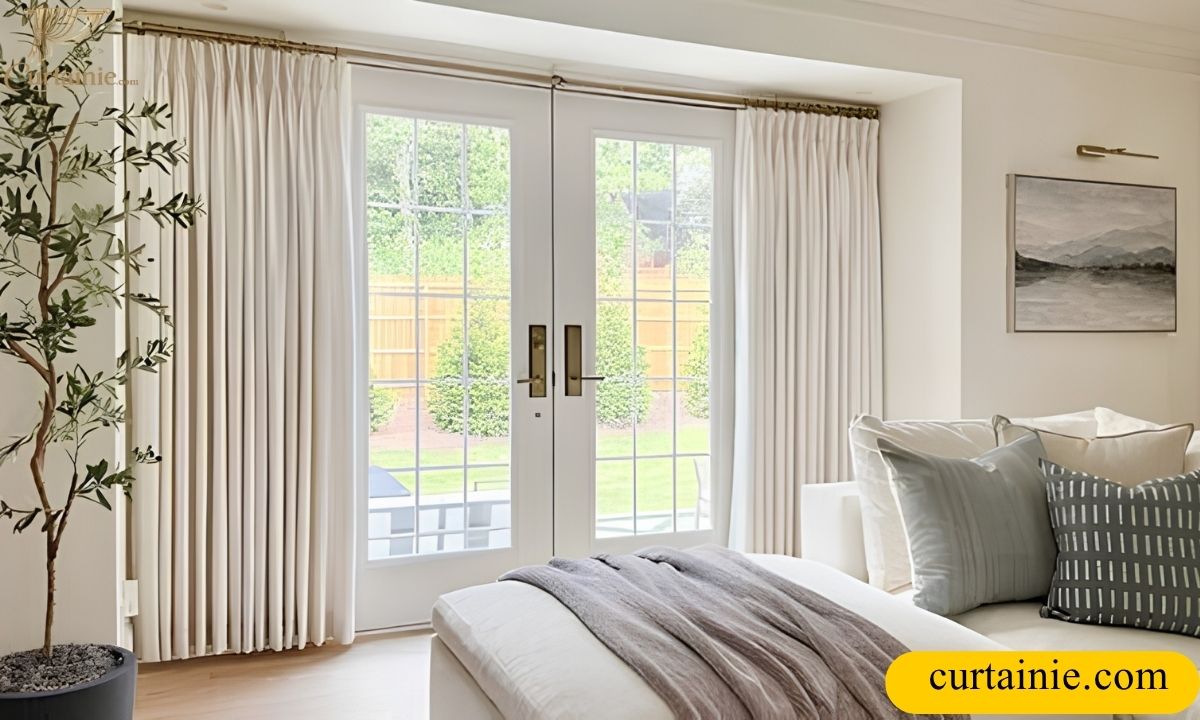
Sliding glass doors are one of the best features a home can have. They flood a room with natural light, open up sightlines to the backyard or patio, and make small spaces feel bigger. But when it comes time to dress that wall of glass, most homeowners hit a wall of confusion instead. Standard curtain rules don’t apply here — the door still needs to slide open every single day, and whatever you hang on it can’t get in the way.
This guide breaks down exactly which curtains and shades work best for sliding glass doors, why sliders need a different approach than a regular window, and how to measure and install each option correctly.
Quick Reference: Sliding Door Window Treatments at a Glance
| Treatment | Best For | Light Control | Insulation | Clears Doorway? |
| Extra-wide drapes on ceiling track | Daily use, effortless glide | Adjustable (with lining) | Moderate–High | Yes, stacks fully to one side |
| Extra-wide drapes on extended rod | Budget-friendly, easy install | Adjustable (with lining) | Moderate | Yes, if rod is long enough |
| Roller shades | Clean, minimal look | Sheer to full blackout | Low–Moderate | Yes, rolls up flat |
| Zebra shades | Rooms with changing light | Fully adjustable, no raising needed | Moderate | Yes, stays close to glass |
| Vertical cellular shades | Energy efficiency | Light filtering to blackout | High | Yes, slides horizontally |
| Layered shade + drape | Total control, layered look | Maximum flexibility | High | Yes, both layers clear separately |
Blackout curtains for bifold doors deserve a special mention here. Bifold and multi-panel sliding doors fold open in sections rather than sliding as one piece, so any drape needs even more stack-back room and a track (rather than a rigid rod) to follow that folding motion smoothly. A ceiling-mounted track with a blackout-lined panel is generally the safest bet for these doors, since it moves independently of the door’s own folding hardware.
Also read this curtain:Are Window Curtain Valances Out of Style in 2026?
Why Sliding Glass Doors Need a Different Approach
A sliding glass door isn’t just a big window — it’s a functional entryway you probably use multiple times a day. That changes the entire equation for choosing window treatments.
- Width. Sliders typically span 6 to 12 feet, far wider than a standard window, so off-the-shelf curtain panels rarely provide enough fabric fullness on their own.
- Daily operation. Whatever you hang has to open and close as easily as the door itself, without snagging on the handle or center support bracket.
- Full clearance. Fabric that hangs in front of the glass has to be able to stack completely off to one side (or both sides) so it never blocks your path in or out.
- Heat and glare. A large glass surface gains and loses heat faster than a standard window, so insulation and glare control matter more here than almost anywhere else in the house.
Because of these factors, hardware choice actually comes before fabric choice. Decide whether you want a track or a rod, and how far it needs to extend past the frame, before you start picking colors and patterns.
The Six Best Window Treatments for Sliding Glass Doors
Sliding Door Curtains
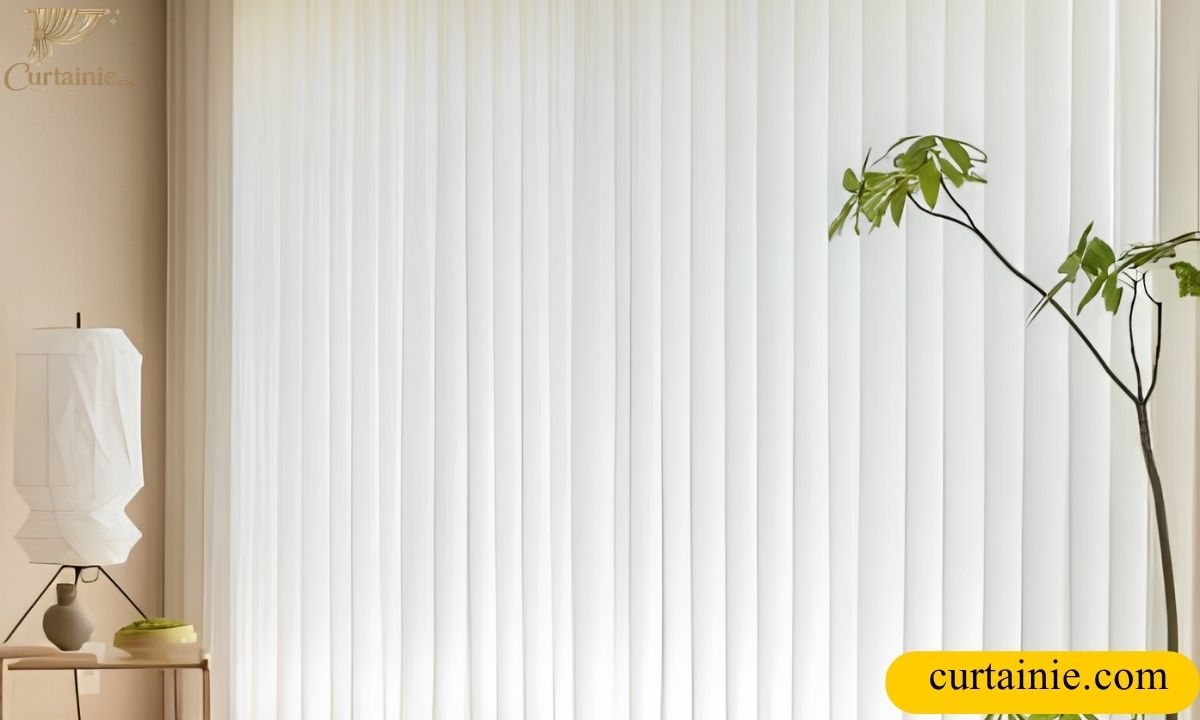
Curtains remain the most popular choice for sliding doors because they soften a large expanse of glass and add texture to the room. The two setups below cover almost every home.
1. Extra-Wide Drapes on a Ceiling-Mounted Track (Top Pick)
A ceiling-mounted track is the gold standard for sliding doors that get used constantly. Panels hang from small gliders that run along the track, so the fabric folds into a slim, tidy stack at one end and leaves the entire doorway open. Motorized versions let you open and close the drapes with a remote or smart-home app.
Why it works:
- No center support bracket to snag on
- Handles heavy, floor-length, or blackout-lined fabric without sagging
- Pinch pleat and ripple fold headers both glide smoothly and look tailored
Best for: Homes where the slider is used several times a day, or anyone who wants a hotel-quality, motorized finish.
2. Extra-Wide Drapes on an Extended Rod (Most Common)
If a track system feels like overkill, a traditional curtain rod is the simpler, more affordable route. Extend the rod 8 to 15 inches past the door frame on each side so the panels have somewhere to stack when open.
A few installation notes:
- Rods longer than roughly 60 inches usually need a center support bracket, which can block rings from sliding all the way across.
- The workaround is a split-draw setup — two separate panels that meet in the middle — or bypass rings designed to pass over the bracket.
- Grommet and back tab headers glide the most smoothly on a rod. Avoid rod-pocket styles for a door you open daily; the fabric bunches and drags.
Voile Curtains for Patio Doors
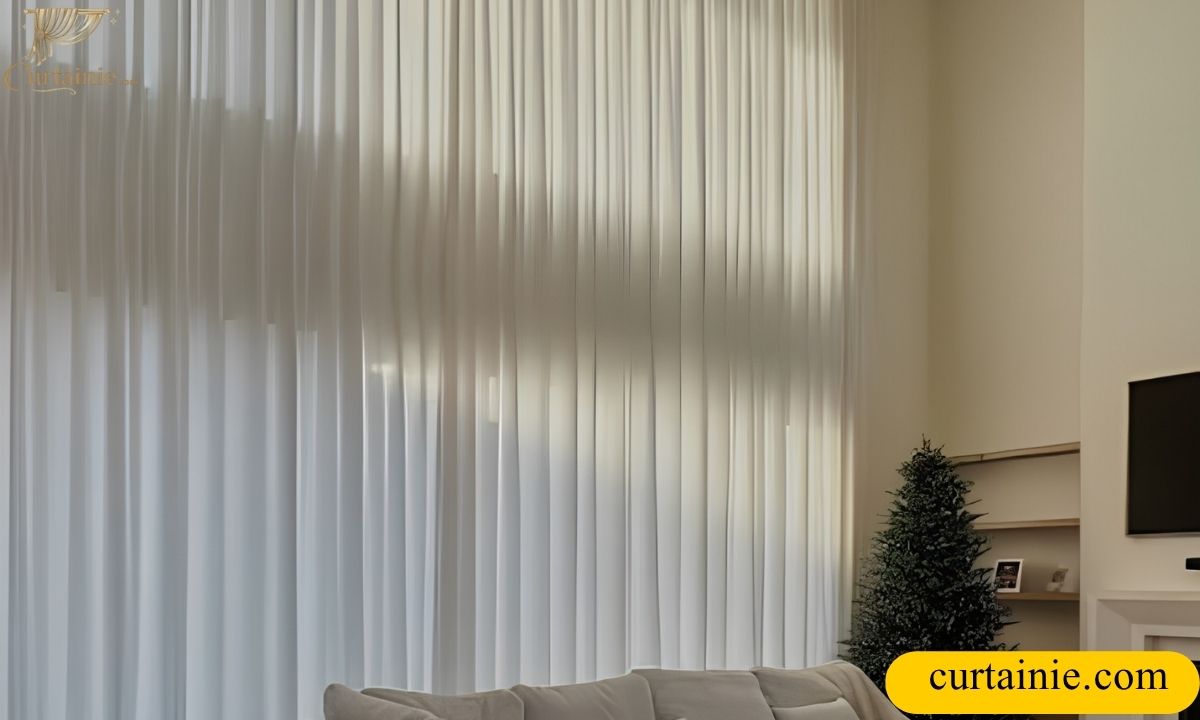
For a softer, everyday look, voile or linen-look sheers are worth considering as either a standalone treatment or the inner layer of a double setup. These lightweight fabrics filter harsh sunlight into a soft glow, offer daytime privacy by obscuring the view inward, and still let you keep a visual connection to the patio or garden beyond. They’re a favorite for coastal and casually styled homes, though they won’t do much for insulation or nighttime privacy on their own.
3. Roller Shades (Best Non-Fabric Option)
If drapery isn’t your style, roller shades mount close to the glass and roll up into a compact tube at the top, leaving the whole doorway clear. Fabric options range from solar weaves (which cut glare while preserving the outdoor view) to light-filtering and full blackout materials.
Roller shades are especially practical in kitchens, sunrooms, or anywhere you want a treatment that’s easy to wipe clean and doesn’t add bulk.
4. Zebra Shades (Best for Adjustable Light)
Zebra shades — also called banded or dual shades — use alternating sheer and solid fabric bands on a single roller. Sliding the bands to align or overlap shifts the room from bright and open to softly filtered to nearly blacked out, all without raising or lowering the shade.
This makes zebra shades a strong pick for living rooms and home offices where the light changes throughout the day, since you get fine-tuned control without constantly adjusting the shade’s height.
5. Vertical Cellular Shades (Best for Insulation)
Cellular shades — also known as honeycomb shades — are built from pleated fabric that forms small air-trapping pockets. Those pockets create an insulating barrier that reduces heat loss in winter and heat gain in summer, making this the most energy-efficient option on the list.
For sliding doors specifically, vertical cellular shades slide horizontally to match the door’s own motion, so they clear the opening the same way the door does. If your slider faces south or west and you’re feeling the temperature swing, this is the treatment to start with.
6. Layered: Inner Shade + Outer Drape (Full Control)
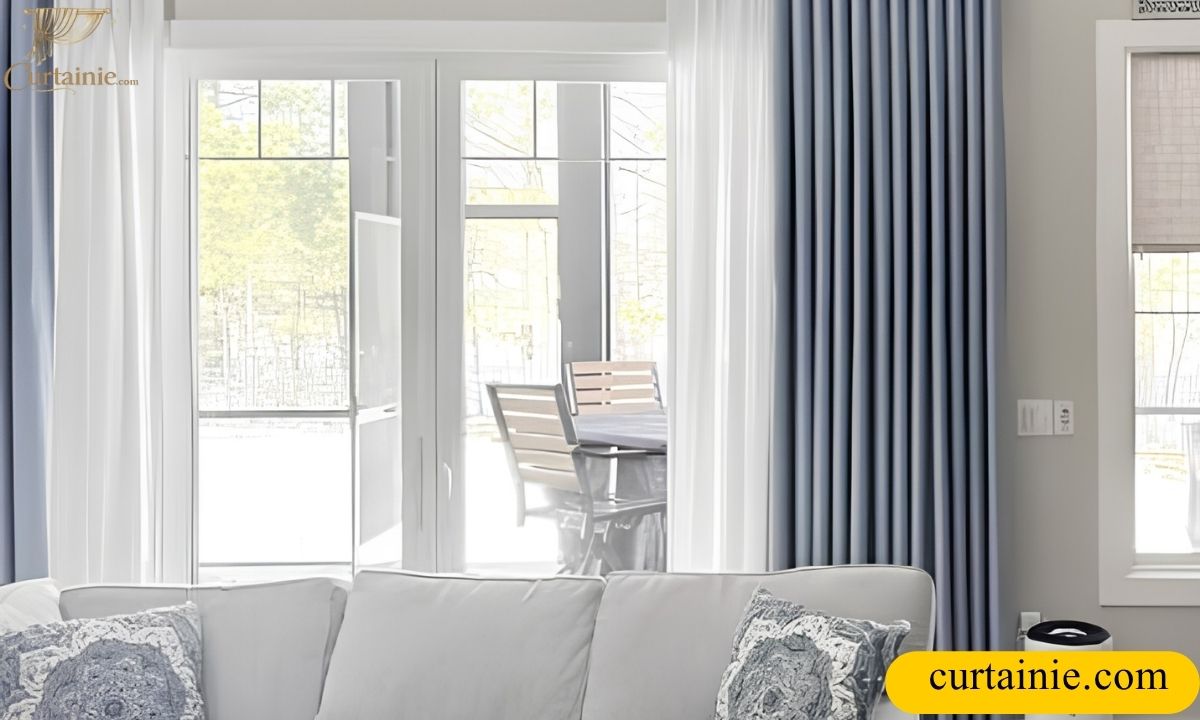
Sometimes one layer can’t do everything you need. Pairing a shade with a drape gives you both function and style:
- Inner layer: a roller shade, zebra shade, or cellular shade mounted close to the glass for daily light and privacy control.
- Outer layer: extra-wide drapes on a track or rod for texture, insulation, and a finished look.
This combination is popular in living rooms and primary bedrooms, where homeowners want the practicality of a shade during the day and the coziness of full drapery at night.
Quick Decision Framework
Use this simple framework if you’re still deciding:
- Do you use the door daily? → Prioritize a track system or extended rod with a header that glides easily.
- Is energy efficiency your top concern? → Choose vertical cellular shades.
- Do you want changing light control without constant adjustment? → Choose zebra shades.
- Do you want a clean, minimal, easy-to-clean look? → Choose roller shades.
- Do you want both softness and function? → Layer a shade with a drape.
- Is the door a bifold or multi-panel design? → Stick with a track-mounted blackout drape that moves independently of the door’s folding hardware.
Modern Curtains for Sliding Doors
For a more contemporary look, pair a ceiling track with ripple fold drapery. Ripple fold headers create soft, uniform S-curves that stack tightly to one side, maximizing the visible glass when the curtains are open. Neutral linen blends, matte blackout linings, and slim aluminum tracks all read as modern rather than traditional, which is why this combination shows up so often in newer builds and renovated living spaces.
How to Measure Curtains for a Sliding Glass Door
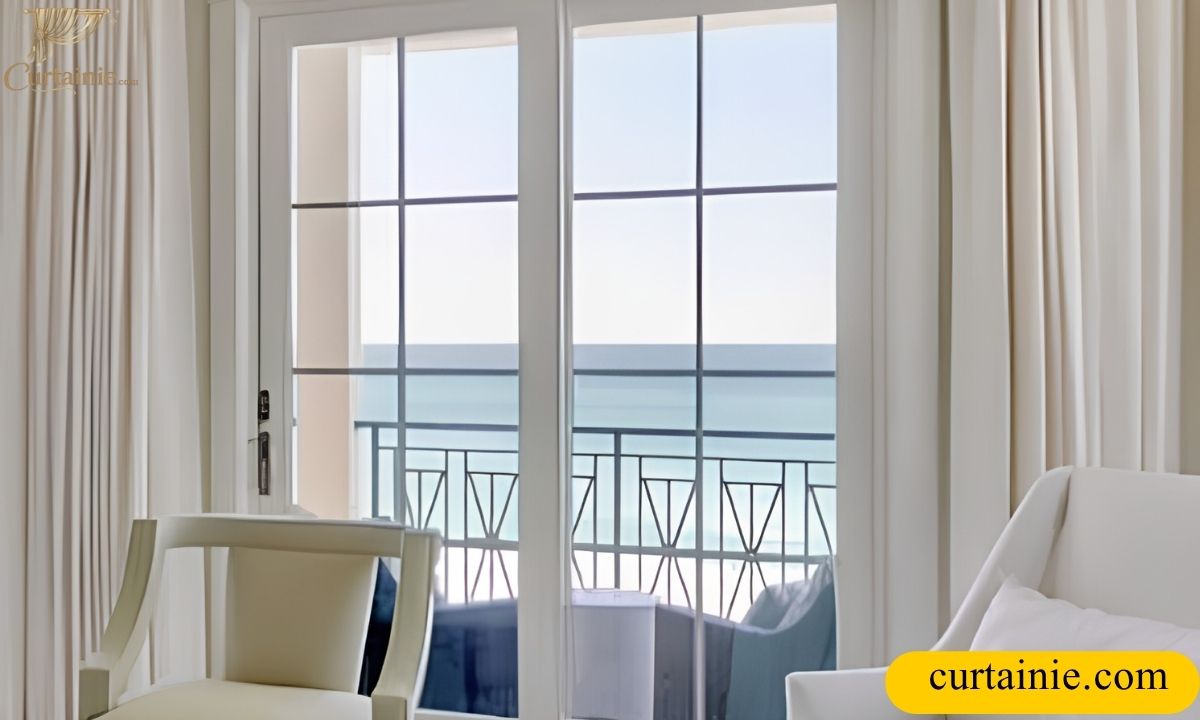
Getting the measurements right is what separates curtains that look intentional from curtains that look like an afterthought.
Measure the width of the door, including the frame or trim.
Add stack-back space. Extend your rod or track 8 to 15 inches past the frame on each side so panels have somewhere to go when open.
Calculate total panel width. For a full, gathered look, aim for roughly two to two-and-a-half times the width of the rod or track.
Measure the length from the top of the rod or track down to the floor. For a clean, tailored finish, curtains should just barely skim or float ½ to 1 inch above the floor.
Use at least two panels — one on each side of the door — so the fabric can stack away from the opening rather than covering it.
Double-check clearance by confirming the fully open stack of fabric doesn’t overlap the door’s sliding path.
Because sliding doors are wider and less standardized than typical windows, made-to-measure panels almost always fit better than off-the-shelf sizes.
Also read this curtain:Curtain Chronicles: The Complete Sliding Glass Door Drapes Guide
FAQs
How do you cover a sliding glass door with curtains?
Use a curtain rod extending 8–12 inches beyond the frame on each side, mounted above the door, with panels that stack fully to one side when open.
What is the best curtain length for sliding doors?
Floor-length panels that just skim or lightly puddle on the floor look best, typically ½ to 1 inch above the ground.
Can you put curtains on a bifold door?
Yes, curtains can hang over bifold doors using a tension rod or ceiling-mounted track that lets the panels bunch to one side without blocking the folding action.
How many curtain panels do I need for a sliding door?
Most sliding doors need two panels for a balanced look, though a single panel works if you only open the door from one side.
Should sliding glass door curtains touch the floor?
Yes, floor-length curtains give the cleanest, most polished appearance and help block drafts better than shorter panels.
Summary
Sliding glass doors deserve a different approach than standard windows because they’re wide, used constantly, and need full clearance to open. A ceiling-mounted track with extra-wide drapes is the top pick for daily use and a polished look, while an extended rod offers a simpler, budget-friendly alternative. If fabric drapery isn’t the goal, roller shades, zebra shades, and vertical cellular shades each solve a specific problem — clean minimalism, adjustable light, and insulation, respectively. For homeowners who want it all, layering a shade with a drape delivers both function and style. Whichever direction you choose, measuring correctly and leaving enough stack-back room is what makes the finished result look — and work — like it was made for the door.