
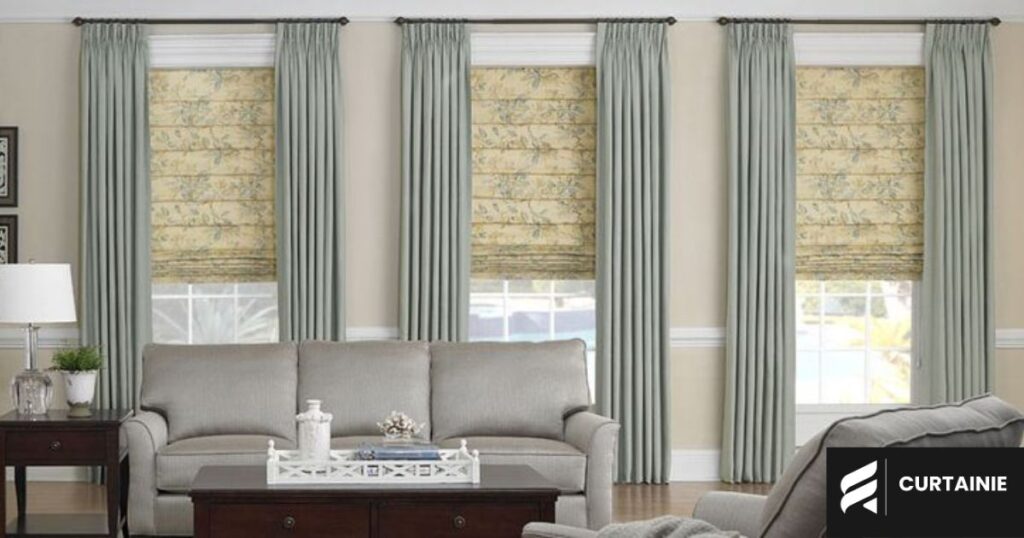
Combining Roman shades with curtains is a timeless way to create a stylish, layered window treatment that balances beauty and function. Roman shades provide a clean, tailored appearance with excellent light control, privacy, and energy efficiency, while curtains add softness, texture, and an elegant finishing touch. This versatile pairing complements every space, from spacious living rooms and bay windows to cozy bedrooms and French doors. By choosing the right fabrics, colors, and hardware, you can achieve a custom look that enhances your home’s décor while meeting your everyday needs. It’s no surprise this layered window treatment remains a top interior design trend in 2026.
Key Takeaways
• Start with Roman shades as a structured base layer, then add curtains for softness and depth. • Choose complementary colors, patterns, and textures to create a cohesive, polished look. • Mount curtain rods high and wide to frame the window and make it feel taller.
• Match hardware finishes across brackets and rings for a unified, intentional appearance. • Avoid common mistakes: clashing patterns, incorrect lengths, heavy fabrics, and low rod placement. • Consider motorized Roman shades for tall or hard-to-reach windows — you will actually use them daily.
The Beauty of Roman Shades
Roman shades are a timeless window treatment known for their sleek, tailored look. Made from a single piece of fabric that folds neatly when raised, they create a clean architectural feel that instantly elevates any layered window setup. They are available in a wide range of fabrics — from sheer linen to blackout materials — making them versatile across every room style.
Benefits of Roman Shades
• Excellent light control — adjust from full daylight to complete blackout.
• Added insulation — keep rooms warmer in winter and cooler in summer.
• Privacy options — choose lined, blackout, or light-filtering materials.
• Customizable — available in hundreds of fabrics, patterns, and colors.
The Charm of Curtains
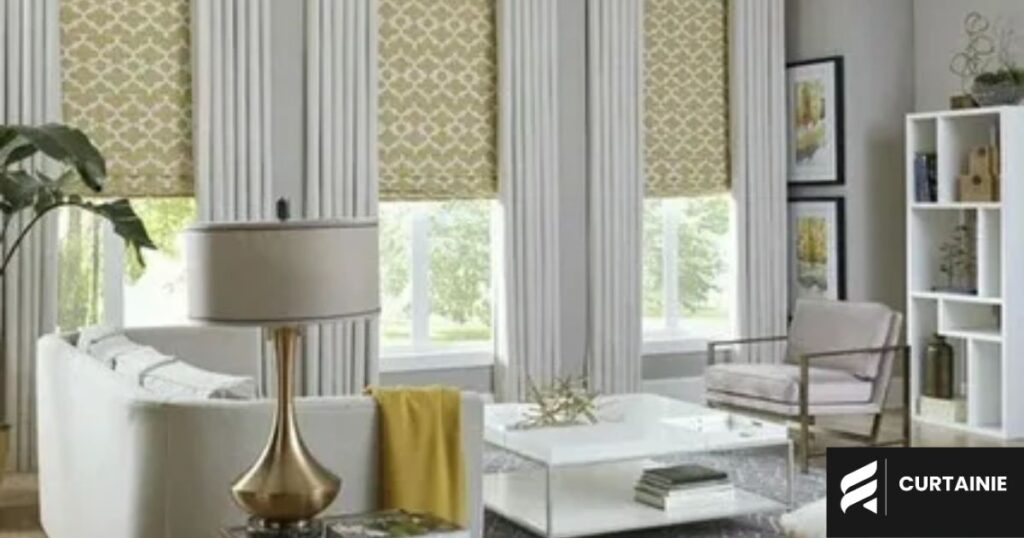
Curtains add instant softness and elegance to any space. Even a simple panel can make a room feel more finished. They are available in a wide range of fabrics, colors, and styles — from sheer voile to heavy velvet — making them easy to tailor to any decor. When layered over Roman shades, curtains provide a soft frame to the window while keeping the look neat, practical, and visually rich.
Benefits of Curtains
• Easy to change — quickly refresh the look of a room without a full makeover.
• Add depth and texture when layered over shades.
• Create a cozy, inviting atmosphere with the right fabric choice.
• Available in floor-length panels that visually raise ceiling height.
Best Combinations by Room
Living Room
Light-filtering Roman shades paired with patterned linen curtains. Enjoy filtered daylight during the day and full privacy at night.
Bedroom
Blackout Roman shades with thick, flowing drapes. Ensures total darkness for better sleep, plus warmth and a cocoon-like feel.
Dining Room
Solid silk or cotton Roman shades with elegant floor-length curtains. Elevates formality while allowing softer mood lighting.
Nursery / Media Room
Motorized blackout-lined Roman shades with heavy curtains. Complete light blocking with smart-home convenience.
Home Office
Light-filtering shades with neutral curtains. Reduces glare on screens while keeping the space feeling bright and professional.
How to Pair Roman Shades with Curtains
Choose Complementary Fabrics & Colors
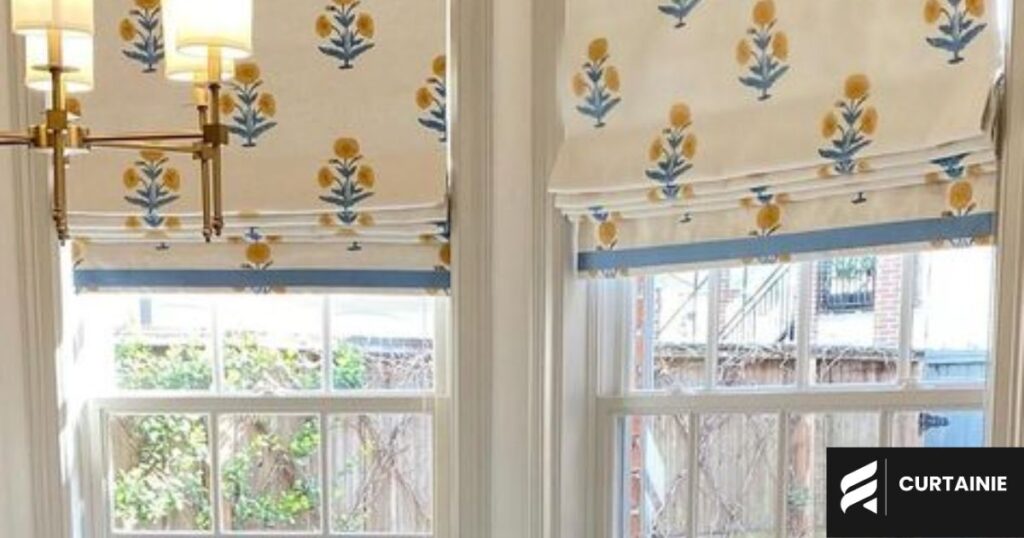
Stick to the same color family for a cohesive look, then vary textures for depth. A neutral Roman shade pairs beautifully with patterned curtains — and vice versa. For example, a flat-fold cotton shade keeps the base clean and structured, while velvet curtains add a rich, upscale finish.
Pair Two Solids
Pick a dominant accent color from your decor and choose a complementary second shade. Since curtains are visible when closed, color matters constantly. Add visual interest through trims like ribbon, pom-poms, fringes, or tassels on the leading edges.
Pair Solids with Patterns
A solid Roman shade with patterned curtains — or a patterned shade with solid drapes — is always a safe, balanced choice. Staying within the same color family ensures the layers feel harmonious even if patterns differ.
Layer for Depth and Texture
Mount the curtain rod above the window frame so curtains hang high and make the window feel taller. Mount the Roman shade inside the frame (or just above it) for a clean, seamless look that still gives full light control.
Common Mistakes to Avoid
• Clashing Patterns: Choose one layer to carry the pattern — let the other stay neutral. Busy shade + bold curtain = visual chaos.
• Wrong Curtain Length: Always aim for floor-length panels or a subtle puddle. Curtains hovering above the floor look unfinished.
• Too Much Weight: Avoid pairing heavy blackout shades with thick velvet drapes unless the room can handle it. Balance textures.
• Low Rod Placement: Hanging rods too close to the window frame shrinks the window visually. Mount high and wide.
• Unlined Curtains: Unlined panels look thin and cheap. Choose lined curtains for a professional finish and better insulation.
• Over-Layering: More layers do not always mean better. Keep it to two layers — shade + curtain — for most rooms.
Read more:what is another things instead of snap button
FAQs
Q1. Can Roman shades and curtains be used together on the same window?
Yes — and it is one of the most popular window treatment combinations. Roman shades sit closer to the glass and handle light control and privacy, while curtains frame the window and add softness. Together they create a layered, finished look that neither treatment achieves alone.
Q2. Should Roman shades go inside or outside the window frame?
For the cleanest look, mount Roman shades inside the window frame. This keeps the lines crisp and lets the curtains frame the window from outside. If your window trim is narrow or the shade needs to cover more area, an outside mount just above the frame works well too.
Q3. What type of Roman shade works best with curtains?
Flat-fold Roman shades are the most popular pairing because their structured, minimal profile does not compete with the curtain. Relaxed or waterfall shades work well in casual spaces like bedrooms and lounges. Avoid very ruffled styles if your curtains are already heavily textured.
Q4. How do I choose the right fabric for each layer?
Start with function: blackout lining for bedrooms, light-filtering for living rooms, sheer for a soft, airy feel. Then match textures — pair heavier curtain fabric with a lighter shade, or vice versa. Keeping both layers in the same color family always gives a cohesive result.
Q5. How high should I hang the curtain rod?
Hang the rod 4 to 6 inches above the window frame — or even closer to the ceiling for a dramatic, elongated effect. Mount it 6 to 12 inches wider than the window on each side so the curtains fully clear the glass when open, letting in maximum light.
Q6. Are motorized Roman shades worth it?
For tall windows, hard-to-reach spots, or anyone who wants smart-home convenience, yes. Motorized shades are used daily because they are effortless — no pulling cords or climbing furniture. They are especially practical in nurseries and media rooms where light control matters most.
Conclusion
Layering Roman shades with curtains is one of the smartest window treatment decisions you can make — whether you are designing a cozy bedroom retreat, a bright and airy living room, or an elegant dining space. The combination delivers everything a single treatment cannot: precise light control, enhanced privacy, better insulation, and a visually rich, layered look that feels deliberately designed.
The key to getting it right lies in three simple principles. First, let function lead — decide what each layer needs to do before you choose fabrics and colors. Second, keep the layers connected — work within the same color family, balance patterns with solids, and match your hardware finishes throughout. Third, mount everything correctly — hang rods high and wide, seat the shade close to the glass, and always choose lined curtains for a clean, professional finish.