
The Complete Guide to Choosing the Right Curtain Hardware for Every Home
When it comes to window treatments, most people focus on the fabric — the color, pattern, and texture of the curtains themselves. But experienced interior designers know that curtain hardware is just as important as the curtains themselves. The right curtain hardware can elevate an ordinary window treatment into a stunning focal point, while the wrong hardware can undermine even the most beautiful fabric.
This comprehensive curtain hardware guide covers everything you need to know about curtain rods, rings, and tiebacks — the three essential components of any window treatment. Whether you are installing curtains for the first time or upgrading your existing hardware, this guide will help you make informed decisions that enhance both the function and beauty of your windows.By the end of this guide, you will understand the different types of curtain rods available, how to choose the right curtain rings for your style, and which tiebacks work best for your curtains. You will also learn practical installation tips and answers to the most frequently asked questions about curtain hardware.
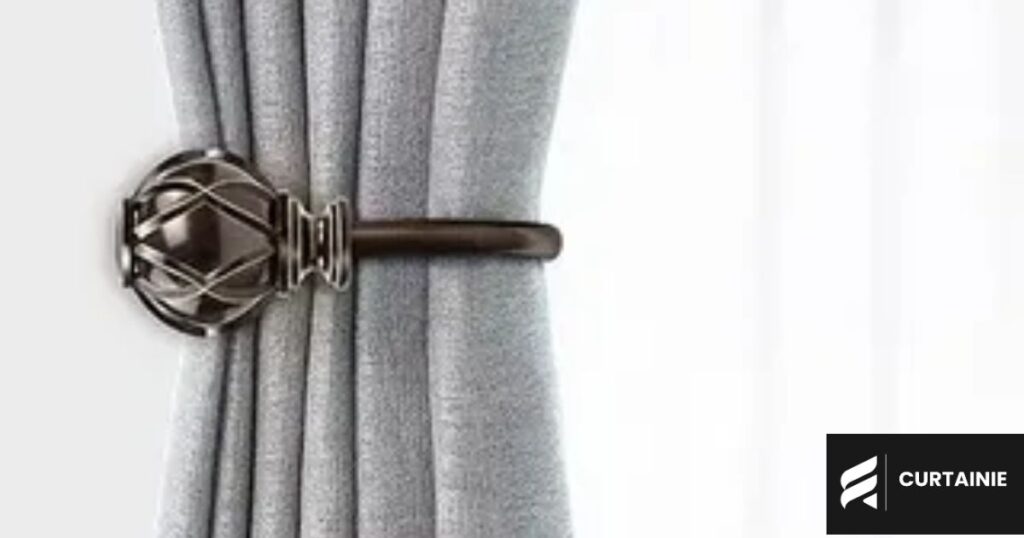
What Is Curtain Hardware and Why Does It Matter?
Curtain hardware refers to all the mechanical and decorative components used to hang, support, and style window curtains. This includes the rods or tracks that support the curtains, the rings or clips that attach curtains to rods, and the tiebacks or holdbacks that keep curtains open during the day.
Good curtain hardware serves two primary purposes: function and aesthetics. Functionally, it must support the weight of your curtains, allow smooth opening and closing, and remain securely mounted to the wall over time. Aesthetically, it contributes to the overall style of your room — from the finish and material of the rod to the decorative detail of the finials at each end.
Types of Curtain Rods: A Complete Overview
Choosing the right curtain rod is the foundation of any window treatment. There are several types of curtain rods available, each suited to different window sizes, curtain weights, and interior styles.
1. Standard Single Curtain Rods
The single curtain rod is the most common type of curtain hardware. It consists of a single horizontal pole supported by two or more brackets. Standard single rods are suitable for lightweight to medium-weight curtains and are available in a wide range of lengths, typically from 28 inches to 144 inches or more. They come in adjustable versions that can be extended to fit different window widths.
Single curtain rods are ideal for sheer curtains, linen panels, or lightweight decorative drapes. They are easy to install and are the most affordable option in the curtain hardware market. However, they are not suitable for very heavy curtain panels like thick velvet or blackout curtains, as they may sag under the weight.
2. Double Curtain Rods
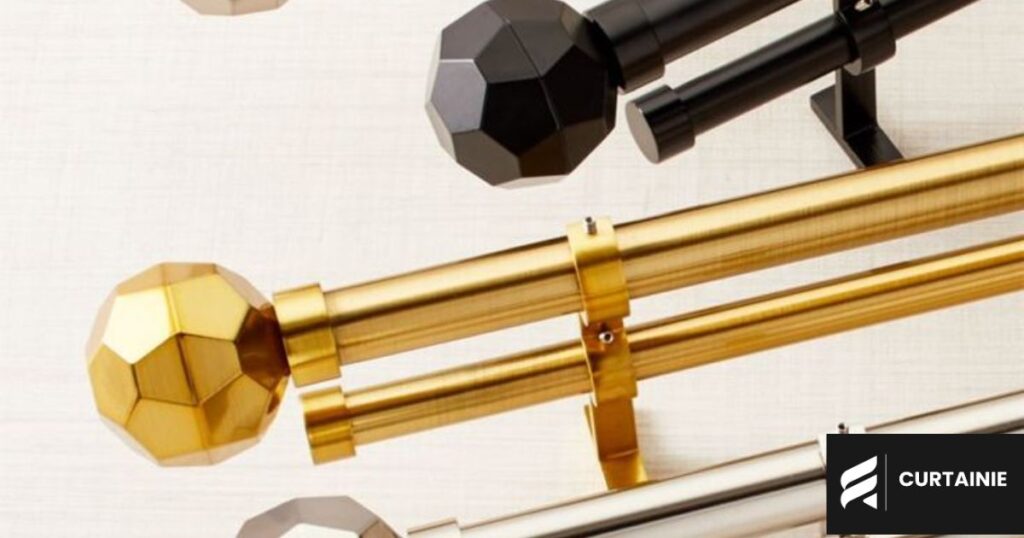
Double curtain rods feature two parallel rods mounted on the same brackets, allowing you to layer two curtain panels. The front rod is typically used for decorative curtains or drapes, while the back rod holds sheer or privacy curtains. This two-layer system offers maximum light control and privacy while adding depth and elegance to your window treatment.
Double curtain rods are an excellent choice for living rooms, bedrooms, and dining rooms where you want the flexibility of both sheer and blackout curtains. The sheer curtains filter natural light during the day while the heavier drapes provide privacy and insulation at night. When choosing double curtain rods, make sure the brackets are strong enough to support both sets of curtains.
3. Tension Curtain Rods
Tension curtain rods use spring tension to stay in place without any screws or wall mounting. They are placed inside the window frame and held up by tension alone. This makes them an ideal no-drill solution for renters, for decorating small windows, or for lightweight curtains in bathrooms and kitchens.
The main limitation of tension rods is their weight capacity. Because they are held in place by tension rather than screws, they can only support lightweight curtains. Heavy drapes or long curtain panels will cause tension rods to slip or fall. They are also limited in length, making them unsuitable for wide windows or patio doors.
4. Traverse Curtain Rods
Traverse rods use a track and pulley system that allows curtains to be opened and closed using a cord or wand. This system is particularly useful for heavy curtains, very wide windows, or curtains that are mounted high up and difficult to reach by hand. Traverse rods are commonly used in formal living rooms, home theaters, and large bedroom windows.
Modern traverse systems are available in both corded and cordless versions. Cordless traverse rods are safer for homes with young children and pets. They are also available in motorized versions, allowing curtains to be opened and closed with a remote control or smart home system — a feature that is becoming increasingly popular in modern interior design.
5. Cafe Curtain Rods
Cafe curtain rods are short, decorative rods designed to hold curtains on only the lower half of a window — a style known as the cafe style. This approach allows natural light to enter through the top of the window while maintaining privacy at the lower half. Cafe rods are most commonly used in kitchens, bathrooms, and dining areas. They come in a variety of finishes and are typically small and simple in design.
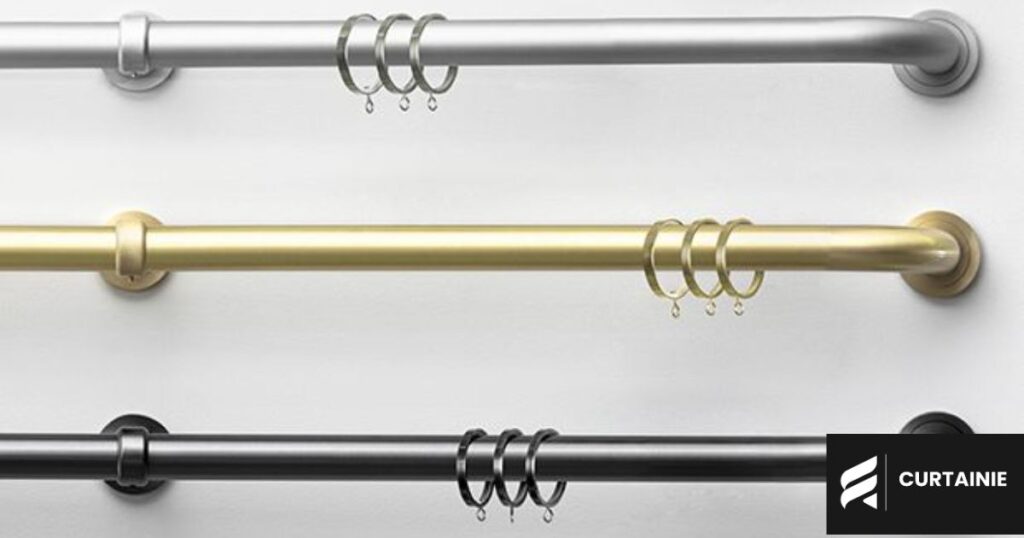
Curtain Rod Materials and Finishes
Curtain rods are available in a wide range of materials and finishes. The material you choose affects both the durability of the rod and the aesthetic style it brings to your space.
- Brushed Nickel: A popular contemporary finish with a soft, matte silver appearance. Brushed nickel curtain hardware complements modern, minimalist, and Scandinavian interior styles. It is resistant to fingerprints and tarnishing, making it a practical choice for everyday use.
- Oil-Rubbed Bronze: A dark, antique-style finish that pairs beautifully with warm color palettes and traditional or rustic interiors. Oil-rubbed bronze curtain hardware adds a rich, aged look to any room.
- Polished Chrome: A bright, reflective silver finish that works well in contemporary and industrial-style interiors. Polished chrome curtain hardware is highly durable and easy to clean.
- Matte Black: One of the most trending curtain hardware finishes, matte black curtain rods create a bold, graphic statement in both modern and farmhouse-style interiors. Matte black hardware is particularly striking against white or light-colored walls.
- Natural Wood: Wooden curtain rods bring warmth and organic texture to a space. They are ideal for bohemian, rustic, or Scandinavian-inspired interiors. Natural wood rods are available in a range of wood types and stain finishes.
Curtain Rings: Types, Styles, and How to Choose
Curtain rings are the hardware pieces that connect your curtains to the rod. They play a functional role in how your curtains hang and move, and a decorative role in how the overall window treatment looks. Choosing the right curtain rings is an important step that many homeowners overlook.
1. Clip Rings
Clip rings are one of the most popular types of curtain rings. They feature a small clip or pinch mechanism that grips the top edge of the curtain fabric directly. Clip rings are extremely versatile — they can be used with almost any type of fabric and allow you to adjust the height and drape of your curtains without sewing any additional headers or tabs.
The main advantage of clip rings is their flexibility. You can easily change your curtains without altering them, making clip rings ideal for renters and anyone who likes to update their decor frequently. They are available in a wide range of finishes to match any curtain rod. The main drawback is that clips can occasionally leave small marks on delicate fabrics.
2. Standard Eyelet Rings
Eyelet curtain rings are simple rings that thread directly onto the curtain rod. They are designed to be used with eyelet curtains — panels that have metal grommets punched into the header of the fabric. The rod threads through both the grommets in the curtain and the rings, creating a clean, uniform pleat effect.
Eyelet curtains and rings are a popular choice in contemporary interiors because they create a neat, modern look with large, even folds. They are also easy to open and close because the curtain slides smoothly along the rod. Eyelet curtains are available in a wide range of fabrics and are suitable for both lightweight sheers and heavier blackout panels.
3. Pinch Pleat Rings
Pinch pleat rings are used with curtains that have been sewn with pinch pleat headers — a traditional tailored pleat style that creates evenly spaced clusters of fabric folds. Hooks are inserted into the pleats of the curtain and then attached to the rings, which slide along the rod. This creates a very formal, elegant drapery style that is popular in traditional and transitional interior designs.
4. Decorative Rings with Clips
For a more polished and cohesive look, decorative rings with integrated clips are available in many finishes and styles. These rings combine the versatility of clip rings with a more refined, finished appearance. They are available in round, square, and oval shapes, and many feature decorative details that complement specific curtain rod styles.
Curtain Tiebacks: Styles, Materials, and Uses
Curtain tiebacks are accessories that hold your curtain panels open to the side, allowing natural light to enter the room and creating an elegant draped effect. Tiebacks are both functional and decorative — they frame the window, create graceful curves in the fabric, and add a finishing touch to the overall window treatment.
1. Fabric Tiebacks
Fabric tiebacks are strips of fabric that wrap around the curtain panel and attach to a hook on the wall. They can be made from the same fabric as the curtains for a coordinated look, or from a contrasting fabric for a more decorative effect. Fabric tiebacks are available in a wide range of styles, from simple flat bands to more elaborate braided, knotted, or tasseled designs.
2. Rope and Tassel Tiebacks
Rope tiebacks are a classic and decorative option that adds a luxurious touch to formal drapery. They typically consist of a twisted or braided cord that wraps around the curtain panel and ends in decorative tassels or knots. Rope and tassel tiebacks are most commonly seen in traditional, classical, and formal interior styles. They are available in a range of colors and materials, including natural jute, silk, cotton, and metallic threads.
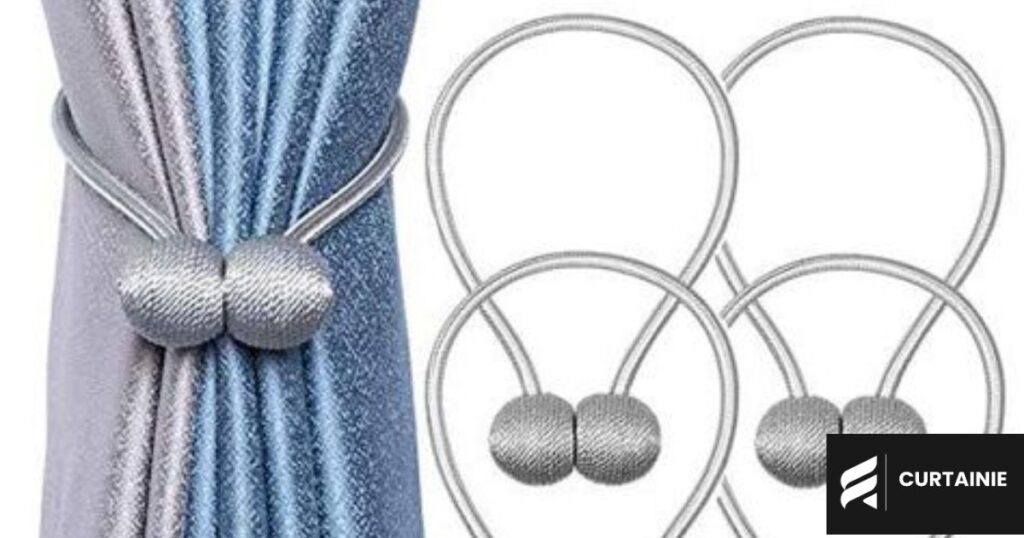
3. Magnetic Tiebacks
Magnetic curtain tiebacks are a modern and convenient innovation. They use powerful magnets to clasp together around the curtain panel, holding it in place without any hooks or wall mounting. Magnetic tiebacks are extremely easy to use and can be repositioned instantly. They are available in a wide range of decorative styles and finishes.
4. Metal Holdbacks
Metal holdbacks are rigid brackets mounted to the wall that curtain panels are draped over or tucked behind. Unlike flexible tiebacks, holdbacks are fixed in position and create a more sculptural look. They are available in a wide range of shapes — from simple curved arms to decorative designs like fans, leaves, and geometric forms. Metal holdbacks are particularly popular in contemporary, industrial, and Art Deco interior styles.
5. Woven and Beaded Tiebacks
Woven tiebacks made from natural materials like jute, rattan, or macrame are a popular choice in bohemian and coastal interior styles. Beaded tiebacks, made from glass, wood, or plastic beads, add a playful and decorative element to casual window treatments. Both options bring texture and visual interest to the window area and are best suited to lighter, informal curtain styles.
How to Choose the Right Curtain Hardware for Your Home
Selecting the right curtain hardware requires considering several factors: the weight and type of your curtains, the size of your window, your interior design style, and your budget. Here are the key factors to keep in mind when shopping for curtain rods, rings, and tiebacks.
- Match the hardware finish to your room’s metal tones: If your room features brushed nickel door handles and light fixtures, choose brushed nickel curtain hardware. Consistent metal finishes create a polished, cohesive look throughout the space.
- Consider curtain weight when choosing rods: Heavyweight curtains like velvet, lined drapes, or blackout panels require sturdy rods with center support brackets. Lightweight sheers and linen panels can be hung on standard single rods without additional support.
- Choose the right rod diameter: Standard rods are available in diameters from 5/8 inch to 2 inches. Thicker rods make a bolder visual statement and are stronger, while thinner rods have a more delicate look. For wide windows over 96 inches, always use a rod with a minimum diameter of 1 inch to prevent sagging.
- Install rods at the right height: Mounting curtain rods high — ideally 4 to 6 inches above the window frame — makes ceilings appear taller and windows look larger. Extend the rod 8 to 12 inches beyond each side of the window frame to allow curtains to be pulled fully open without blocking the glass.
- Coordinate tiebacks with your curtain style: Formal pinch pleat or goblet pleat curtains pair beautifully with rope or tassel tiebacks, while casual linen or cotton panels look great with simple fabric bands or woven tiebacks.
Curtain Hardware Installation Tips
Proper installation is essential for curtain hardware that looks great and lasts for years. Here are the most important installation tips for curtain rods, rings, and tiebacks.
- Always use wall anchors: Unless you are mounting into a wall stud, use appropriate wall anchors to secure curtain rod brackets. Unsupported drywall alone cannot hold the weight of curtains over time.
- Use a level: Always use a spirit level when marking bracket positions to ensure your curtain rod is perfectly horizontal. Even a slight tilt is very noticeable once the curtains are hung.
- Add a center support bracket for wide windows: For windows wider than 60 inches, always install a center support bracket to prevent the rod from bowing or sagging under the weight of the curtains.
- Position tiebacks at the right height: For full-length curtains, tiebacks should be mounted approximately one-third from the bottom of the curtain length. This creates the most elegant and proportional drape.
- Allow curtains to puddle or break at the floor: Curtains that just touch the floor or have a slight break of 1 to 2 inches create a tailored look. Curtains that puddle on the floor by 3 to 6 inches create a more dramatic, luxurious effect.
Read more:layered look roman shades and curtains
Frequently Asked Questions (FAQs) About Curtain Hardware
Q1: What size curtain rod do I need for my window?
To determine the correct curtain rod size, measure the width of your window frame and add 8 to 12 inches on each side. This extra width allows the curtains to clear the glass when fully opened, maximizing the amount of light entering the room. For example, for a 36-inch wide window, a rod that extends 20 to 24 inches on each side would give you a rod length of 56 to 60 inches.
Q2: How high should curtain rods be mounted?
The general rule is to mount curtain rods 4 to 6 inches above the top of the window frame. For rooms with high ceilings, you can mount the rod even higher — sometimes just below the crown molding. Hanging curtains high creates the illusion of taller ceilings and larger windows, which is one of the most impactful interior design tricks for any room.
Q3: Can I use any curtain rings with any curtain rod?
Not necessarily. The inner diameter of the curtain ring must be larger than the outer diameter of the curtain rod for the rings to slide smoothly. Most standard curtain rings are designed for rods up to 1.25 inches in diameter. If you have a thick rod, make sure the rings you choose have a large enough opening. Also, the finish of the rings should match or complement the rod finish for a cohesive look.
Q4: What are the best curtain tiebacks for heavy drapes?
For heavy drapes like velvet, silk, or lined blackout curtains, the best tiebacks are metal holdbacks or substantial fabric tiebacks with strong loops and hooks. Avoid delicate rope or decorative tiebacks for heavy curtains, as they may not hold the weight effectively and can quickly become distorted. Metal holdbacks mounted securely to the wall are the most durable option for heavy window treatments.
Q5: How do I prevent curtain rings from getting stuck on the rod?
Curtain rings can stick on rods due to surface roughness, paint overspray, or debris. To prevent sticking, lightly wax the rod with a clear furniture wax or rub it with a dryer sheet before hanging the rings. Make sure the rod surface is smooth and free of any rough spots or weld marks. For traverse rods with a track system, periodically clean the track to remove dust and debris.
Conclusion
Curtain hardware — rods, rings, and tiebacks — is the unsung hero of every beautiful window treatment. While curtain fabric gets most of the attention, it is the hardware that determines how well your curtains hang, how easily they open and close, and how polished the overall look appears in your space.By choosing the right curtain rod for your window size and curtain weight, selecting rings that complement your rod style and allow smooth operation, and adding tiebacks that coordinate with your overall design aesthetic, you can create window treatments that are both beautiful and highly functional.
Whether you prefer the clean lines of matte black metal hardware, the warmth of natural wood rods, or the classic elegance of brushed nickel, the key is to choose hardware that reflects your personal style while meeting the practical demands of your space. Take the time to measure accurately, choose quality hardware, and install everything correctly — and your curtains will look professionally styled for years to come.We hope this complete curtain hardware guide has answered all your questions about curtain rods, rings, and tiebacks. Use this guide as your reference the next time you are shopping for new curtain hardware, and enjoy the transformation that the right hardware can bring to every room in your home.