
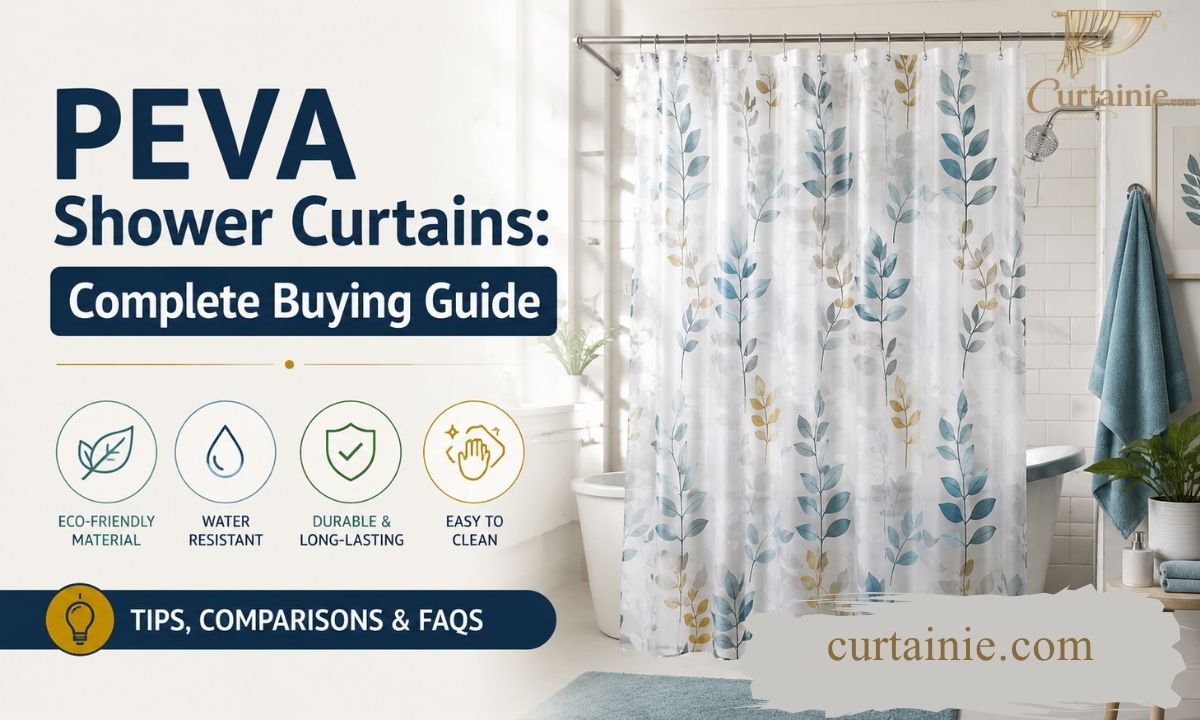
If you’ve been shopping for a shower curtain recently, you’ve probably noticed the term “PEVA” on packaging. But what exactly is PEVA, why is everyone talking about it, and is it the right choice for your bathroom? This complete guide covers everything — from what PEVA is made of, to how to clean it, to how it stacks up against other materials. By the end, you’ll know exactly what to look for before making a purchase.
What Is PEVA? Understanding the Material
PEVA stands for Polyethylene Vinyl Acetate. It is a non-chlorinated vinyl — a type of plastic that is manufactured without the use of chlorine. This distinction is critical because it separates PEVA from traditional PVC (Polyvinyl Chloride), which has long been used in shower curtains but comes with significant health and environmental drawbacks.
PEVA is a copolymer, meaning it is created by combining ethylene and vinyl acetate in varying ratios. The higher the vinyl acetate content, the softer and more flexible the material becomes. This gives manufacturers the ability to produce PEVA shower curtains in a range of thicknesses and textures to suit different preferences and budgets.
Because PEVA does not contain chlorine, it does not release harmful chlorine-based gases during manufacturing or use. This makes it a significantly safer and more eco-conscious alternative to PVC — without sacrificing the water-resistant properties that make vinyl ideal for bathrooms.
Why PEVA Became So Popular for Shower Curtains
The rise of PEVA shower curtains is directly tied to growing consumer awareness about toxic chemicals in household products. For decades, PVC shower curtains dominated the market — but studies and reports began highlighting a major problem: the “new shower curtain smell.”
That distinctive smell is caused by volatile organic compounds (VOCs), including phthalates, dioxins, and other chemical plasticizers that off-gas from PVC products. Research linked prolonged exposure to these chemicals with potential hormone disruption, respiratory issues, and other health concerns.
PEVA entered the market as the practical, affordable answer. It delivers:
- Excellent water resistance — just as effective as PVC at keeping water inside the shower
- Durability — PEVA holds up well against mildew, tearing, and everyday use
- No chlorine off-gassing — far fewer harmful VOCs compared to PVC
- Affordability — PEVA curtains are budget-friendly and widely available
- Variety — available in hundreds of colors, patterns, and thicknesses
Major retailers like IKEA, Target, Walmart, and Amazon all stock PEVA shower curtains as one of their primary offerings, which reflects just how mainstream this material has become.
PEVA vs. PVC Shower Curtains: Key Differences
Understanding the difference between PEVA and PVC helps you make a smarter purchasing decision.
| Feature | PEVA | PVC |
|---|---|---|
| Chlorine content | None | Contains chlorine |
| Chemical off-gassing | Minimal | High (VOCs, phthalates) |
| Smell when new | Mild or none | Strong chemical odor |
| Water resistance | Excellent | Excellent |
| Durability | Good to Very Good | Very Good |
| Eco-friendliness | More eco-friendly | Less eco-friendly |
| Price | Budget-friendly | Budget-friendly |
| Recyclability | Limited | Limited |
The bottom line: For most households, PEVA is the smarter choice. It performs just as well as PVC in a wet bathroom environment but exposes your family to far fewer potentially harmful chemicals.
PEVA vs. EVA Shower Curtains
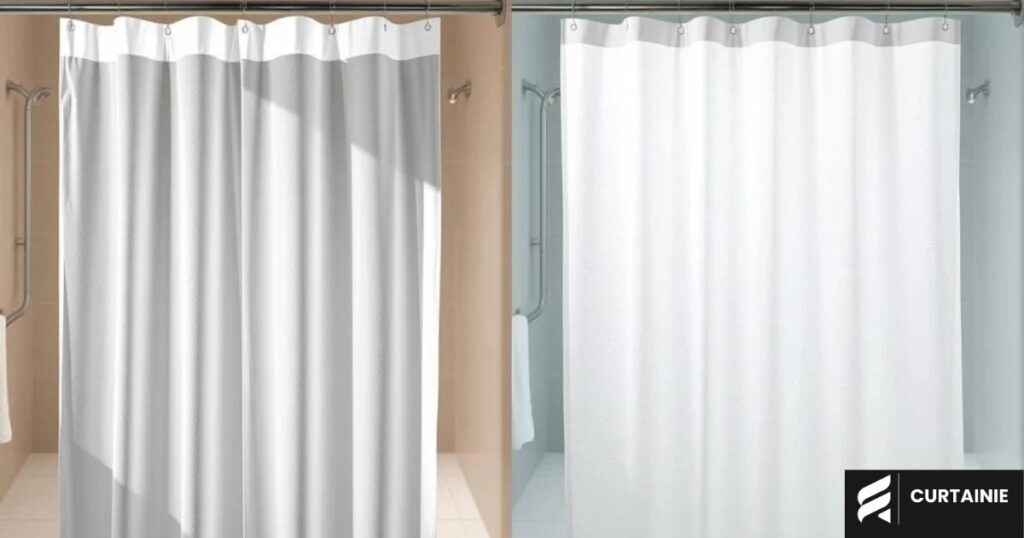
You’ll also encounter EVA (Ethylene Vinyl Acetate) shower curtains alongside PEVA products. These two materials are very similar — in fact, PEVA is sometimes considered a variant of EVA. The differences are subtle:
- EVA tends to be slightly softer and more flexible
- PEVA is slightly denser and more resistant to mildew in high-humidity environments
- Both are chlorine-free and considered safer than PVC
For practical bathroom purposes, either material performs well. Some manufacturers label their products interchangeably, so don’t be confused if you see both terms on the same product.
PEVA vs. Fabric Shower Curtains
Fabric shower curtains — made from polyester, cotton, or microfiber — are another popular alternative. Here’s how they compare to PEVA:
PEVA Advantages Over Fabric:
- No liner required (PEVA itself is waterproof)
- Easier to wipe clean
- Lower upfront cost
- Dries faster
Fabric Advantages Over PEVA:
- More luxurious appearance
- Machine washable
- Better long-term durability
- More environmentally friendly options available (organic cotton, recycled polyester)
Which should you choose? If you want something low-maintenance and affordable, PEVA wins. If you want a high-end aesthetic and don’t mind the extra care (and cost of a separate liner), fabric is worth the investment.
How to Choose the Right PEVA Shower Curtain
Not all PEVA shower curtains are created equal. Here are the key factors to evaluate before buying:
1. Thickness (Gauge)
PEVA shower curtains are available in different gauges — a measurement of thickness. Common options include:
- 1 Gauge (thin/lightweight): Best for occasional use or decorative purposes. Less durable.
- 3–5 Gauge (medium weight): The most common option for everyday household use. Good balance of flexibility and durability.
- 8–12 Gauge (heavy duty): Excellent for high-traffic bathrooms. More resistant to tearing and better at staying in place.
For most homes, a medium-weight (3–5 gauge) PEVA curtain offers the best value.
2. Size
Standard shower curtains are 70″ x 70″ or 70″ x 72″, which fits most tubs. For walk-in showers or extra-long setups, look for:
- Extra-long: 70″ x 84″ or 72″ x 84″
- Extra-wide: 108″ x 72″ for wider showers
Always measure your shower space before purchasing.
3. Grommets and Reinforcement
Check that the curtain has reinforced metal grommets (the holes where hooks go through). Plastic grommets can crack and break, causing the curtain to tear. Rust-resistant metal grommets are a sign of a better-quality product.
4. Mildew Resistance
Many PEVA curtains are marketed as “mildew resistant.” This usually means the material has been treated or is dense enough to resist mold growth. Look for this feature if your bathroom has poor ventilation.
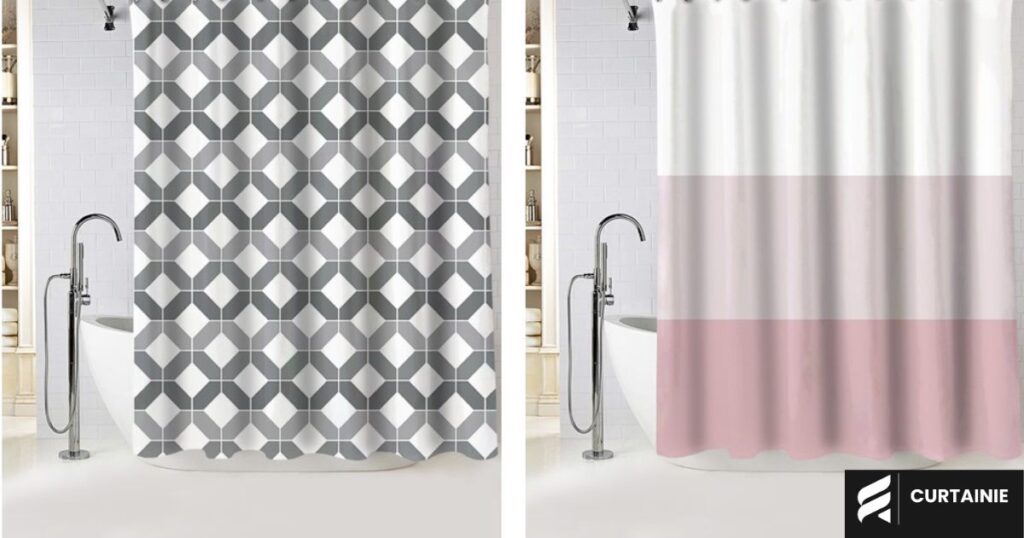
5. Design and Opacity
PEVA curtains are available in:
- Clear or frosted — allows light through, good for smaller bathrooms
- Solid colors — simple and clean
- Printed patterns — florals, geometric, abstract, nautical themes, and more
Choose based on your bathroom’s decor and your preference for privacy.
Top Benefits of PEVA Shower Curtains
Here is a summary of why PEVA shower curtains are one of the most popular choices today:
1. Healthier for Your Home No chlorine means fewer harmful VOCs released into your bathroom air. This is especially important in enclosed spaces with limited ventilation.
2. Water-Resistant by Nature PEVA is inherently waterproof — it doesn’t absorb water, which helps prevent mold and mildew from forming inside the curtain material itself.
3. Easy to Clean You can wipe down a PEVA curtain with a damp cloth and mild soap. Soap scum and water spots come off easily without the need for harsh chemicals.
4. Affordable PEVA shower curtains are available at nearly every price point, from under $10 for basic options to $30–$50 for premium designs. You don’t have to spend a lot to get good quality.
5. Quick-Drying PEVA doesn’t absorb water, so it dries fast after each shower — reducing the chance of mold and mildew growth.
6. Wide Variety The sheer number of available colors, patterns, and designs means you can always find something that matches your bathroom perfectly.
Potential Drawbacks of PEVA Shower Curtains
No product is perfect. Here are honest limitations to consider:
1. Still a Plastic Product While PEVA is safer than PVC, it is still a petroleum-based plastic. It is not fully biodegradable and has limited recyclability, so it does carry some environmental footprint.
2. Can Feel Stiff in Cold Temperatures In very cold bathrooms or climates, PEVA can stiffen slightly. Thinner gauges are especially susceptible to this.
3. Not as Durable as Fabric Long-Term Over time, with repeated washing and exposure to humidity, PEVA can yellow, crack, or develop a sticky texture — typically after 1–3 years depending on quality.
4. May Have a Mild Initial Odor While far less intense than PVC, some PEVA curtains do have a faint smell when first unpackaged. This typically dissipates within a day or two.
How to Clean and Maintain a PEVA Shower Curtain
Proper care extends the life of your PEVA curtain significantly.
Regular Cleaning (Weekly)
- Spread the curtain fully open after each shower to allow airflow and drying
- Wipe down with a damp cloth and a small amount of dish soap or bathroom cleaner
- Rinse with warm water and let it air dry
Deep Cleaning (Monthly)
- Remove the curtain from the rings
- Lay it flat in the tub or on a clean surface
- Scrub with a soft brush using a mixture of white vinegar and water (1:1 ratio)
- Rinse thoroughly
- Rehang and allow to air dry completely before closing
What to Avoid
- Hot water: Extremely hot water can warp or distort PEVA
- Harsh chemical cleaners: Bleach and abrasive cleaners can degrade the material
- Machine washing: Most PEVA curtains are not designed for machine washing — check the label
When to Replace Your PEVA Shower Curtain
Replace your PEVA shower curtain when you notice:
- Visible mold or mildew that won’t come off after cleaning
- Yellowing or discoloration
- Cracks, tears, or holes in the material
- A sticky or tacky texture on the surface
- Persistent odor that doesn’t go away with cleaning
On average, a quality PEVA shower curtain lasts 1 to 3 years with proper care.
Environmental Considerations
Eco-conscious shoppers should know that while PEVA is better than PVC, it still comes with environmental trade-offs:
- It is not biodegradable — it will sit in a landfill for decades
- Recycling programs for PEVA are limited in most areas
- Manufacturing it still involves fossil fuel-derived materials
If sustainability is your top priority, consider organic cotton or recycled polyester fabric curtains, which have a smaller environmental footprint. However, for those looking for a practical, affordable, and health-conscious upgrade from PVC, PEVA remains an excellent step in the right direction.
Best Practices for Installing a PEVA Shower Curtain
Getting the most out of your curtain starts with proper installation:
- Use rust-resistant rings or hooks — cheap rings can rust and stain your curtain
- Space hooks evenly — most standard curtains have 12 grommets; distribute weight evenly
- Hang at the correct height — the bottom of the curtain should hang 1–2 inches above the tub floor to prevent water pooling
- Allow it to flow freely — don’t bunch the curtain too tightly; it needs airflow to dry properly
Read more:can you use a shower curtain without a liner
Frequently Asked Questions (FAQs)
Q1: Is PEVA safe for children and babies?
Yes. PEVA is considered much safer than PVC because it does not contain chlorine or phthalates — chemicals associated with hormone disruption. It is one of the better choices for family bathrooms. However, like all plastics, it should be kept out of reach of young children to avoid any choking or suffocation hazard.
Q2: Does a PEVA shower curtain need a liner?
No. PEVA is waterproof by nature, which means you typically do not need a separate liner — unlike fabric curtains. This is one of PEVA’s major advantages: it functions as both the decorative curtain and the waterproof barrier in one.
Q3: Can I put a PEVA shower curtain in the washing machine?
Most manufacturers advise against machine washing PEVA curtains, as heat and agitation can warp, stretch, or damage the material. Hand cleaning or a gentle wipe-down is recommended. Always check the care instructions on your specific curtain’s label.
Q4: Why does my new PEVA curtain smell?
A mild smell when first unpackaging a PEVA curtain is normal. It comes from residual manufacturing compounds. Unlike PVC curtains, which can release strong, harmful odors for weeks, PEVA’s smell is much milder and typically disappears within 24–48 hours. Air the curtain out in a well-ventilated space before hanging it.
Q5: How long do PEVA shower curtains last?
With proper care, a good-quality PEVA shower curtain can last between 1 and 3 years. Heavier gauges and better-quality products tend to last longer. Signs it’s time to replace include yellowing, stickiness, cracks, or persistent mold.
Conclusion
PEVA shower curtains represent a smart, practical, and health-conscious choice for any bathroom. They deliver all the waterproofing and durability you expect from a traditional vinyl curtain — without the harmful chlorine-based chemicals associated with PVC. Whether you’re upgrading for health reasons, looking for a fresh design, or simply replacing an old curtain, PEVA offers excellent value at nearly every budget level.
When shopping, focus on gauge (thickness), grommet quality, size, and mildew resistance to find the best option for your specific bathroom. With basic regular maintenance — keeping it spread open to dry, occasional wipe-downs, and monthly vinegar cleanings — your PEVA curtain can serve you well for years.