
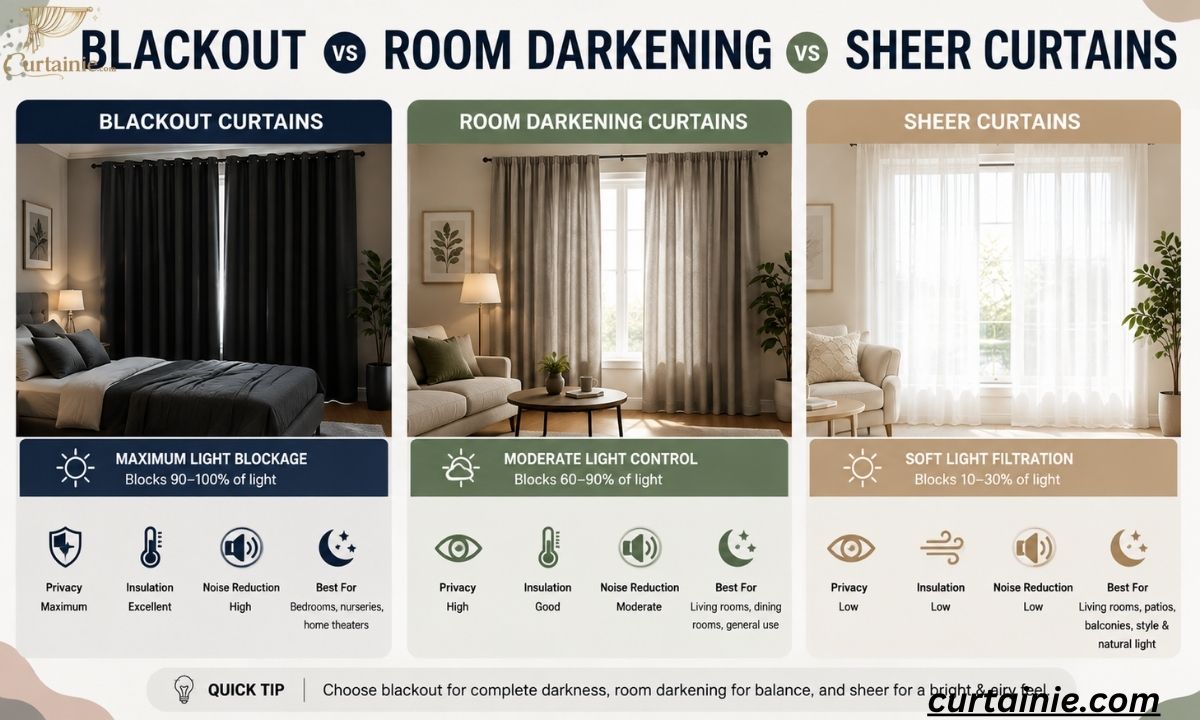
Choosing the right curtains for your home is not just about color and fabric pattern — it’s also about how much light, privacy, and insulation each type of curtain provides. Among the most searched curtain comparisons online are blackout curtains, room darkening curtains, and sheer curtains. Each of these serves a different purpose, and picking the wrong one can leave your room either too bright, too dark, or lacking the privacy you need.
In this detailed guide, we will break down the differences between blackout, room darkening, and sheer curtains, explain their pros and cons, and help you decide which option best suits each room in your home.
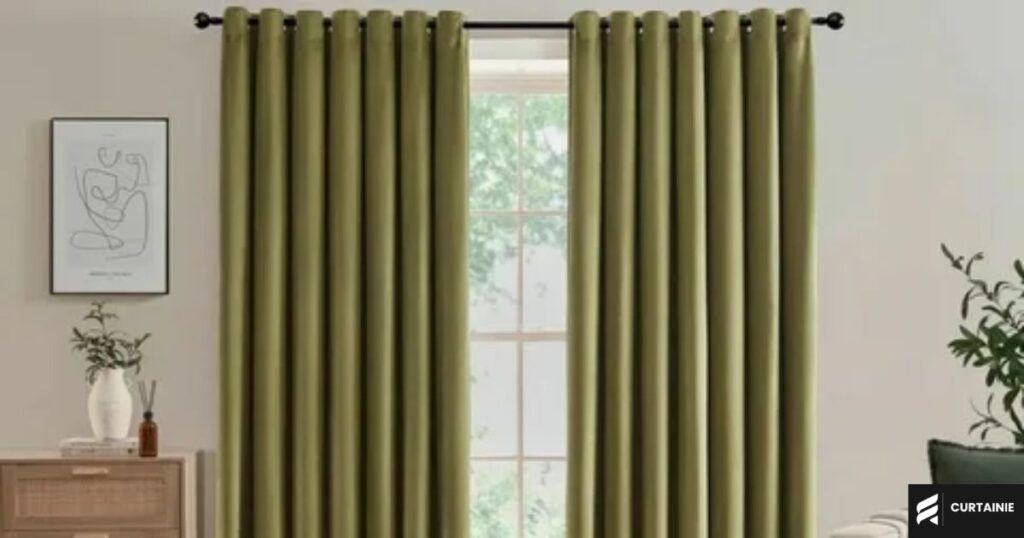
What Are Blackout Curtains?
Blackout curtains are designed with multiple layers of tightly woven, thick fabric — often combined with a special lining — that blocks nearly 100% of sunlight from entering a room. Unlike regular curtains, blackout curtains are engineered specifically to create complete darkness, even during the brightest hours of the day.
These curtains are commonly made from heavyweight materials such as polyester, microfiber, or velvet, and they often include a foam-backed or acrylic-coated lining that prevents light penetration. Because of this dense construction, blackout curtains also do an excellent job of reducing outside noise and keeping rooms insulated against heat and cold.
Key Features of Blackout Curtains
- Block up to 99–100% of sunlight
- Provide maximum privacy, even at night with lights on indoors
- Help reduce outside noise
- Offer thermal insulation, lowering energy bills
- Ideal for shift workers, light-sensitive sleepers, and home theaters
What Are Room Darkening Curtains?
Room darkening curtains sit right in the middle between sheer curtains and full blackout curtains. They are made from medium-weight fabric that blocks a significant portion of sunlight — typically around 80–95% — but they are not completely opaque. A small amount of light may still filter through the edges or fabric weave, especially during peak daylight hours.
Room darkening curtains are a popular choice for people who want a noticeably dimmer room without making it pitch black. They strike a balance between functionality and softer, more natural lighting.
Key Features of Room Darkening Curtains
- Block approximately 80–95% of sunlight
- Allow a soft glow of natural light to filter in
- Lighter and more breathable than blackout fabric
- Good noise reduction, though less effective than blackout curtains
- Suitable for living rooms, guest rooms, and bedrooms where total darkness isn’t required
What Are Sheer Curtains?
Sheer curtains are lightweight, translucent, and airy. Made from fabrics like voile, chiffon, organza, or lace, sheer curtains allow most natural light to pass through while softening direct sunlight and glare. They do not block outside view completely, but they reduce direct visibility into the room, especially during daylight hours.
Sheer curtains are primarily used for aesthetic and ambient purposes — adding elegance, softness, and a sense of openness to a space — rather than for blocking light or ensuring privacy.
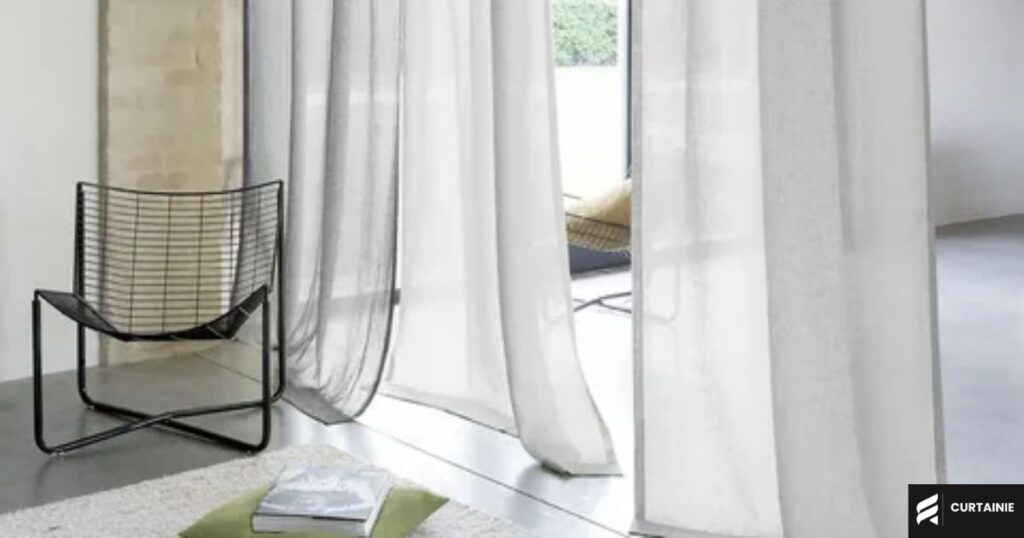
Key Features of Sheer Curtains
- Allow most natural light to pass through (60–90% light transmission)
- Provide minimal privacy, especially at night
- Create a soft, elegant, breezy look
- Often layered with blackout or room darkening curtains for both function and style
- Best suited for living rooms, dining areas, and spaces where natural light is desired
Blackout vs Room Darkening vs Sheer Curtains: Quick Comparison Table
| Feature | Blackout Curtains | Room Darkening Curtains | Sheer Curtains |
|---|---|---|---|
| Light Blockage | 99–100% | 80–95% | 10–40% |
| Privacy Level | Maximum | High | Low |
| Fabric Weight | Heavy | Medium | Lightweight |
| Noise Reduction | Excellent | Moderate | Minimal |
| Thermal Insulation | Excellent | Good | Poor |
| Best Use Case | Bedrooms, nurseries, home theaters | Living rooms, guest rooms | Living rooms, decorative layering |
| Price Range | Higher | Mid-range | Affordable |
| Aesthetic Appeal | Heavy, formal look | Balanced, soft look | Elegant, airy look |
Blackout vs Room Darkening Curtains: Detailed Differences
The main difference between blackout and room darkening curtains lies in the degree of light control and the fabric construction used to achieve it.
Blackout curtains use a denser, often triple-layered fabric structure specifically engineered to eliminate light entirely. This makes them the top choice for people who need total darkness — such as night-shift workers who sleep during the day, parents trying to help babies nap longer, or homeowners setting up a media room or home theater.
Room darkening curtains, on the other hand, use a single or double-layer fabric that reduces light significantly but doesn’t fully eliminate it. They are a great middle-ground option for people who want a darker room in the morning but don’t mind a little ambient light filtering through.
In terms of insulation, blackout curtains generally perform better at keeping a room cool in summer and warm in winter, which can translate into noticeable energy savings over time. Room darkening curtains offer some insulation benefits but not to the same degree.
Blackout vs Sheer Curtains: Detailed Differences
Blackout and sheer curtains sit at completely opposite ends of the spectrum. Where blackout curtains are designed to block all light and maximize privacy, sheer curtains are designed to do the exact opposite — let light in and create an open, breathable atmosphere.
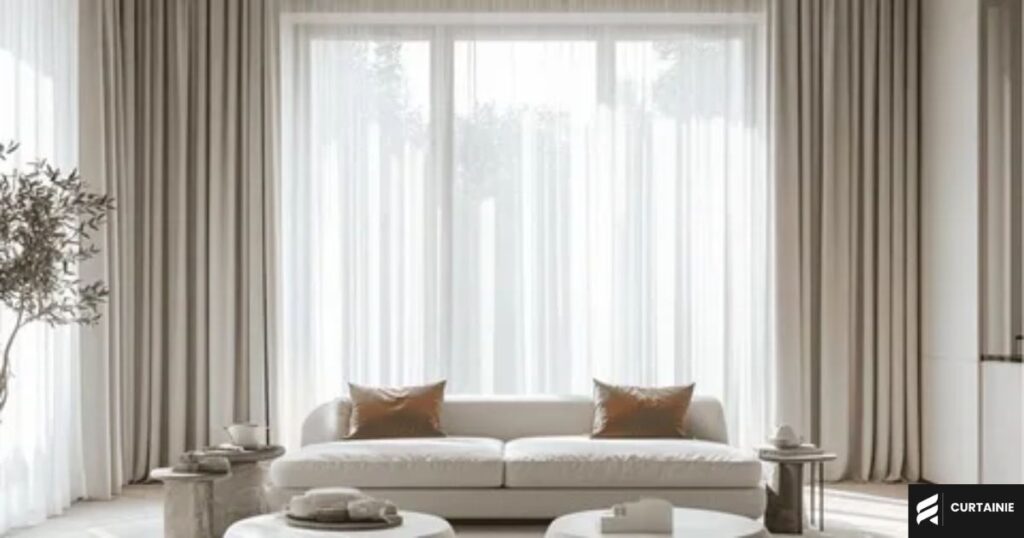
Many homeowners actually combine both: sheer curtains are hung closer to the window for daytime use, while blackout curtains are layered on the outside (closer to the room) to be drawn at night or when full darkness or privacy is needed. This combination provides flexibility, allowing a room to switch between a bright, airy daytime look and a fully private, dark nighttime setting.
Sheer curtains are also far less effective at insulation and noise reduction compared to blackout curtains, so they are typically chosen for style and ambiance rather than functionality.
Room Darkening vs Sheer Curtains: Detailed Differences
Room darkening curtains and sheer curtains differ mainly in purpose. Sheer curtains prioritize light and openness, while room darkening curtains prioritize dimming the room and offering privacy.
If you live in a sunny climate and want to control glare without making the room feel closed off, room darkening curtains may be the better option since they still allow some natural ambient light. Sheer curtains, in contrast, are better suited for spaces where you want maximum natural light along with a touch of softness and privacy.
Which Curtain Is Best for Each Room?
Bedroom
For most bedrooms, blackout curtains are the ideal choice, especially if you’re sensitive to early morning sunlight or work irregular hours. They help promote deeper, uninterrupted sleep by eliminating outside light completely.
Nursery or Kids’ Room
Blackout curtains are highly recommended for nurseries and children’s bedrooms. A darker room during nap time and at night helps regulate a child’s sleep schedule and improves overall sleep quality.
Living Room
Room darkening curtains or a layered combination of sheer plus room darkening curtains work best in living rooms. This allows you to enjoy natural daylight during the day while still having the option to dim the room for movie nights or added privacy in the evening.
Home Office
If you work from home and use a computer or do video calls, room darkening curtains can help reduce screen glare without completely darkening the room, keeping your workspace comfortable and professional-looking on camera.
Dining Room
Sheer curtains are a popular choice for dining rooms since they enhance natural light during meals and add an elegant, welcoming touch without sacrificing too much openness.
Home Theater or Media Room
Blackout curtains are essential here. They eliminate all external light, allowing for a true cinematic viewing experience regardless of the time of day.
Pros and Cons of Blackout Curtains
Pros:
- Complete light control
- Superior noise insulation
- Energy-efficient (keeps rooms cooler in summer, warmer in winter)
- Enhances privacy at all hours
Cons:
- Heavier and bulkier fabric
- Generally more expensive
- Can make rooms feel darker or smaller if not styled well
Pros and Cons of Room Darkening Curtains
Pros:
- Good balance of darkness and natural light
- More affordable than blackout curtains
- Softer, lighter fabric that’s easier to maintain
- Suitable for most general-purpose rooms
Cons:
- Doesn’t fully block light
- Less effective for noise reduction compared to blackout
- Not ideal for people who need total darkness
Pros and Cons of Sheer Curtains
Pros:
- Beautiful, elegant aesthetic
- Maximizes natural light
- Lightweight and easy to wash
- Affordable and versatile for layering
Cons:
- Minimal privacy, especially at night
- No real light-blocking or insulation benefits
- Not suitable as a standalone option for bedrooms
Factors to Consider Before Choosing Curtains
- Purpose of the Room – Bedrooms and nurseries benefit from blackout curtains, while living and dining areas often look better with sheer or room darkening options.
- Climate – In hot or cold climates, blackout curtains offer better thermal insulation and can help reduce energy bills.
- Sleep Sensitivity – Light-sensitive sleepers or night-shift workers should prioritize blackout curtains.
- Budget – Sheer curtains are generally the most budget-friendly, followed by room darkening, with blackout curtains typically costing more due to their multi-layer construction.
- Aesthetic Preference – If you want a soft, breezy look, sheer curtains are ideal. For a more formal or cozy look, blackout or room darkening curtains work better.
- Layering Option – Many homeowners combine sheer curtains with blackout or room darkening curtains on a double rod for the best of both worlds — natural light during the day and full privacy/darkness at night.

Read More: what fabric should you use to make blackout curtains
FAQs
1. What is the main difference between blackout and room darkening curtains?
The main difference is the level of light blocked. Blackout curtains block almost 100% of light, while room darkening curtains block around 80–95%, allowing a small amount of light to filter through.
2. Can sheer curtains block sunlight completely?
No, sheer curtains are designed to let light through. They only slightly reduce glare and brightness, and are not meant for blocking sunlight or ensuring full privacy.
3. Are blackout curtains good for energy savings?
Yes, blackout curtains provide strong thermal insulation, which helps keep rooms cooler in summer and warmer in winter, potentially reducing heating and cooling costs.
4. Can I use sheer and blackout curtains together?
Yes, this is a very common and practical setup. Sheer curtains are usually hung on an inner rod close to the window, while blackout curtains are hung on an outer rod, giving you the flexibility to choose between natural light and full darkness depending on the time of day.
5. Which curtain type is best for a baby’s nursery?
Blackout curtains are highly recommended for nurseries since a dark environment helps babies sleep longer and more soundly, both during naps and at night.
Conclusion
Choosing between blackout, room darkening, and sheer curtains ultimately comes down to your specific needs for light control, privacy, and room ambiance. If your priority is complete darkness, noise reduction, and energy efficiency — especially in bedrooms, nurseries, or home theaters — blackout curtains are the best choice. If you want a balanced level of light and darkness for everyday living spaces, room darkening curtains offer a practical middle ground. And if your goal is to maximize natural light while adding a soft, elegant touch to your interior, sheer curtains are the perfect fit.
For many homeowners, the smartest solution isn’t choosing just one — it’s layering sheer curtains with blackout or room darkening curtains to enjoy the benefits of both light and darkness, depending on the time of day and your personal comfort. By understanding how each curtain type performs in terms of light blockage, privacy, insulation, and style, you can make a well-informed decision that improves both the comfort and aesthetic of your home.