
If you’re tired of waking up at sunrise, struggling to sleep during the day after a night shift, or simply want a darker, quieter, and more energy-efficient bedroom, making your own blackout curtains is one of the smartest home projects you can take on. But the success of a DIY blackout curtain depends almost entirely on one decision: which fabric you choose.
Not every thick or dark fabric blocks light effectively, and not every “blackout fabric” sold in stores is created equal. In this guide, we’ll break down exactly which fabrics work best for blackout curtains, how they compare, and how to choose the right one for your space, budget, and sewing skill level.
Why Fabric Choice Matters for Blackout Curtains
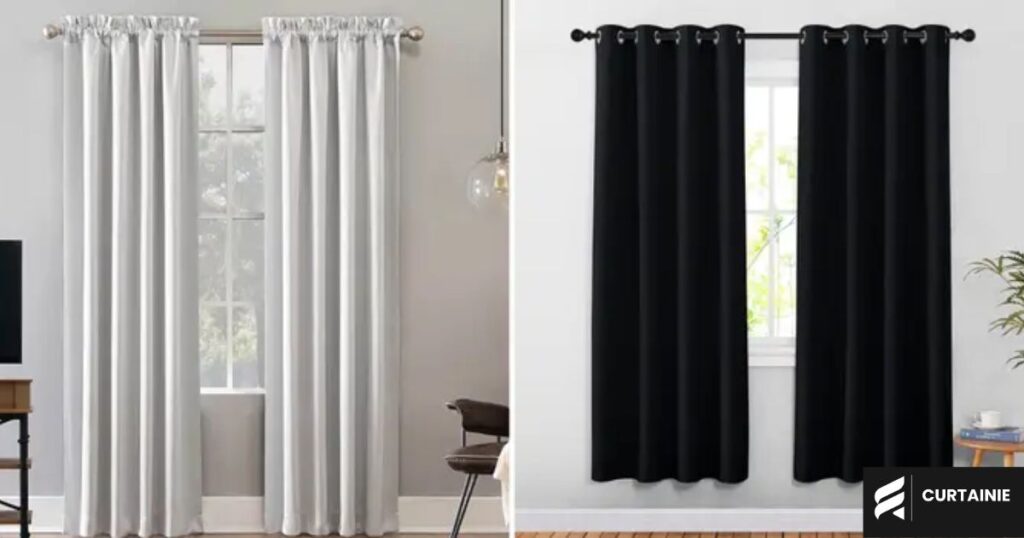
Blackout curtains work by blocking, absorbing, or reflecting light so it cannot pass through the curtain panel. This requires fabric that is either naturally dense and tightly woven, treated with a special coating, or backed with an additional opaque layer.
A regular cotton or linen curtain might look elegant, but it will still let light filter through, especially around dawn and dusk. True blackout performance comes from three key fabric properties:
- Thread density (thread count and weave tightness) – tighter weaves leave fewer gaps for light to pass through.
- Fabric weight (GSM – grams per square meter) – heavier fabrics generally block more light.
- Special backing or coating – foam, acrylic, or polyurethane backing layers physically block light that would otherwise pass through fibers.
Choosing the right combination of these factors determines whether your curtains achieve full blackout, moderate light blocking, or just a “room darkening” effect.
Best Fabrics for Making Blackout Curtains
1. Blackout Polyester Fabric (Most Popular Choice)
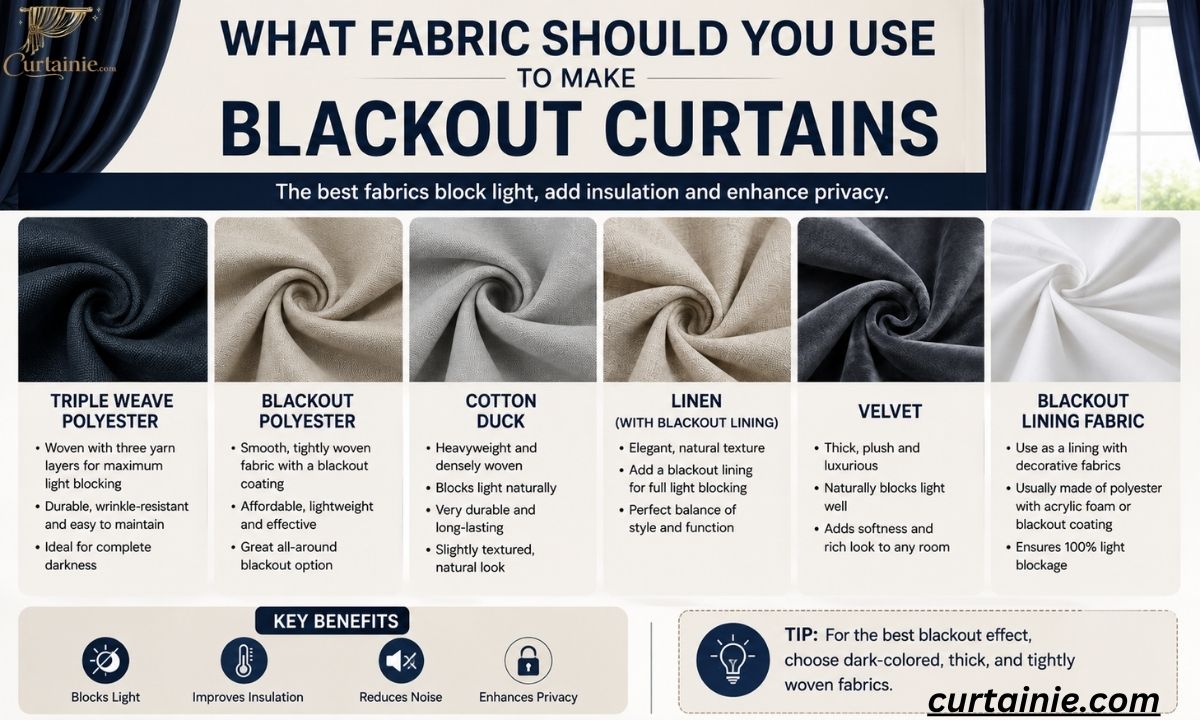
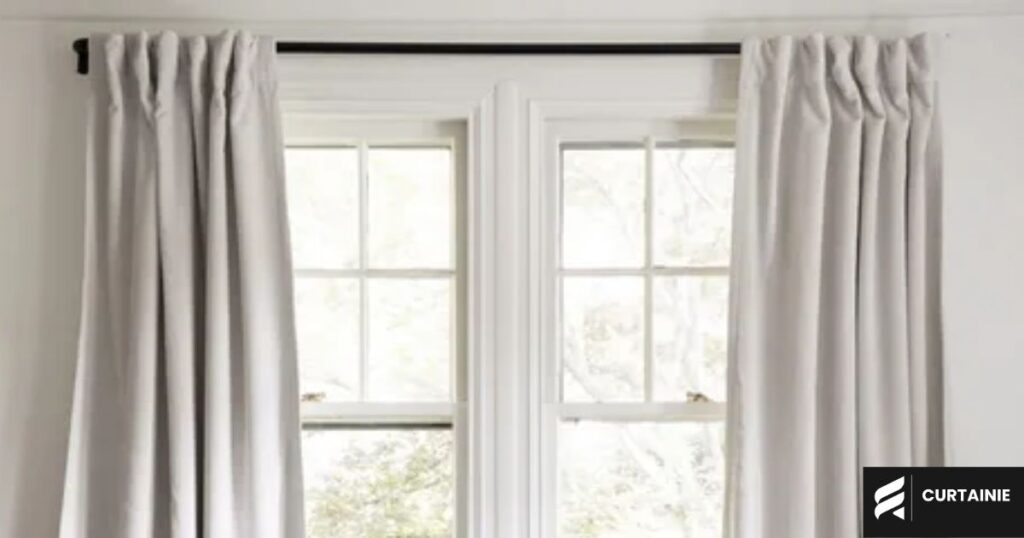
Polyester is, by far, the most commonly used fabric for blackout curtains, and for good reason. It’s affordable, durable, easy to sew, and widely available in tightly woven, heavyweight versions specifically designed for light blocking.
Why it works well:
- Polyester fibers are naturally dense and can be woven very tightly.
- It resists wrinkling and holds its shape well, even after washing.
- It’s often pre-treated with a blackout lining or foam backing.
- It’s budget-friendly compared to natural fabric alternatives.
Best for: Bedrooms, nurseries, home theaters, and anyone looking for an affordable, low-maintenance option.
2. Triple-Weave Blackout Fabric
Triple-weave fabric is a specialized type of polyester weave that uses three layers of yarn woven together in a single fabric. This construction makes it one of the most effective light-blocking fabrics on the market.
Why it works well:
- Blocks up to 99% of light without needing a separate lining.
- Reduces noise transmission better than single-layer fabrics.
- Provides better insulation, keeping rooms warmer in winter and cooler in summer.
- No “shiny” plastic look — even though it’s effective, it still drapes like a regular curtain.
Best for: People who want maximum darkness without sewing a separate blackout lining — ideal for shift workers and light-sensitive sleepers.
3. Velvet
Velvet is a heavier, more luxurious option that naturally blocks a significant amount of light due to its thick, dense pile.
Why it works well:
- The dense fiber pile absorbs light rather than letting it pass through.
- Adds a rich, elegant, hotel-style look to any room.
- Provides excellent insulation and noise reduction.
Drawbacks:
- Heavier and harder to sew at home without a strong sewing machine.
- More expensive than polyester or cotton blends.
- Can collect dust and may require special cleaning.
Best for: Living rooms, formal bedrooms, and anyone prioritizing aesthetics alongside light-blocking performance.
4. Suede (Faux Suede/Microsuede)
Faux suede is another heavyweight option that offers good light-blocking properties while being more affordable and easier to maintain than real velvet.
Why it works well:
- Tight, dense weave naturally reduces light penetration.
- Soft texture and attractive matte finish.
- More wrinkle-resistant and easier to clean than velvet.
Best for: Those wanting a velvet-like look without the higher price tag or maintenance.
5. Heavyweight Cotton or Cotton-Blend with Blackout Lining
Pure cotton alone is not an effective blackout fabric since it’s breathable and lets light through. However, heavyweight cotton or cotton-blend fabric paired with a separate blackout lining can perform extremely well.
Why it works well:
- Cotton offers a natural, breathable look and feel that many homeowners prefer.
- When combined with a blackout lining (sewn or attached separately), it becomes highly effective at blocking light.
- Easy to dye, print, or pattern, giving you more design flexibility.
Best for: People who want a specific color or pattern that isn’t available in pre-made blackout fabric.
6. Blackout Lining Fabric (Add-On Layer)
If you already have curtain fabric you love — whether it’s a printed cotton, linen, or silk-blend — you don’t need to throw it away. Instead, you can sew or clip on a blackout lining fabric behind your existing curtain.
Types of blackout lining:
- Foam-backed lining – a layer of fabric with a foam coating on one side; highly effective but adds bulk and weight.
- Acrylic-coated lining – thinner and lighter than foam-backed versions, with slightly less blocking power but easier to sew.
- 3-pass or 4-pass coated lining – multiple layers of white, black, and white coating sandwiched together for maximum opacity.
Best for: Anyone who wants to keep their existing curtain’s appearance while adding blackout functionality.
Comparison Table: Blackout Curtain Fabric Options
| Fabric Type | Light Blocking | Cost | Ease of Sewing | Best For |
|---|---|---|---|---|
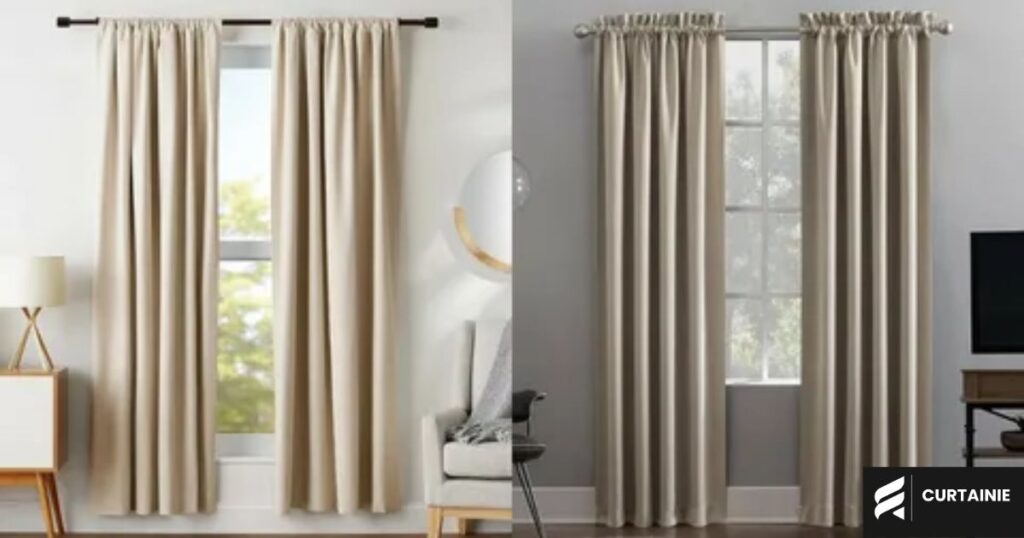
| Blackout Polyester | High | Low–Medium | Easy | Budget bedrooms, nurseries |
| Triple-Weave Polyester | Very High | Medium | Easy–Moderate | Maximum darkness without lining |
| Velvet | High | High | Difficult | Luxury living rooms, formal spaces |
| Faux Suede | Medium–High | Medium | Moderate | Velvet look on a budget |
| Cotton + Blackout Lining | High (with lining) | Medium | Moderate | Custom prints and colors |
| Blackout Lining (Add-On) | Very High | Low–Medium | Easy–Moderate | Adding blackout to existing curtains |
How to Choose the Right Fabric for Your Needs
Choosing the best fabric isn’t just about light-blocking power — it also depends on your room, budget, and lifestyle. Here’s a simple way to decide:
- If budget is your top priority: Go with standard blackout polyester. It offers the best value for reliable light blocking.
- If you want maximum darkness with zero extra steps: Choose triple-weave blackout fabric, since it doesn’t require a separate lining.
- If style and luxury matter most: Velvet or faux suede will give you a richer look while still blocking a good amount of light.
- If you already love a specific fabric pattern: Pair heavyweight cotton or your chosen fabric with a blackout lining instead of switching fabrics entirely.
- If you’re sewing for a nursery or shift-worker’s bedroom: Prioritize fabrics with the highest blocking percentage, such as triple-weave or foam-backed lining, since complete darkness matters most in these spaces.
Tips for Sewing Blackout Curtains at Home
- Always measure your window width and height before buying fabric, and add extra width (at least 2x the window width) for a fuller, more elegant drape.
- Choose a fabric weight appropriate for your sewing machine. Heavier fabrics like velvet may require a heavy-duty needle and slower stitching speed.
- Use blackout lining even with naturally heavy fabrics if you want near-100% light blocking, especially in rooms facing direct sunlight.
- Pre-wash your fabric (if washable) before cutting and sewing to prevent shrinkage after the curtains are finished.
- Add curtain weights or extra hems at the bottom to help the curtain hang straight and seal more effectively against light leaks at the edges.
- Consider side and top light gaps, not just the fabric itself. Even the best blackout fabric won’t fully darken a room if there are large gaps along the curtain rod or sides of the window.
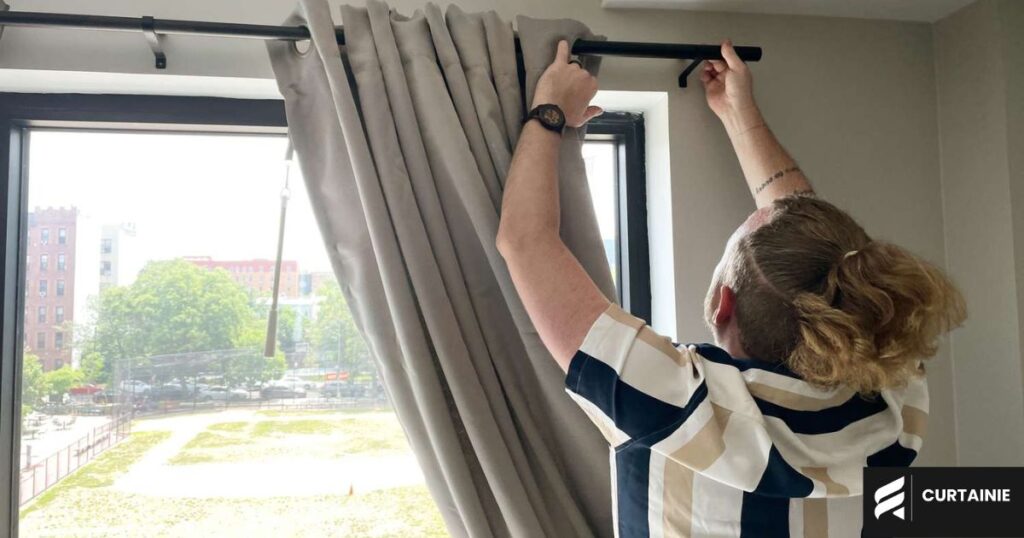
Common Mistakes to Avoid
- Choosing fabric based on color alone. A dark-colored fabric is not automatically a blackout fabric. Color affects how the room feels, but density and lining determine how much light is actually blocked.
- Skipping the lining for lightweight decorative fabrics. Sheer or thin fabrics will never achieve full blackout without an added lining layer.
- Ignoring curtain width and overlap. Even perfect blackout fabric will let light through gaps if the curtain isn’t wide enough to fully cover the window and overlap at the center.
- Not checking washing instructions. Some foam-backed linings cannot be machine washed, which can affect long-term maintenance decisions.
Read more:can people see through sheer curtains at night
Frequently Asked Questions (FAQs)
1. What is the best fabric for 100% blackout curtains?
Triple-weave polyester fabric or fabric paired with a 3-pass blackout lining typically offers the closest result to 100% light blocking, since these are specifically engineered with multiple layers to prevent any light penetration.
2. Can I make blackout curtains without buying special blackout fabric?
Yes. You can use any fabric you like for the outer layer and sew or attach a separate blackout lining fabric behind it. This is a popular method when you want a specific color, pattern, or texture that isn’t available in pre-made blackout fabric.
3. Is velvet a good fabric for blackout curtains?
Yes, velvet is an excellent natural light-blocking fabric due to its dense pile and weight. However, it’s heavier, more expensive, and slightly harder to sew compared to polyester options.
4. Does fabric color affect how well curtains block light?
Color has a minor effect, with darker colors absorbing slightly more light than lighter shades, but the fabric’s weave density and lining are far more important than color for blocking light effectively.
5. How heavy should fabric be for blackout curtains?
Most effective blackout fabrics range between 200–350 GSM (grams per square meter) when made from polyester, while natural fabrics like velvet can be heavier. As a general rule, the denser and heavier the weave, the better the light-blocking performance.
Conclusion
Choosing the right fabric is the single most important factor in making truly effective blackout curtains. While blackout polyester remains the most popular and budget-friendly option, triple-weave fabric offers superior performance for those who want maximum darkness without sewing a separate lining. If style and luxury are priorities, velvet and faux suede provide both elegance and strong light-blocking ability, while cotton paired with a blackout lining gives you the freedom to use any pattern or color you love.
Ultimately, the best fabric for your blackout curtains depends on your personal priorities: budget, sewing skill level, room aesthetics, and how completely you need to block outside light. By understanding how thread density, fabric weight, and lining layers work together, you can confidently choose — or sew — blackout curtains that transform any room into a dark, peaceful, and energy-efficient retreat.
I am looking for blackout curtain material for the hall which I manage. Could you please contact me with samples. I would like either dark grey or black. The windows are large at least 7feet high.