
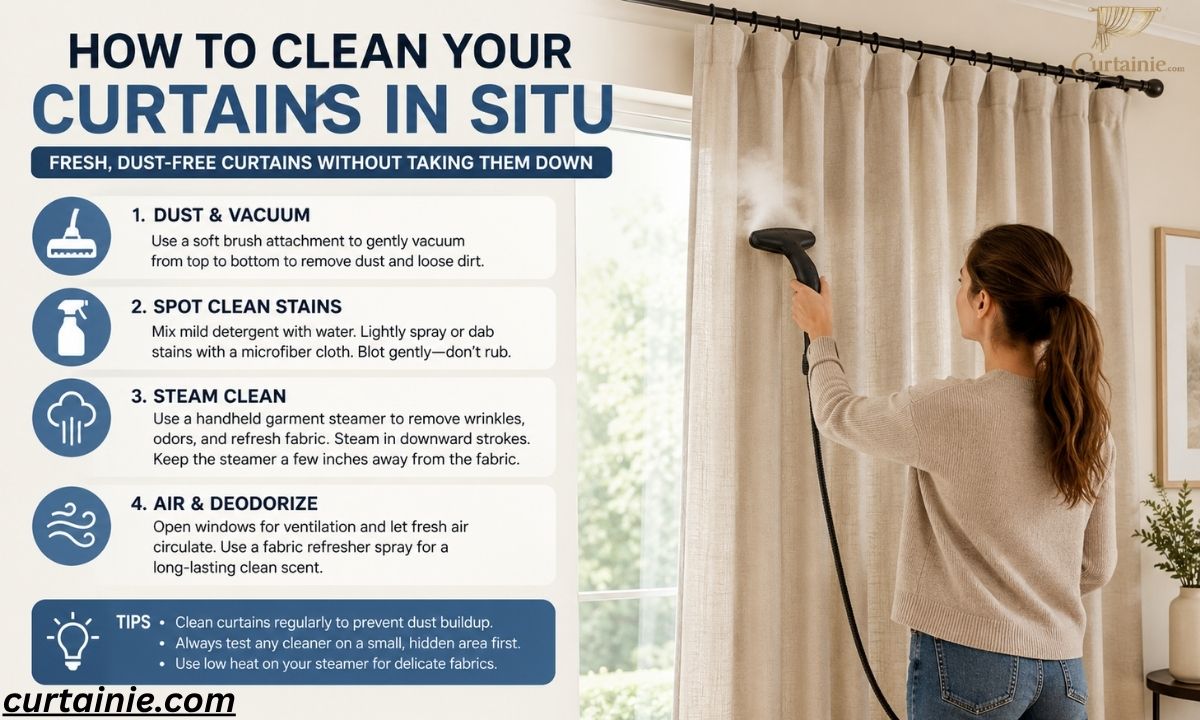
Curtains are an important part of interior design, but they also collect dust, pet dander, pollen, mold spores, and odors over time. Since they remain in place for long periods, these particles can be released into the air when curtains are opened or closed. Regular cleaning helps keep your curtains fresh and supports a cleaner indoor environment.
Taking curtains down for washing can be difficult, especially with heavy drapes. Fortunately, you can clean curtains in situ, meaning without removing them. This method saves time and effort while helping extend the life of your window treatments.
Why Cleaning Curtains Hanging Up is Better for Your Fabrics
Before diving into the “how,” it helps to understand why in situ maintenance is often superior to traditional washing machines:
- Prevents Fabric Shrinkage: Many high-end drapery fabrics used in US homes—such as linen, wool, velvet, and rayon—can shrink by up to 10% in a standard washing machine or when exposed to improper heat. Cleaning them while hanging keeps them under the natural tension of their own weight, preserving their exact length.
- Avoids Structural Damage: Interlinings, buckram (the stiff fabric inside pleats), and delicate stitching can disintegrate or warp during machine cycles.
- Saves Time and Money: Professional dry cleaning for an entire house of custom drapes can easily cost hundreds of dollars. The methods below cost mere pennies in energy and basic household tools.
The 4 Best Methods to Clean Curtains In Situ
Depending on how dirty your curtains are, choose one of these targeted strategies. For the best results, work from the top of the curtain downward, as gravity will cause loose particles to fall.
1. The Deep Vacuum Method (Best for Weekly Dusting)
The absolute baseline of curtain maintenance is vacuuming. If you skip this, any moisture you apply later (like steam or spray) will turn dry dust into muddy stains.
- What you need: A vacuum cleaner with variable suction control and a soft upholstery brush attachment.
- The Technique:
- Set your vacuum to its lowest suction setting (often marked with a curtain or sofa icon). High suction will suck the fabric into the nozzle, potentially tearing delicate sheers or pulling threads.
- Attach the upholstery brush. Ensure the bristles are completely clean so you don’t transfer floor dirt to the fabric.
- Start at the top pleats or grommets. Dust heavily accumulates on the upper ledges of the fabric fold.
- Move the brush vertically downward in smooth, overlapping strokes.
- Don’t forget the back. The side facing the window often accumulates insects, cobwebs, and window condensation dust.
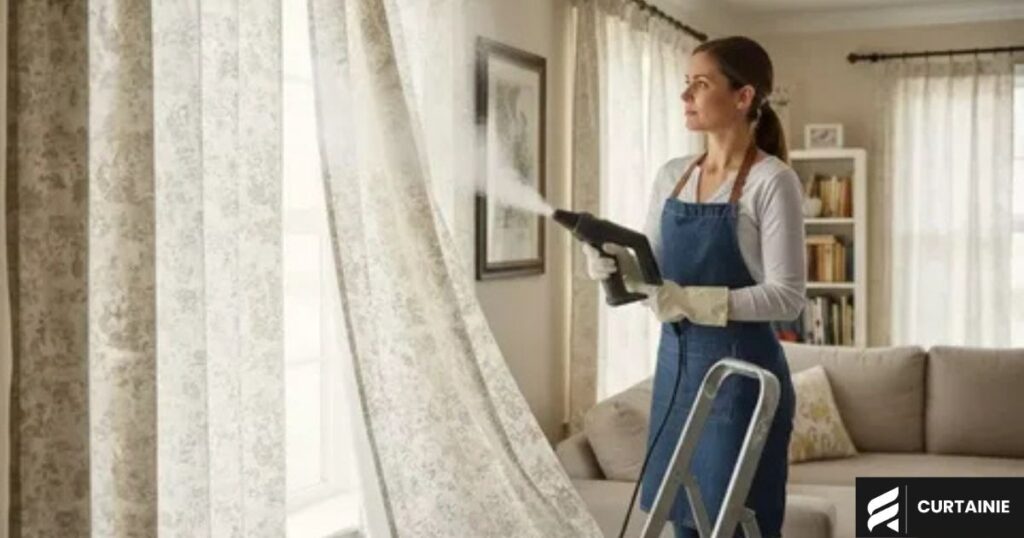
2. The Power of Steam (Best for Creases and Deep Refreshing)
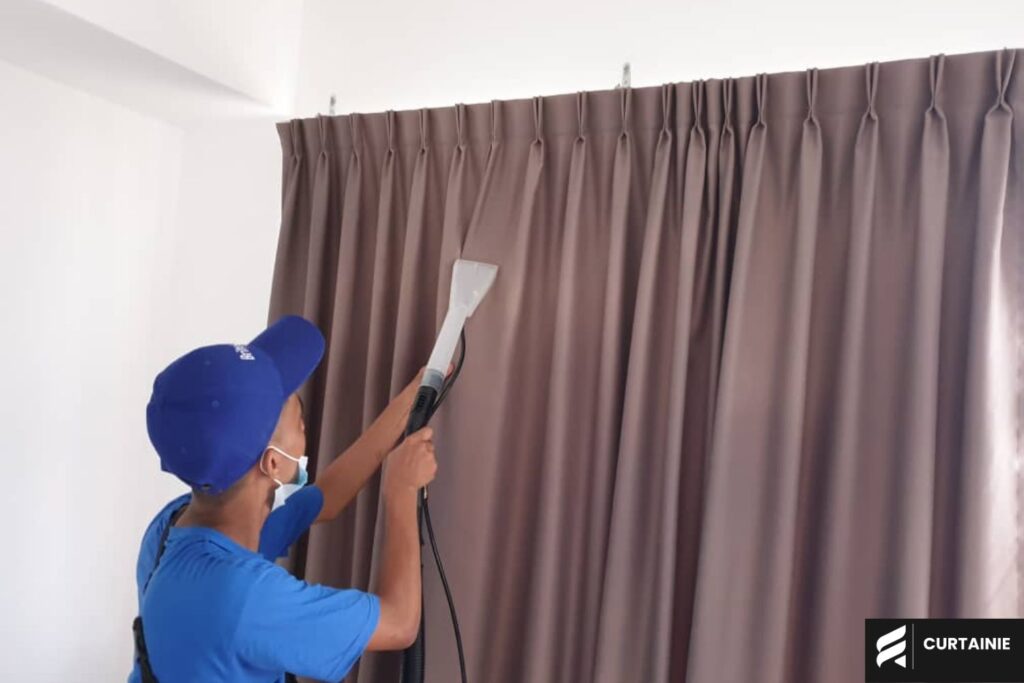
Steam cleaning is excellent because the heat relaxes the fibers to release deep-seated odors and kill dust mites without soaking the material.
- What you need: A handheld garment steamer or a steam mop with a fabric attachment.
- The Technique:
- Ensure the curtain has been thoroughly vacuumed first.
- Fill the steamer with distilled water to prevent mineral buildup on your fabric.
- Hold the steamer nozzle roughly 4 to 6 inches away from the drape.
- Work from top to bottom. If you notice the fabric getting damp, pull the steamer further away.
- Let the curtains air dry completely. The weight of the damp fabric will naturally pull out wrinkles, leaving them looking freshly ironed.
Safety Warning: Check your care label first. Synthetic fabrics like polyester can melt under extreme heat, and certain silks can water-spot. Always test a small hidden corner on the back of the curtain hem before steaming the entire panel.
3. The Traditional “Beating” and Airing Method (Best for Odor Elimination)
If your curtains smell like last night’s dinner or pet dander, simple mechanical agitation can dislodge deep debris.
- What you need: A clean, dry towel or a traditional broom handle, and open windows.
- The Technique:
- Open the window directly behind the curtains completely to allow fresh air flow.
- Firmly shake the curtain panels from the base to loosen heavy dust.
- Take a clean, large bath towel and fold it. Gently beat the curtains down the entire length. The dust will be dislodged and drawn out of the open window by the cross-breeze.
- Leave the windows open for 1 to 2 hours to let the outdoor air naturally deodorize the weave.
4. Target Spot-Cleaning (Best for Stains and Grease)
If you have a localized stain from coffee, sticky fingers, or window grime, you can treat it without removing the panel.
- What you need: Mild liquid dish soap, warm water, white microfiber cloths, and a dry towel.
- The Technique:
- Mix a few drops of mild dish soap into a bowl of warm water until suds form.
- Dip a white microfiber cloth into the soapy water and wring it out until it is barely damp. (Always use a white cloth to avoid dye transfer).
- Blot—do not rub—the stain. Rubbing pushes the stain deeper into the fabric fibers and can cause pilling.
- Once the stain lifts, press a clean towel against the wet patch to absorb excess moisture, then let it air dry naturally.
Fabric-Specific Care Rules
Not all curtains are built the same. Use this quick reference table to ensure you don’t ruin your specific fabric type while cleaning them on the rail.
| Fabric Type | Safe In-Situ Methods | Special Instructions |
| Heavy Velvet & Chenille | Vacuuming (with pile direction), Light Steaming | Never brush velvet harshly against the grain. Steam only from the back side to prevent crushing the velvet pile. |
| Linen & Cotton | Vacuuming, Steaming, Spot Cleaning | Highly prone to shrinking if removed; keeping them hanging while steaming is the ideal way to straighten them. |
| Polyester & Synthetics | Vacuuming, Low-Heat Steaming, Spot Cleaning | Very durable, but sensitive to high heat. Keep the garment steamer moving quickly to avoid melting fibers. |
| Sheers & Lace | Ultra-Low Vacuuming, Gentle Shaking | Highly delicate. Place a clean nylon stocking over your vacuum nozzle to diffuse suction power and prevent fraying. |
Read More ; how to clean your curtains in situ without taking them down
Frequently Asked Questions (FAQs)
1. Can I use a fabric refresher spray like Febreze on hanging curtains?
Yes, but always vacuum them first to prevent the spray from turning lingering dust into permanent muddy streaks.
2. How do I get rid of mold or mildew on curtains without taking them down?
Lightly mist the area with a 1:1 mix of water and white vinegar, then gently blot it dry.
3. Will steaming curtains remove pet hair?
No, steam only loosens fibers, so follow up with a lint roller or rubber glove to actually pull hair away.
4. How do I clean the very top of the curtains where the dust is thickest?
Use a vacuum crevice tool on a step stool, or wipe the top pleats with a damp cloth wrapped around a broom head.
Conclusion
Cleaning your curtains in situ doesn’t require complex machinery or expensive chemicals. By incorporating curtain care into your standard cleaning routine, you can keep your home looking immaculate and allergen-free with minimal effort.
As a rule of thumb, give your curtains a quick vacuum every 2 weeks, a freshening steam every 3 to 6 months, and a targeted spot clean as soon as accidents happen. This simple routine protects your investment, keeps your air crisp, and ensures you never have to climb a shaky ladder to wrestle down heavy fabrics again.